

San Gabriel Mountains
Images
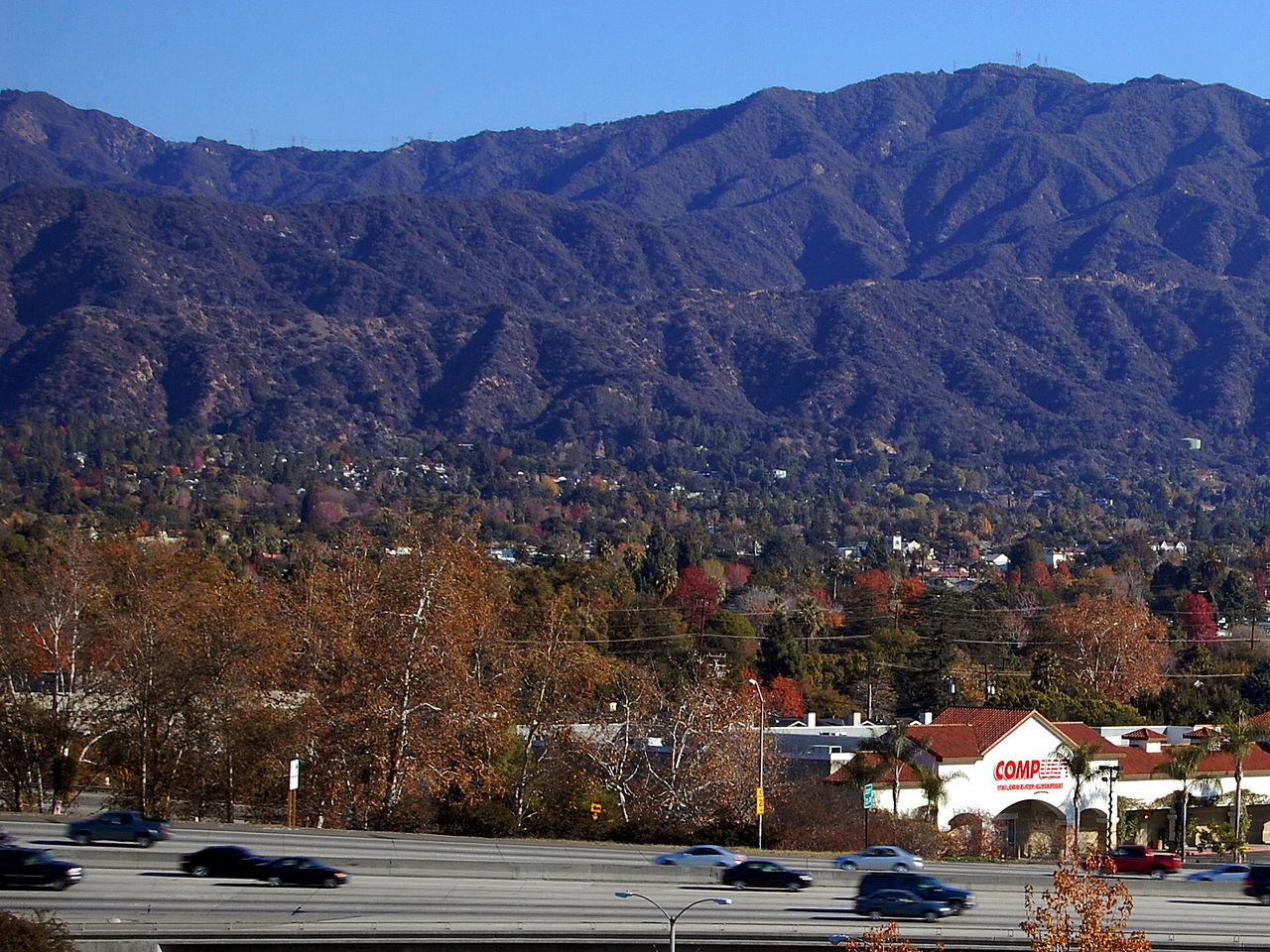
Monrovia CA San Gabriel Mountains i210


Tectonic Forces Shaping a Rugged Landscape
The San Gabriel Mountains are a dramatic product of powerful tectonic forces, forming a significant portion of the Transverse Ranges. Unlike the predominantly north-south trending ranges of California, the Transverse Ranges, including the San Gabriels, are characterized by their east-west orientation. This unique alignment is a result of complex geological processes, including compressional forces and strike-slip faulting.
The range's northern boundary is starkly defined by the San Andreas Fault, one of the most active and significant fault systems in the world. This geological activity has sculpted a rugged topography, creating steep slopes, deep canyons, and prominent peaks that rise dramatically from the surrounding lowlands. The mountains act as a critical climatic barrier, influencing weather patterns by forcing moist air from the Pacific Ocean to rise, cool, and precipitate, thereby affecting rainfall in the Los Angeles Basin and contributing to the arid conditions of the Mojave Desert to the north.
Ecological Diversity and Conservation Efforts
Nestled within the Angeles and San Bernardino National Forests, the San Gabriel Mountains harbor a rich tapestry of biodiversity. The varied elevations and microclimates support a range of ecosystems, from chaparral and oak woodlands in the foothills to coniferous forests at higher altitudes. These mountains are a crucial habitat for numerous plant and animal species, some of which are endemic or threatened.
The designation of the San Gabriel Mountains National Monument in 2014 underscored the federal government's recognition of the area's ecological importance and its value for public enjoyment. Conservation efforts, exemplified by the work of organizations like the Trust for Public Land, which has protected thousands of acres, are vital for preserving this natural heritage. These efforts aim to safeguard the delicate balance of the ecosystem against pressures from urbanization and climate change, ensuring the long-term survival of its unique flora and fauna.
A Crucial Resource Hub
Beyond their ecological and geological significance, the San Gabriel Mountains serve as an indispensable resource for Southern California. The mountains act as a vital watershed, collecting precipitation that is then channeled into reservoirs and distributed as a primary source of fresh water for millions of residents in the Los Angeles and San Bernardino metropolitan areas. This role as a water provider highlights the direct link between the health of the mountain ecosystem and the sustainability of urban life.
Furthermore, the range offers extensive opportunities for recreation, attracting hikers, climbers, campers, and nature enthusiasts. Peaks like Mount Baldy are iconic destinations, while areas around Mount Wilson, with its historical observatory and broadcast infrastructure, blend scientific pursuit with public access. The mountains provide a much-needed natural escape, offering respite and recreational outlets for a densely populated region.
Scientific Observation and Communication Nexus
Mount Wilson, a prominent peak within the San Gabriel range, has a long and distinguished history as a center for scientific observation and technological advancement. The Mount Wilson Observatory, established in the early 20th century, was once the world's premier astronomical research facility. It was here that Edwin Hubble made his groundbreaking discovery that the universe is expanding, fundamentally changing our understanding of cosmology.
Today, while its role in optical astronomy has evolved, the site remains significant. It also hosts a dense array of broadcast antennas and transmitters, serving as a critical hub for media communication across Southern California. This dual role of Mount Wilson-as a historical site of profound scientific discovery and a modern center for broadcasting-illustrates the multifaceted importance of the San Gabriel Mountains to the region's scientific, cultural, and technological landscape.
Go deeper
Frequently Asked Questions
What are the San Gabriel Mountains and why are they special?+
Why do the San Gabriel Mountains help keep the Los Angeles area cool and wet?+
How do the San Gabriel Mountains protect wildlife?+
Why is Mount Wilson famous?+
What can people do in the San Gabriel Mountains?+
Based on content from Wikipedia · Licensed under CC BY-SA 4.0