

Cosmology: The Universe's Big Story!
Images
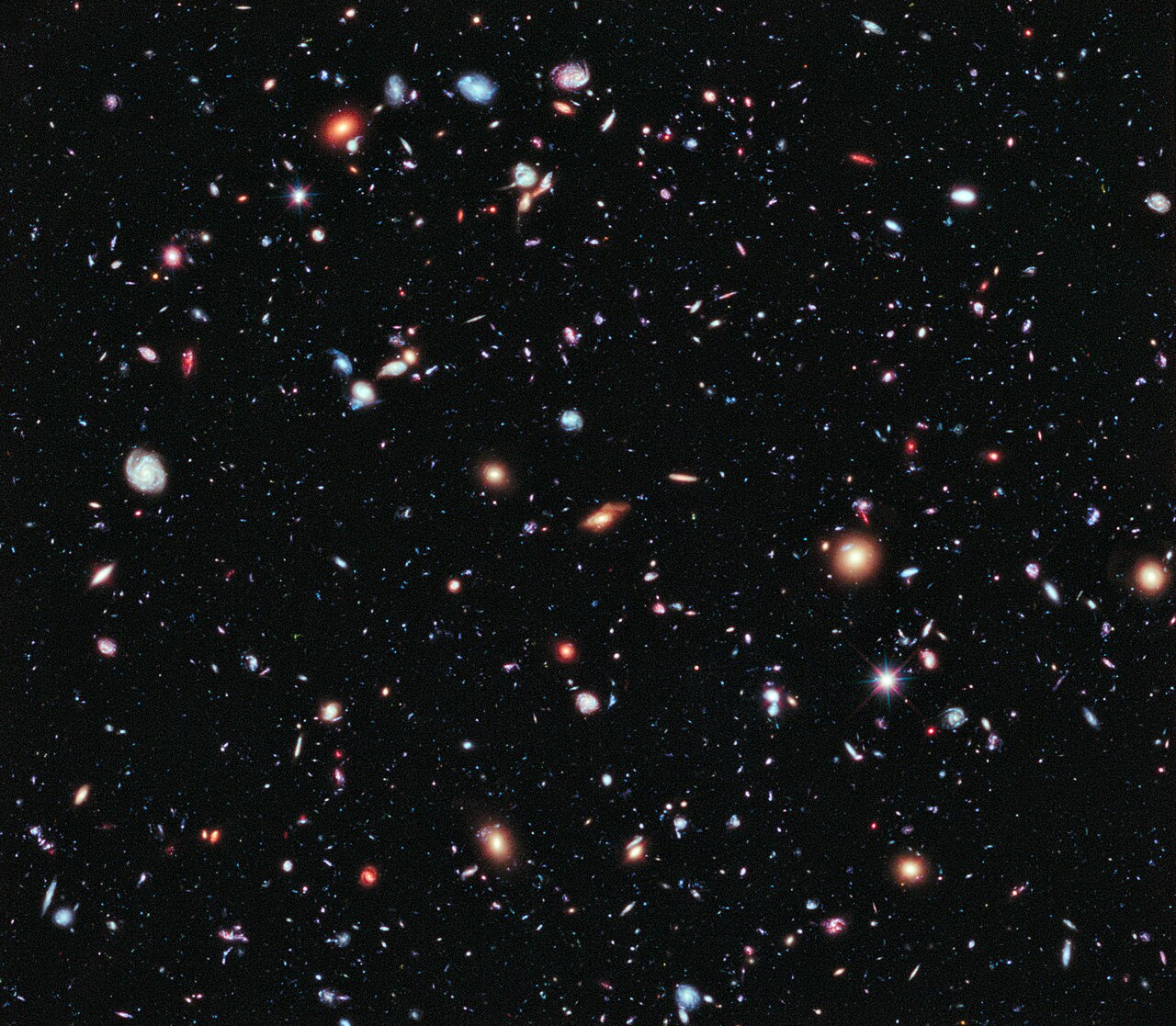
Cosmology





Historical Trajectories
The intellectual journey of cosmology spans millennia, evolving from philosophical speculation to rigorous scientific inquiry. Ancient civilizations observed celestial patterns, leading to geocentric models like those of Aristotle and Ptolemy, which dominated thought for over a thousand years. The Copernican Revolution marked a paradigm shift, placing the Sun at the center and paving the way for Kepler's elliptical orbits and Newton's universal law of gravitation, which provided a mechanistic understanding of celestial motion.
However, the true revolution in modern cosmology arrived with Albert Einstein's general theory of relativity in 1915. This theory provided the mathematical framework to describe gravity as the curvature of spacetime, enabling the development of dynamic cosmological models. Subsequent observational evidence, such as Edwin Hubble's discovery of the expanding universe and the detection of the cosmic microwave background radiation, solidified the Big Bang theory as the standard cosmological model, a testament to the power of theoretical physics combined with empirical observation.
The Cosmological Inventory
Our understanding of the universe's composition has been profoundly reshaped by discoveries that challenge our intuitive grasp of matter and energy. Cosmological observations reveal that the luminous matter we see – stars, planets, gas, and dust – constitutes only about 5% of the universe's total mass-energy density. A significant portion, approximately 27%, is attributed to dark matter, an enigmatic substance that interacts gravitationally but does not emit, absorb, or reflect electromagnetic radiation, making it invisible to conventional telescopes.
Its presence is inferred from gravitational lensing, galaxy rotation curves, and the large-scale structure of the universe. The dominant component, however, is dark energy, estimated at around 68%. This mysterious entity is responsible for the observed accelerated expansion of the universe, a phenomenon that has led to intense theoretical investigation, including concepts like a cosmological constant or quintessence.
Understanding these dark components is paramount to comprehending the universe's past, present, and future.
The Big Bang Model
The Big Bang theory stands as the cornerstone of modern cosmology, describing the universe's origin and evolution from an extremely hot, dense initial state approximately 13.8 billion years ago. This is not an explosion in pre-existing space, but rather the expansion of spacetime itself. Key observational pillars support this model: the cosmic microwave background (CMB) radiation, a faint afterglow of thermal radiation left over from the early universe, exhibits remarkable uniformity with tiny temperature fluctuations that seeded structure formation; the observed redshift of distant galaxies, as documented by Edwin Hubble, indicates that the universe is expanding; and the measured abundances of light elements like hydrogen and helium closely match predictions from Big Bang nucleosynthesis.
While immensely successful, the model is continually refined, addressing questions about inflation, the nature of dark matter and dark energy, and the universe's ultimate fate.
The Significance of Cosmological Inquiry
Cosmology is not merely an academic pursuit; it addresses fundamental questions about existence and our place within the cosmos. By unraveling the universe's history and composition, we gain profound insights into the physical laws that govern reality. This quest for knowledge drives technological innovation, spurring advancements in areas such as observational astronomy, detector technology, data analysis, and theoretical physics, with applications ranging from medical imaging to telecommunications.
Furthermore, cosmology fosters a sense of wonder and perspective, reminding us of the vastness and complexity of the universe. It encourages critical thinking and a holistic understanding of natural phenomena, contributing to a broader scientific literacy and a deeper appreciation for the interconnectedness of all things, from the smallest subatomic particles to the largest cosmic structures.
Go deeper
Based on content from Wikipedia · Licensed under CC BY-SA 4.0