

Reims Cathedral
Images

Reims Cathedral Organ, France - Diliff




The Sacred Heart of French Kingship
Reims Cathedral, officially Notre-Dame de Reims, stands as an unparalleled monument to the history of the French monarchy and the zenith of Gothic art. Located in Reims, a city with a rich historical tapestry in northeastern France, this cathedral served as the traditional site for the coronation of French kings for centuries. This sacred ritual transformed the cathedral into a powerful symbol of divine right and national identity.
The very stones of Reims seem to echo with the footsteps of kings and the solemn pronouncements of their ascension to power. Its architectural grandeur, a prime example of High Gothic style, was meticulously crafted to inspire awe and reflect the glory of God and the monarchy. The annual influx of approximately one million visitors underscores its enduring appeal as a pilgrimage site for history buffs and admirers of sacred art.
Foundations of Faith and Flourishing of Gothic Splendor
The origins of Reims Cathedral trace back to the early 5th century, with its initial founding by Bishop Nicasius. A foundational moment in both religious and political history occurred here when Clovis I, the first king of the Franks to convert to Christianity, was baptized by Saint Remigius, the Bishop of Reims, around the turn of the 6th century. This event marked a pivotal alliance between the Frankish monarchy and the Catholic Church, shaping the future of France.
The current structure, however, is a testament to the architectural prowess of the 13th and 14th centuries. Its construction was initiated to replace a preceding church destroyed by fire in 1210. The resulting edifice is a masterpiece of High Gothic architecture, characterized by its soaring height, expansive stained-glass windows, and intricate sculptural programs, designed to convey theological narratives and royal authority.
Resilience Through Conflict and Restoration
Reims Cathedral has endured a tumultuous history, bearing witness to periods of both peace and conflict. While it largely escaped significant damage during the French Revolution, its resilience was tested severely during World War I. The cathedral suffered extensive damage from shelling, a stark reminder of the destructive power of modern warfare.
However, its historical and cultural importance spurred significant restoration efforts. The 19th century saw major work to repair and conserve the structure, and further extensive restoration was undertaken in the 20th century following the devastation of the war. These continuous efforts highlight the cathedral's status not just as a religious site but as a vital piece of global heritage, a testament to human dedication in preserving cultural treasures against the ravages of time and conflict.
A Unique Stewardship
The administrative status of Reims Cathedral is a fascinating reflection of France's secular governance. Since the 1905 law on the separation of Church and State, the cathedral has been owned by the French state. This means the state is responsible for its preservation, restoration, and upkeep, ensuring its long-term survival as a national monument.
Concurrently, the Catholic Church maintains an agreement for its exclusive use as a place of worship and religious ceremony. This dual custodianship underscores the cathedral's profound significance, both as a sacred space central to Catholic tradition and as an invaluable component of France's cultural and historical patrimony. Its designation as a UNESCO World Heritage Site in 1991 further solidifies its global importance.
Architectural Innovations and Artistic Legacy
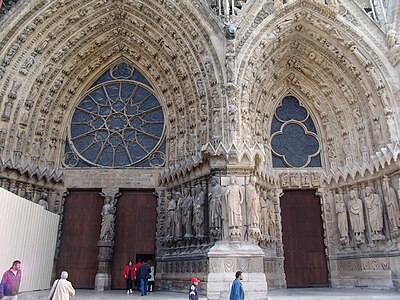
The architectural brilliance of Reims Cathedral lies in its embodiment of High Gothic principles, pushing the boundaries of engineering and aesthetics for its time. The design features a soaring nave, supported by innovative flying buttresses that allowed for thinner walls and larger windows, flooding the interior with light. The facade is adorned with an astonishing array of sculptures, depicting biblical figures, saints, and kings, creating a visual sermon for the illiterate populace of the Middle Ages.
The cathedral's stained-glass windows, though many have been replaced over centuries, were once renowned for their vibrant colors and intricate storytelling. The sheer scale and artistic detail of Reims Cathedral not only served its religious and royal functions but also established it as a benchmark for Gothic architecture across Europe, influencing countless subsequent structures and solidifying its place as a masterpiece of medieval art.
See also
Based on content from Wikipedia · Licensed under CC BY-SA 4.0