

Reims
Images

Trips to Reims, Champagne



Geographical Context and Historical Foundation
Reims, situated 129 kilometers (80 miles) northeast of Paris in the French department of Marne, occupies a strategic position on the Vesle River, a tributary of the Aisne. This geographical placement has been instrumental in its historical development, dating back to its founding by the Gauls. Its integration into the Roman Empire as a significant urban center, known as Durocortorum, underscored its early importance.
The city's location on fertile plains, coupled with its river access, facilitated trade and agricultural development. The region experiences a temperate oceanic climate, characterized by moderate temperatures and rainfall distributed throughout the year, which is particularly conducive to viticulture. This environmental setting has profoundly shaped Reims' economic and cultural trajectory, laying the groundwork for its future prominence.
The Sacred Heart of French Monarchy
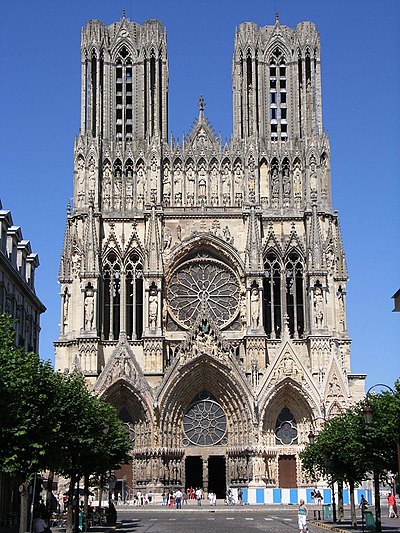
Reims' historical legacy is indelibly marked by its role as the traditional site for the coronation of French monarchs. This ceremonial function, spanning centuries, elevated the city to a paramount position in the nation's political and religious consciousness. The magnificent Reims Cathedral, a masterpiece of Gothic architecture, served as the sacred venue for these pivotal events.
Central to the coronation ritual was the Holy Ampulla, a reliquary containing consecrated oil, purportedly delivered by a dove for the baptism of Clovis I in 496. This event cemented Reims' association with divine right and royal legitimacy. The city's enduring identity as 'la cité des sacres' ('the Coronation City') reflects this profound historical connection, drawing scholars and tourists interested in the pageantry and symbolism of French royal history.
Architectural Heritage and UNESCO Recognition
The urban fabric of Reims showcases a remarkable synthesis of architectural periods, ranging from remnants of its Roman past to the distinctive aesthetics of Art Deco. The city's most celebrated monuments-Reims Cathedral, the adjacent Palace of Tau, and the Abbey of Saint-Remi-collectively represent an outstanding ensemble of Romanesque and Gothic architectural achievement. Their designation as a UNESCO World Heritage Site in 1991 acknowledges their universal value and historical significance to the French monarchy and European heritage.
The Cathedral, in particular, is renowned for its intricate sculptures, soaring naves, and stained-glass windows, while the Palace of Tau served as a royal residence and treasury. The Abbey of Saint-Remi houses the sarcophagus of Saint Remigius, the bishop who baptized Clovis I, further underscoring the city's religious and historical importance.
Viticultural Epicenter
Reims stands as a global epicenter for the production and export of Champagne, one of the world's most prestigious sparkling wines. Its location on the northern fringe of the Champagne wine region is no coincidence; the region's unique terroir, characterized by chalky subsoil, provides ideal conditions for cultivating the Chardonnay, Pinot Noir, and Pinot Meunier grape varietals. Beneath the city lie extensive networks of ancient chalk cellars, utilized by numerous prestigious Champagne houses for aging their wines.
These subterranean vaults, often stretching for miles, offer stable temperatures and humidity essential for the maturation process. Reims is not merely a gateway to the vineyards but an active participant in the industry, hosting major producers and contributing significantly to the global reputation and economic impact of Champagne.
Modern Reims
In contemporary times, Reims continues to be a dynamic economic hub, driven significantly by the Champagne industry, which generates substantial revenue and employment. Beyond viticulture, the city boasts a diversified economy encompassing automotive manufacturing, pharmaceuticals, and technological innovation. Its role as a regional administrative center means it has a structured system of local governance, with a mayor and city council responsible for public services and urban planning. Education is a strong pillar, with Reims hosting several institutions of higher learning, including the University of Reims Champagne-Ardenne, which offers a wide range of programs and contributes to research and development, particularly in fields related to its industrial strengths.
This blend of historical prestige and modern economic vitality defines Reims today.
See also
Frequently Asked Questions
What is Reims known for?+
Where is Reims located?+
Why is the Reims Cathedral special?+
What is the Holy Ampulla?+
How does Reims grow Champagne?+
Based on content from Wikipedia · Licensed under CC BY-SA 4.0