

Cathedral
Images

The Manila Cathedral


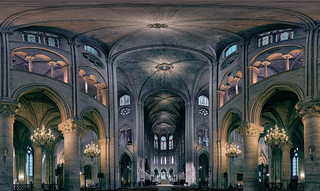


The Seat of Power
A cathedral is fundamentally defined by its function as the principal church of a diocese, housing the bishop's 'cathedra' – the symbolic throne or seat of authority. This architectural and institutional feature distinguishes it from parish churches, monastic churches, or episcopal residences. The cathedral serves as the administrative and spiritual nucleus from which the bishop exercises governance over a specific ecclesiastical territory.
This concept is primarily relevant to Christian denominations with an episcopal polity, including the Roman Catholic, Eastern Orthodox, Anglican, and certain Lutheran churches. The presence of the cathedra signifies the bishop's teaching office and pastoral responsibility, making the cathedral the focal point of the diocese's liturgical and organizational life. Its importance transcends mere size or beauty; it is intrinsically linked to the hierarchical structure and authority within these Christian traditions.
Evolution of the Cathedral
The architectural and institutional development of cathedrals traces back to the early Christian era, with significant examples emerging in the 4th century across Italy, Gaul, Spain, and North Africa. These early structures often adapted existing Roman buildings. However, the distinct architectural forms, institutional structures, and legal identities of cathedrals, separate from other church types, solidified over centuries, particularly by the 12th century within the Western Catholic Church.
This period saw the rise of Romanesque and later Gothic architectural styles, characterized by massive scale, innovative engineering (like ribbed vaults and flying buttresses), and elaborate ornamentation. These cathedrals were not merely places of worship but also served as centers of civic life, education, and artistic expression, often taking generations to complete and embodying the collective faith and resources of their communities.
Beyond the Liturgy
The significance of a cathedral extends far beyond its role as the bishop's seat. Historically, they have been crucibles of artistic and intellectual development, housing scriptoria, schools, and treasuries. Their immense scale and enduring presence made them powerful symbols of the Church's influence and permanence in society.
Architecturally, they represent pinnacles of human engineering and artistic achievement, often pushing the boundaries of what was thought possible with stone and glass. In contemporary times, many cathedrals continue to serve vital community functions, acting as venues for concerts, lectures, and civic events, while also grappling with issues of preservation and relevance in a secularizing world. They stand as tangible links to the past, offering insights into historical faith, culture, and craftsmanship.
A Global Tapestry
The landscape of cathedrals has evolved dramatically, especially since the Protestant Reformation. In regions where episcopal structures were abandoned, such as parts of Scotland and Germany, ancient cathedral buildings often retained their status and architectural significance, though their hierarchical role diminished. Conversely, the 19th and 20th centuries witnessed extensive missionary efforts by Western European churches, leading to the establishment of numerous new dioceses and the construction of associated cathedrals across Asia, Africa, Oceania, and the Americas.
Furthermore, the movement of people and the re-establishment of certain traditions have resulted in multiple cathedrals coexisting within a single city, representing different denominations and national communities. This dynamic global presence underscores the enduring, albeit varied, role of the cathedral in contemporary Christianity.
Go deeper
Frequently Asked Questions
What is a cathedral?+
Why does a cathedral have a special chair?+
How did cathedrals become so big and beautiful?+
Where did the first cathedrals start?+
What do people do in cathedrals today?+
Based on content from Wikipedia · Licensed under CC BY-SA 4.0