

Rajendra Prasad
Images

Rajendra Prasad at Maa election 2015 press meet


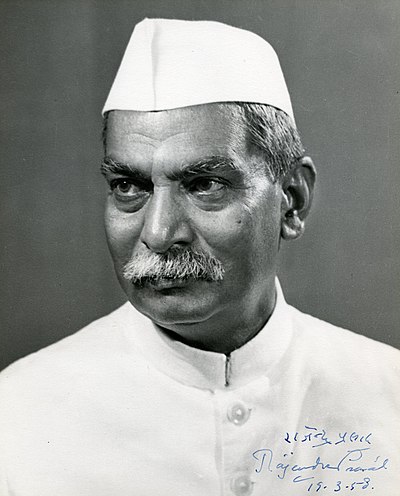

From Legal Luminary to Nationalist Firebrand
Rajendra Prasad's early life was steeped in scholarship and legal practice. Born in 1884 in Bihar, he excelled academically, earning advanced degrees and establishing himself as a formidable lawyer. However, his intellectual prowess was soon channeled into the burgeoning Indian independence movement.
He became an ardent supporter of Mahatma Gandhi, deeply influenced by his philosophy of non-violent civil disobedience. Prasad's commitment led him to join the Indian National Congress, where he rose to prominence as a key leader, particularly from his home region of Bihar. His active participation in pivotal moments of the struggle, such as the Salt Satyagraha in 1930 and the Quit India Movement in 1942, resulted in his imprisonment by the British authorities.
These experiences forged his resolve and solidified his reputation as a steadfast nationalist. His legal background provided him with a unique perspective on governance and justice, which would prove invaluable in the post-independence era.
Architect of the Constitution and First Citizen
Following India's independence in 1947, Rajendra Prasad's leadership was instrumental in establishing the new nation's framework. He was elected as the first President of the Constituent Assembly, the body responsible for drafting India's Constitution. In this capacity, he guided the complex and often contentious debates that shaped the fundamental law of the land.
His presidency of the assembly ensured a methodical and inclusive approach to constitution-making. Subsequently, when India transitioned into a republic on January 26, 1950, Prasad was unanimously elected as its first President. This marked a significant moment, placing a leader deeply rooted in the independence struggle at the helm of the newly formed republic.
He consciously worked to establish the presidency as an office of impartiality and dignity, setting a precedent for future occupants.
A Presidency Defined by Longevity and Principle
Rajendra Prasad's tenure as President of India was exceptionally long, spanning twelve years from 1950 to 1962. He remains the only Indian President to have served two full terms, a testament to the trust and respect he commanded across the political spectrum. During his time in office, he championed the development of education, recognizing it as a cornerstone for national progress and empowerment.
While the presidential role is largely ceremonial, Prasad utilized his influence to advocate for crucial social and educational initiatives. He also provided invaluable, non-partisan advice to the government, drawing upon his extensive experience and deep understanding of India's challenges. His commitment to upholding the integrity of the office and fostering national unity during India's critical early years was paramount.
Legacy Beyond Office
Upon completing his presidential term, Rajendra Prasad did not fade into obscurity. He consciously stepped away from active politics, including resigning from the Congress party, to maintain his non-partisan stance. More enduringly, he established a set of guidelines for parliamentarians.
These principles, likely emphasizing ethical conduct, dedication to public service, and the primacy of national interest, continue to inform parliamentary decorum and practice in India. His life's work underscores the transition from colonial rule to self-governance, highlighting the importance of legal frameworks, principled leadership, and a steadfast commitment to democratic ideals. Rajendra Prasad's legacy is that of a foundational statesman whose contributions continue to resonate in the structure and spirit of modern India.
See also
Based on content from Wikipedia · Licensed under CC BY-SA 4.0