

Pygmy Peoples
Images

Endangered tribe, Batwa Pygmies people




Defining Pygmy Peoples
In anthropology, 'Pygmy peoples' refers to ethnic groups exhibiting endemic short stature, a phenotype where adult males average less than 150 cm (4 ft 11 in). This contrasts with sporadic cases of disproportionate dwarfism. The term 'pygmyism' specifically denotes this population-level trait.
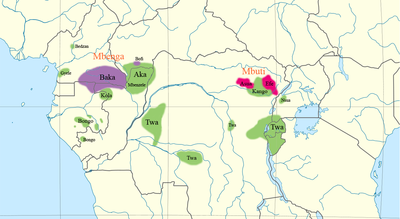
While the label 'Pygmy' can be contentious due to its focus on a single physical characteristic, it remains a widely used descriptor, particularly for the hunter-gatherer communities of the Congo Basin, such as the Bambenga, Bambuti, and Batwa. Historically, the term has also encompassed 'Asiatic pygmies' and 'Oceanic pygmies,' referring to the Negrito populations of Southeast Asia and short-statured Australo-Melanesian peoples, respectively. The Taron people of Myanmar represent a distinct East Asian phenotype among these groups.
Understanding these populations requires acknowledging both their unique physical traits and the broader cultural contexts they inhabit.
Evolutionary Adaptations and Environmental Pressures
The prevalence of short stature among Pygmy peoples is widely considered an evolutionary adaptation to their specific ecological niches. In the dense, humid tropical rainforests of the Congo Basin, for example, smaller body size offers several advantages. It facilitates greater agility and mobility within the thick undergrowth and canopy, crucial for hunting and foraging.
Furthermore, a reduced body mass correlates with lower metabolic energy requirements, meaning less food and water are needed for survival. This is a significant adaptive advantage in environments where resource availability can fluctuate. The genetic basis for this short stature is believed to have been shaped by natural selection over millennia, favoring individuals whose physiology was best suited to the challenges and opportunities of their forest habitats.
This biological adaptation is a key aspect of their long-term survival and cultural development.
Cultural Richness Beyond Stature
It is imperative to move beyond a singular focus on stature when discussing Pygmy peoples and recognize the depth and diversity of their cultures. These communities possess rich traditions, complex social structures, unique linguistic heritage, and profound spiritual cosmologies that have evolved over centuries of interaction with their environments. Their traditional ecological knowledge (TEK) is particularly noteworthy, encompassing intricate understandings of botany, zoology, and sustainable resource management.
This knowledge is vital for their subsistence and holds potential value for modern conservation efforts and ethnobotanical research. Groups like the Mbuti are renowned for their sophisticated hunting techniques, communal living, and harmonious relationship with the forest. Appreciating these cultural dimensions is essential for a holistic anthropological understanding.
Historical Context and Modern Relevance
The history of Pygmy peoples is marked by long periods of relative isolation and adaptation, but also by increasing contact and interaction with surrounding agricultural societies and, more recently, with national governments and global economic systems. This has led to complex dynamics, including land rights issues, cultural assimilation pressures, and socio-economic challenges. Understanding their historical trajectory is crucial for appreciating their current circumstances.
In contemporary anthropology, the study of Pygmy peoples continues to offer valuable insights into human biological variation, cultural resilience, and the impact of environmental change and globalization on indigenous communities. Their experiences highlight the importance of respecting cultural diversity and supporting the rights and self-determination of all peoples.
Global Distribution and Diversity
While the African Pygmies of the Congo Basin are perhaps the most well-known, short-statured populations exist in various parts of the world. The Negrito peoples of Southeast Asia, including groups in the Philippines (e.g., Agta, Aeta), Malaysia (e.g., Semang), and Thailand, share some characteristics but also possess distinct cultural and linguistic identities. The Taron people of Myanmar are another example, representing a short-statured group with an East Asian phenotype.
These diverse groups, despite their shared trait of short stature, have developed unique adaptations, social systems, and cultural practices shaped by their specific geographical and historical contexts. Studying this global distribution underscores that endemic short stature has arisen independently in different regions, driven by varied evolutionary pressures and cultural developments.
See also
Frequently Asked Questions
What are Pygmy peoples?+
Why are Pygmy peoples shorter?+
Where do Pygmy peoples live?+
What do Pygmy peoples do for a living?+
Are Pygmy peoples the same as people with dwarfism?+
Based on content from Wikipedia · Licensed under CC BY-SA 4.0