

South Korea's Super Helper: The Prime Minister!
Images
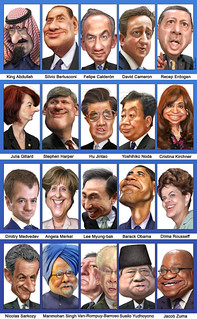
G-20 Leaders - Caricatures (September 2011)


The Prime Minister's Constitutional Mandate and Function
The Prime Minister of the Republic of Korea occupies a unique and significant position within the nation's governmental structure. Unlike in many parliamentary democracies where the Prime Minister is the head of government, South Korea's presidential system vests both head of state and head of government authority in the President.
Consequently, the Prime Minister serves as the President's principal executive assistant and a senior member of the cabinet. This role involves overseeing the administration of government ministries and implementing presidential policies. The Prime Minister is appointed by the President, a process that requires the consent of the National Assembly.
This legislative check ensures a degree of consensus and parliamentary oversight on executive appointments. While the Prime Minister can be a member of the National Assembly, it is not a prerequisite for holding the office, allowing for appointments from outside the legislature, often based on expertise or political alignment with the President. The Prime Minister's office is thus a crucial link between the President and the broader executive branch, facilitating the efficient execution of governmental functions and policy initiatives.
Succession and Continuity
Perhaps the most critical constitutional function of the Prime Minister is their role in the presidential line of succession. The Prime Minister is designated as the first in line to assume the presidency in an acting capacity should the incumbent President be removed from office, die, resign, or become incapacitated. This provision is vital for ensuring governmental continuity and preventing a power vacuum during times of crisis.
The mechanism is analogous to the Vice President's role in the United States, underscoring the importance of having a designated successor ready to lead. This responsibility necessitates that the Prime Minister maintains a comprehensive understanding of national affairs and is prepared to exercise presidential powers if circumstances demand. The recent impeachment of Prime Minister Han Duck-soo and the subsequent interim role of Deputy Prime Minister Choi, followed by Choi's reinstatement by the Constitutional Court before the appointment of the current Prime Minister Kim Min-seok, highlights the complex legal and political dynamics that can surround these high-level transitions and the critical nature of succession planning.
Distinguishing the Role
It is essential to differentiate the South Korean Prime Minister's role from that of prime ministers in parliamentary systems like the United Kingdom or Canada. In those systems, the Prime Minister is typically the leader of the majority party or coalition in the legislature and is directly accountable to it. They are the chief executive and the primary political figure.
In contrast, the South Korean Prime Minister operates within a presidential framework. While they hold significant administrative power and influence, their authority is derived from and subordinate to the President. The President is directly elected and holds a stronger mandate as both head of state and government.
The Prime Minister's position, therefore, is more akin to a chief of staff or a senior minister with broad portfolio responsibilities, rather than an independent head of government. This structural difference impacts the political dynamics, power distribution, and accountability mechanisms within the South Korean government.
Recent Developments and the Evolving Political Landscape
The leadership of the Prime Minister's office is subject to the political currents and the President's strategic decisions. The current Prime Minister, Kim Min-seok, assumed office on July 3, 2025, appointed by President Lee Jae Myung. This appointment followed a period of significant political upheaval, including the impeachment of the previous Prime Minister, Han Duck-soo, on December 27, 2024.
The interim period saw Deputy Prime Minister and Finance Minister Choi briefly assume acting Prime Minister duties. However, Choi's reinstatement on March 24, 2025, by the Constitutional Court of South Korea, prior to Kim Min-seok's official appointment, points to the intricate legal challenges and political maneuvering that can occur. These events underscore the fluid nature of high-level appointments and the importance of constitutional processes in maintaining governmental stability.
The Prime Minister's tenure is often closely tied to the President's political fortunes and policy agenda, making their role a barometer of the administration's effectiveness and direction.
See also
Frequently Asked Questions
What is the role of the Prime Minister in South Korea?+
How is the Prime Minister chosen in South Korea?+
Why is the Prime Minister important if the President is the head of government?+
What happens if the President can’t do their job?+
Can the Prime Minister be a member of the National Assembly?+
Based on content from Wikipedia · Licensed under CC BY-SA 4.0