

Impeachment
Images

CEI2016 - Comissão Especial do Impeachment 2016
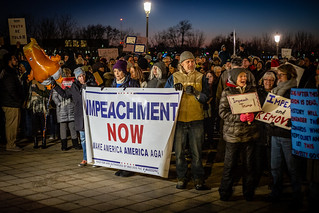


Defining Impeachment
Impeachment is a constitutionally defined process by which a legislative body initiates formal charges against a public official for grave misconduct. It is crucial to understand that impeachment itself is akin to an indictment; it is the formal accusation, not the conviction or removal. This process is typically reserved for ministerial officials or heads of state whose unique positions may place them beyond the reach of ordinary legal prosecution, or whose actions constitute a breach of the high expectations associated with their office, even if not explicitly codified as a criminal offense.
The scope of impeachable offenses, such as 'Treason, Bribery, or other high Crimes and Misdemeanors' in the United States, reflects a deliberate intent to address serious abuses of power that undermine the foundations of government. It represents a departure from the normal constitutional pathways of appointment or election, signaling a profound crisis of confidence in an official's fitness for office.
Historical Evolution and Global Variations of Impeachment
The roots of impeachment can be traced back to English parliamentary history, where it served as a mechanism to hold royal ministers accountable. Over centuries, this concept has been adapted and integrated into the constitutional frameworks of numerous nations. While the United States inherited a model where the House impeaches and the Senate tries, many other democracies incorporate judicial bodies, such as constitutional courts, into the impeachment process.
This divergence highlights differing philosophies on the separation of powers and the role of the judiciary in political matters. The frequency of impeachment proceedings globally, with hundreds of cases involving heads of state in recent decades, underscores its continued relevance as a tool for political accountability, albeit with vastly different procedures and outcomes across jurisdictions. Understanding these variations is key to appreciating its diverse application.
The Indispensable Role of Impeachment in Governance
Impeachment serves as a cornerstone of democratic governance by providing a critical check on executive and judicial power. Its significance lies not only in its potential to remove unfit officials but also in its deterrent effect. The mere possibility of impeachment encourages public officials to adhere to ethical standards and constitutional principles, knowing that serious transgressions can lead to forfeiture of office.
In presidential systems, where the executive is largely insulated from legislative votes of no confidence, impeachment is often the sole constitutional recourse for addressing presidential misconduct. This prevents a leader from becoming entrenched and unaccountable. By providing a formal, albeit politically charged, avenue for addressing severe breaches of trust, impeachment helps maintain public confidence in governmental institutions and upholds the rule of law, preventing potential instability or extra-constitutional challenges.
The Mechanics of Impeachment
The impeachment process is typically bifurcated. The first phase involves the legislative initiation of charges, often in a lower house of the legislature. This stage includes investigations, hearings, and a vote on articles of impeachment.
If passed, the official is formally impeached. The second phase is the trial, usually conducted by an upper house or a specialized tribunal. This trial determines guilt or innocence regarding the charges and decides whether to remove the official from office.
A supermajority vote is commonly required for conviction and removal, reflecting the gravity of the action and the need to ensure broad consensus. The legal and political dimensions are intertwined, as impeachment trials are often considered nonjusticiable, meaning courts typically do not intervene. This procedural complexity underscores that impeachment is fundamentally a political remedy, albeit one grounded in constitutional law.
Impeachment in Practice
The global landscape of impeachment reveals a dynamic and often contentious application of this constitutional mechanism. Reports indicate a significant number of impeachment proceedings against heads of state worldwide, particularly in regions like Latin America, where it has been used to address presidential incapacity or serious misconduct. These instances highlight the practical challenges of implementing impeachment, including the potential for its politicization and its use as a tool for partisan advantage rather than genuine accountability.
The distinction between impeachment and other removal mechanisms, such as votes of no confidence, is particularly relevant in understanding how different political systems manage executive accountability. The varied consequences and definitions of impeachment across nations underscore the importance of specific constitutional contexts and the ongoing debate about the most effective ways to ensure that public officials serve with integrity and respect for the law.
Go deeper
Based on content from Wikipedia · Licensed under CC BY-SA 4.0