

President of France
Images

President Trump Meets with the President of France


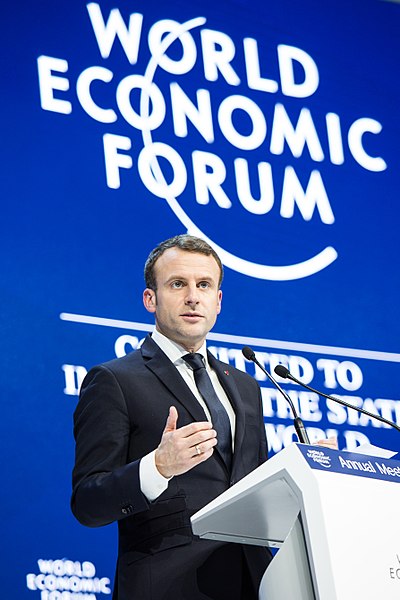

Constitutional Authority and Executive Leadership
The President of the French Republic stands as the apex of executive power, serving as the head of state and the ultimate guarantor of the nation's institutions. Under the Fifth Republic's constitution, the President possesses significant authority, including the power to appoint the Prime Minister, preside over the Council of Ministers, and promulgate laws passed by the Parliament.
They are also the supreme commander of the French Armed Forces, a role that underscores their responsibility for national defense and security. The President's influence extends to foreign policy, where they represent France on the international stage, negotiate treaties, and play a crucial role in the European Union. The powers vested in the presidency have been a subject of ongoing debate and constitutional evolution since the establishment of the Second Republic, with the Fifth Republic notably strengthening the executive branch and the role of the President.
Beyond National Borders
The President of France's responsibilities transcend domestic governance, encompassing a unique array of international and symbolic duties. Most notably, the President serves as an ex officio co-prince of Andorra, a co-principality sharing sovereignty with the Bishop of Urgell. This historical arrangement places the French head of state in a unique position of shared leadership in a microstate.
Furthermore, the President is the grand master of the Legion of Honour and the National Order of Merit, France's highest and second-highest honors, respectively, bestowed upon individuals for exceptional service. They also act as the protector of the Institut de France, a prestigious academic body. Historically, some presidents have held the honorary title of proto-canon of the Archbasilica of Saint John Lateran in Rome, reflecting deep-seated historical and religious ties, though this role has seen varying degrees of acceptance by officeholders.
Evolution of the Presidency and Current Leadership
The office of the President of France has undergone significant transformations since its inception. The powers and functions have differed considerably across various constitutional frameworks, from the Second Republic to the current Fifth Republic. The Fifth Republic, established in 1958 under Charles de Gaulle, significantly enhanced the presidency's authority, creating a strong executive capable of decisive action.
The current incumbent, Emmanuel Macron, assumed office on May 14, 2017, and was re-elected for a second term, inaugurated on May 7, 2022. His presidency navigates contemporary challenges, including economic reforms, social issues, and France's role in a complex global geopolitical landscape. The election of the President by popular vote ensures a direct mandate from the citizenry, making the office a central pillar of French democracy.
The President's Influence on French Society and Global Standing
The President of France is not merely a political figure but also a symbol of the nation and its values. Their leadership influences not only domestic policy but also France's standing on the global stage. Through diplomatic engagements, participation in international organizations like the United Nations and the European Union, and the articulation of French foreign policy, the President shapes international perceptions and alliances.
The decisions made in the Élysée Palace, the official residence of the President, have ripple effects across economic, social, and cultural spheres. The President's ability to inspire national unity and project French influence is a critical aspect of their role, making them a pivotal figure in both French history and contemporary world affairs.
See also
Based on content from Wikipedia · Licensed under CC BY-SA 4.0