

The Legion of Honour: France's Super Award!
Images

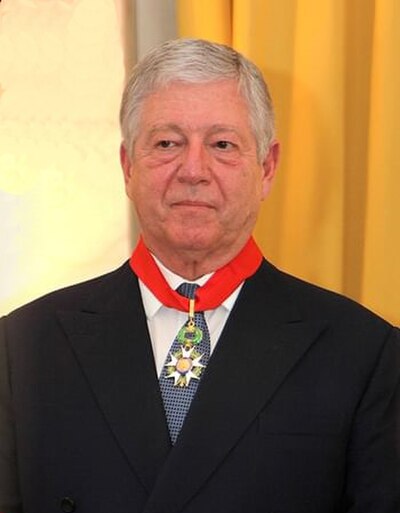
Michel Schifres receives the medal of Knight of Legion of Honour in Paris, on September 30th, 2004. Photo by Lucas Schifres




Genesis and Evolution
Established on May 19, 1802, by Napoleon Bonaparte during the Consulate, the Ordre national de la Légion d'honneur was initially conceived as a means to consolidate national unity and reward merit, breaking from the hereditary aristocratic orders of the Ancien Régime. Napoleon envisioned it as a meritocracy, open to all citizens, regardless of birth, who demonstrated exceptional service to the state, whether in military valor or civil contribution.
Despite political upheavals, including the fall of the Empire, the Restoration, and subsequent republics, the Legion of Honour has been consistently retained, albeit with minor alterations to its statutes and insignia. This remarkable continuity underscores its deep integration into the fabric of French national identity and its enduring appeal as the ultimate symbol of state recognition.
Its seat, the Palais de la Légion d'Honneur, a historic Parisian landmark, further solidifies its prestigious status.
Hierarchical Structure
The Legion of Honour is meticulously structured into five distinct classes, representing a progressive ascent of honor and recognition. The lowest rank is Chevalier (Knight), followed by Officier (Officer), and then Commandeur (Commander). Above these are the higher echelons: Grand Officier (Grand Officer) and, at the apex, Grand-croix (Grand Cross).
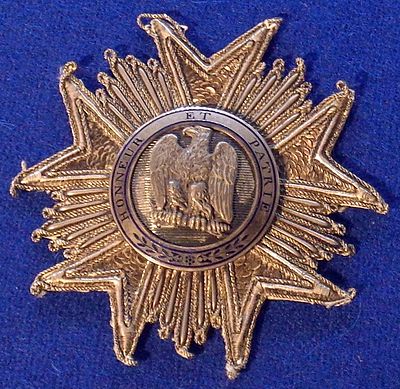
Advancement through these ranks is not automatic; it requires demonstrated continued exceptional service and merit, often after a significant period at a lower grade. This tiered system ensures that the award truly reflects a lifetime of extraordinary dedication and significant impact on France. The insignia for each rank varies in complexity and size, visually representing the level of honor bestowed upon the recipient.
The Core Tenets
The enduring significance of the Legion of Honour lies in its powerful motto: 'Honneur et Patrie' (Honour and Fatherland). This succinctly encapsulates the core values it seeks to recognize: personal integrity and unwavering dedication to the nation. It serves as France's highest national order of merit, encompassing both military and civil achievements.
This dual focus is crucial, highlighting that contributions to society extend far beyond the battlefield. Whether it's a soldier's bravery, a scientist's groundbreaking discovery, an artist's cultural contribution, or a politician's service, the Legion of Honour aims to acknowledge the highest forms of merit. Its existence reinforces a national ethos that values service, excellence, and patriotic devotion.
Global Reach and Enduring Relevance
The Legion of Honour is not exclusively awarded to French citizens. It is frequently bestowed upon foreign nationals who have rendered exceptional services to France or who have contributed significantly to international peace, cooperation, or the arts and sciences on a global scale. Notable recipients include figures like Winston Churchill, Dwight D.
Eisenhower, Charles de Gaulle, Marie Curie, and Nelson Mandela. This international dimension highlights France's role on the world stage and its appreciation for global contributions. In contemporary France, the award continues to be presented, albeit with evolving criteria that reflect modern societal values and challenges, ensuring its continued relevance as a symbol of national pride and recognition.
See also
Frequently Asked Questions
What is the Legion of Honour?+
How many levels are in the Legion of Honour?+
Who can receive the Legion of Honour?+
When was the Legion of Honour created?+
Why does the Legion of Honour have a motto?+
Based on content from Wikipedia · Licensed under CC BY-SA 4.0