

Prambanan
Images
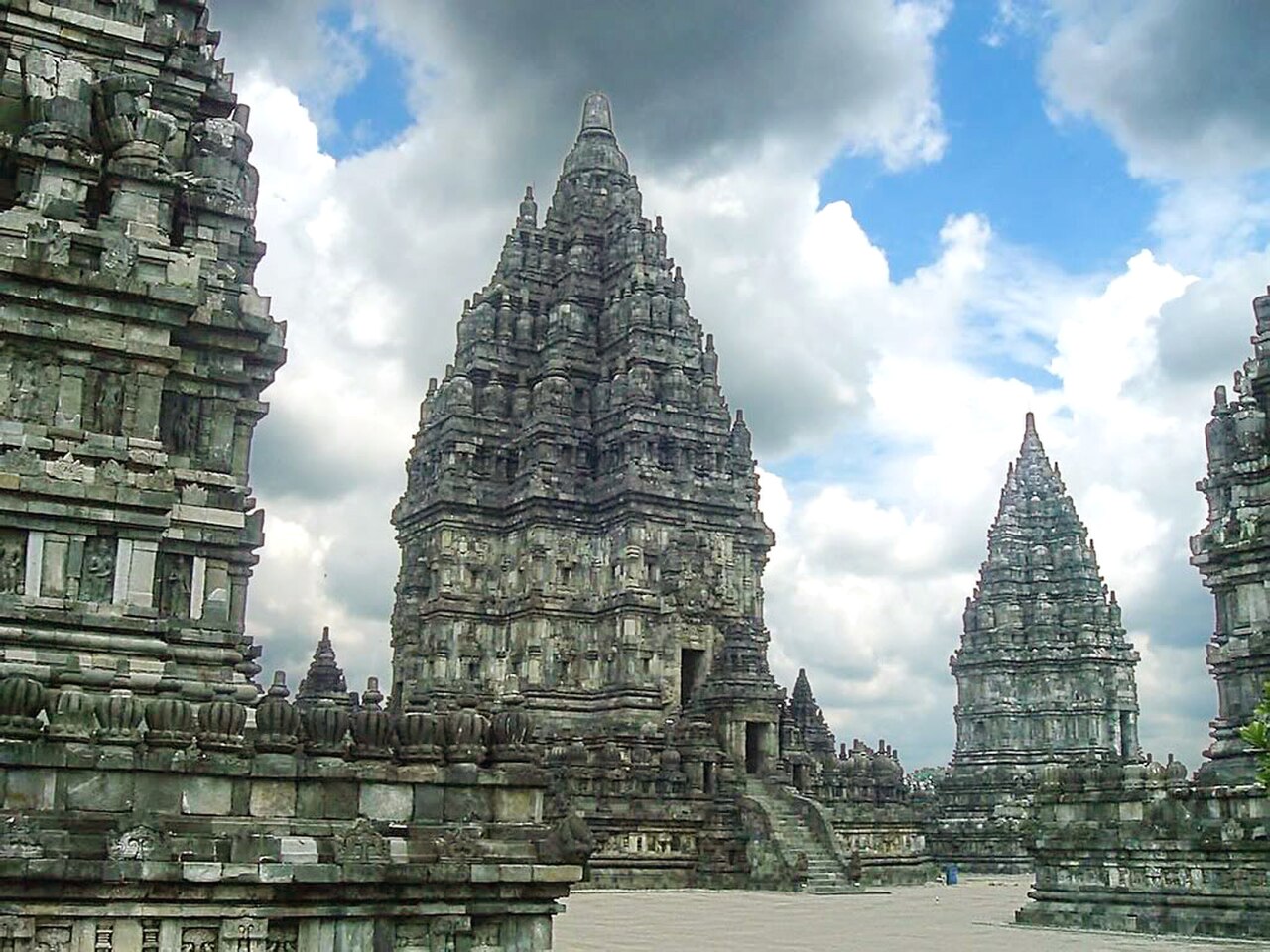
Prambanan Shiva Temple


Geographical Context and Architectural Typology
Prambanan is strategically situated in the Special Region of Yogyakarta, on the island of Java, Indonesia, approximately 17 kilometers northeast of the provincial capital. Its location on the boundary between Central Java and Yogyakarta provinces places it within a historically rich and culturally significant landscape. The site benefits from a tropical monsoon climate, characterized by warm temperatures and distinct wet and dry seasons, which influences the surrounding vegetation and the preservation of the ancient stone structures.
Architecturally, Prambanan is a quintessential example of Hindu temple design, distinguished by its tall, pointed towers (shikharas) and intricate stone carvings. This style is typical of many Hindu temples built during the classical period in India and Southeast Asia. The complex's layout, with a central, towering structure surrounded by smaller temples, reflects a cosmic diagram, a common feature in religious architecture aimed at symbolizing the universe.
Historical Genesis and Evolution of the Complex
The construction of Prambanan dates back to the 9th century CE, during the Medang Kingdom, a period of significant Hindu influence in Java. It was commissioned as a grand religious monument dedicated to the Trimūrti, the supreme trinity of Hinduism. The original complex was vast, reportedly comprising 240 individual temple structures, a testament to the immense resources and sophisticated organizational capabilities of the era.
This scale highlights Prambanan's role not just as a place of worship but as a symbol of royal power and religious devotion. Over centuries, the site experienced periods of decline and damage due to earthquakes and volcanic activity, common geological events in the region. Despite this, its architectural grandeur and artistic merit were recognized, leading to its eventual designation as a UNESCO World Heritage Site.
This status underscores its importance as a masterpiece of ancient Javanese art and architecture and a crucial link to Indonesia's pre-Islamic past.
Cultural Narratives and Artistic Expression
Prambanan is celebrated for its exceptionally detailed bas-reliefs, which adorn the walls of the main temples, particularly the central Shiva temple. These carvings vividly narrate episodes from the Hindu epic, the Ramayana. The sequential panels depict the story of Prince Rama, his wife Sita, the monkey god Hanuman, and the demon king Ravana, offering a visual chronicle of moral and spiritual themes.
The artistry displayed is remarkable, showcasing a high level of craftsmanship and a deep understanding of narrative composition. The central temple, dedicated to Shiva, stands at an impressive 47 meters (154 feet) tall, making it one of the tallest ancient structures in Southeast Asia. Its soaring spire and the surrounding smaller temples create a majestic silhouette against the Javanese sky, embodying the spiritual aspirations of its creators.
The complex serves as an invaluable source for understanding the religious beliefs, social structures, and artistic traditions of ancient Java.
Socio-Economic and Educational Significance
As a major historical and cultural landmark, Prambanan plays a vital role in Indonesia's tourism economy. It attracts a significant number of domestic and international visitors, contributing to local employment and revenue through hospitality, guiding services, and handicraft sales. The site's preservation is a collaborative effort involving governmental bodies, archaeological institutions, and international organizations, highlighting its global importance.
Educationally, Prambanan serves as a living museum and an outdoor classroom. It provides unparalleled opportunities for students and researchers to study ancient history, architecture, religion, and art. Educational programs and interpretive centers at the site help visitors understand its context and significance.
The ongoing archaeological research and restoration efforts continue to reveal more about its past, ensuring that Prambanan remains a dynamic site for learning and cultural appreciation, connecting contemporary society with its rich historical heritage.
Go deeper
Frequently Asked Questions
What is Prambanan?+
Where is Prambanan located?+
How tall is the main temple?+
What stories are shown on the temple walls?+
Why is Prambanan a UNESCO World Heritage Site?+
Based on content from Wikipedia · Licensed under CC BY-SA 4.0