

Central Java
Images
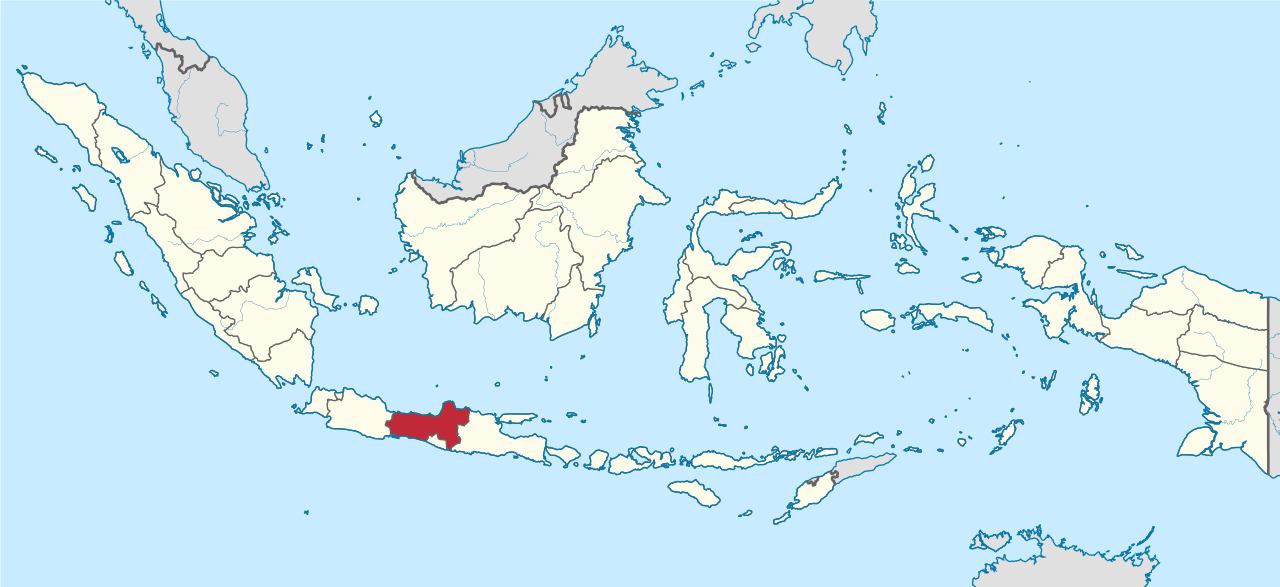
Central Java In Indonesia


Geographical Foundation
Central Java occupies a strategically vital position in the middle of the island of Java, forming a core component of Indonesia's most densely populated island. Its geographical boundaries are defined by West Java to the west, the vast Indian Ocean to the south, East Java to the east, and the Java Sea to the north. The province's administrative capital, Semarang, is a historic port city that has long served as a gateway for trade and cultural exchange.
With a substantial area of 33,750.37 km², Central Java is a significant landmass. Its topography is diverse, featuring volcanic mountains, fertile alluvial plains ideal for intensive agriculture, and a considerable coastline. The inclusion of offshore islands like Nusakambangan and the Karimun Jawa archipelago adds to its territorial complexity and ecological richness, offering distinct environments and economic opportunities.
Historical Tapestry
The historical significance of Central Java is profound, stretching back to prehistoric eras. The discovery of Homo erectus fossils, famously known as 'Java Man,' along the Bengawan Solo River, dating back an astonishing 1.7 million years, attests to its deep human habitation. This land was once the seat of powerful Hindu-Buddhist kingdoms, such as the Mataram Kingdom, which left behind monumental architectural legacies like the Borobudur and Prambanan temples, though these are technically in the Special Region of Yogyakarta, which is culturally intertwined.
Later, Islamic sultanates flourished, further shaping the region's identity. During the colonial era, it was under Dutch rule, and critically, Central Java became a crucible for the Indonesian independence movement. Its central role in these historical epochs has indelibly marked its social and political landscape, making it a living museum of Indonesia's past.
Cultural Crucible
Central Java is widely recognized as the cultural heartland of the Javanese people, who constitute the majority of its population. The Javanese language and its intricate traditions, including Wayang kulit (shadow puppetry) and Gamelan music, are deeply ingrained here. However, the province is not monolithic.
It hosts a mosaic of ethnic groups, including Sundanese communities along the western border, and significant populations of Chinese Indonesians, Arab Indonesians, and Indian Indonesians who have integrated into the social fabric over generations. This rich diversity contributes to a vibrant cultural scene, influencing cuisine, arts, and social customs. The administrative capital, Semarang, itself is a testament to this cultural fusion, having been a major trading port for centuries.
Economic Dynamics
The economy of Central Java is robust and multifaceted, driven by a combination of traditional and modern sectors. Agriculture remains a cornerstone, with vast tracts of fertile land supporting the cultivation of staple crops like rice and corn, as well as cash crops such as sugar cane and tobacco. Beyond farming, the province has developed a significant industrial base, encompassing textiles, manufacturing, and food processing.
Semarang's role as a major port city facilitates extensive domestic and international trade, making it a vital economic hub for Indonesia. The growing tourism sector, capitalizing on historical sites and natural beauty, also contributes to the provincial economy, creating employment and driving development.
Governance and Administration
As a province of Indonesia, Central Java operates under a decentralized governance system. The provincial government, headquartered in Semarang, is headed by an elected Governor who oversees administrative functions, public services, and regional development initiatives. The province is further divided into regencies (kabupaten) and cities (kota), each with its own local government apparatus.
This structure allows for localized decision-making while adhering to national policies. The administrative capital's historical significance as a trading center and its current role as a hub for governance underscore its importance in managing the province's complex social, economic, and cultural dynamics. The government's role is crucial in balancing development with the preservation of cultural heritage.
Education and Human Capital
Central Java places a significant emphasis on education as a driver of progress and development. The province boasts a comprehensive educational infrastructure, ranging from early childhood education centers to numerous primary and secondary schools. Higher education is also well-represented, with a variety of public and private universities and vocational institutions located across the province, including prominent institutions in the capital city of Semarang.
These institutions offer a wide array of academic programs, contributing to the development of skilled human capital essential for the region's economic growth and societal advancement. The government actively supports educational initiatives, aiming to improve access, quality, and relevance of education to meet the evolving needs of the 21st century workforce and society.
Go deeper
Based on content from Wikipedia · Licensed under CC BY-SA 4.0