

Shiva: The Awesome God of Many Things!
Images
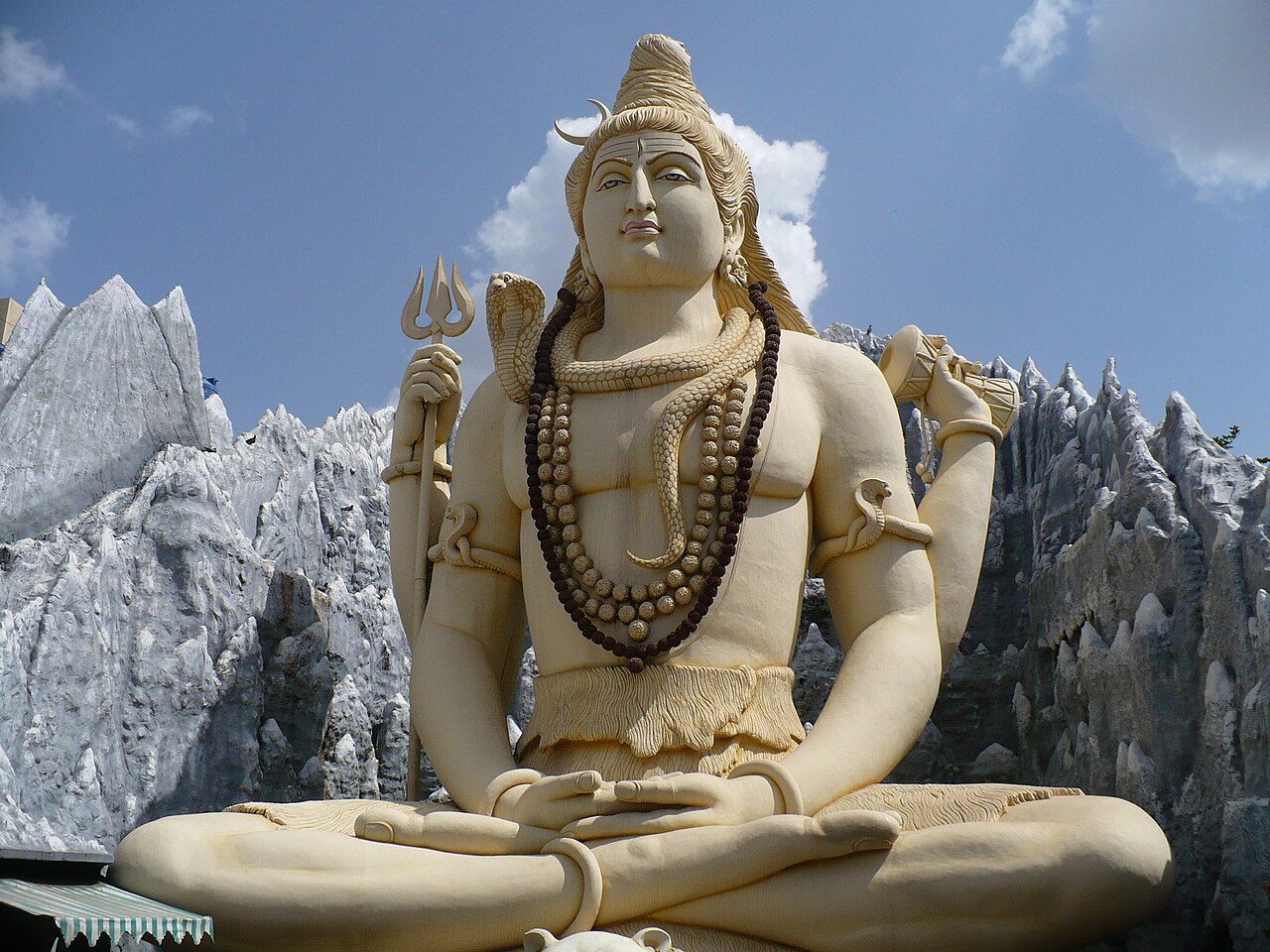
Shiva
The Multifaceted Nature of Shiva
Shiva stands as one of the most complex and revered deities within the Hindu pantheon, embodying a spectrum of seemingly contradictory attributes. He is simultaneously the ascetic yogi, detached from worldly pleasures, and the householder, married to Parvati and father to Ganesha and Kartikeya. His most prominent role is that of the Destroyer within the Trimurti, yet this destruction is not nihilistic but rather a necessary precursor to creation and renewal.
This transformative power is central to his worship, as he dissolves the universe to allow for its recreation, symbolizing the eternal cycle of existence. His iconography further reflects this duality: the crescent moon in his hair signifies control over time, the serpent around his neck represents mastery over ego and fear, and the ash smeared on his body points to his ascetic nature and transcendence of material existence. This intricate symbolism makes Shiva a profound figure for contemplation on the nature of reality.
Evolution of Shiva Worship Through Millennia
The origins of Shiva worship are deeply ancient, with scholarly debate placing its roots in pre-Vedic times. Archaeological evidence, such as seals from the Indus Valley Civilization depicting a proto-Shiva figure, suggests a lineage predating the formalized Vedic traditions. Over centuries, his worship evolved, absorbing local deities and traditions.
The Vedic god Rudra, a fierce deity associated with storms and the hunt, is often considered an early precursor to Shiva. As Hinduism developed, Shiva's mythology expanded significantly, detailed in vast bodies of literature including the Puranas (like the Shiva Purana and Linga Purana), the Upanishads, and the Agamas. These texts describe his cosmic exploits, his ascetic practices, his divine marriage, and his role as the supreme being for Shaivites, a major sect of Hinduism.
The construction of numerous temples dedicated to Shiva across India, from the Himalayas to the southern tip, attests to his widespread and enduring appeal throughout history.
The Cosmic Dance
The depiction of Shiva as Nataraja, the Lord of the Dance, is one of the most iconic and philosophically rich representations of the deity. His Tandava dance is not merely a performance but a cosmic act that orchestrates the cycles of creation, preservation, destruction, illusion, and liberation. The flames surrounding him in the Nataraja iconography symbolize the destruction of ignorance and the cosmic fire that dissolves the universe.
His right foot rests on Apasmara, a dwarf-like demon representing ignorance and ego, signifying Shiva's triumph over these obstacles. The raised left foot symbolizes liberation and release. This dynamic imagery encapsulates the Hindu worldview of a universe in constant flux, governed by divine rhythms.
The Nataraja form serves as a powerful reminder of the interconnectedness of all existence and the underlying order within apparent chaos.
Shiva's Enduring Influence on Spirituality and Philosophy
Shiva's influence extends far beyond religious devotion, deeply impacting philosophical thought and spiritual practices. He is revered as the Adi Yogi, the first yogi, and the originator of yoga and meditation. His asceticism and profound meditation are seen as pathways to self-realization and liberation (moksha).
For his followers, Shiva represents the ultimate reality, the source of all, and the goal of spiritual pursuit. The mantra 'Om Namah Shivaya' is a powerful invocation used for meditation and devotion, believed to connect the practitioner with Shiva's divine energy. Furthermore, Shiva's paradoxical nature-destroyer and creator, ascetic and householder-invites contemplation on the dualities inherent in life and the universe.
His worship continues to inspire millions to seek inner peace, overcome worldly attachments, and understand the profound cycles of existence.
Shiva's Role in Shaivism and Comparative Theology
Within Hinduism, Shaivism is one of the major traditions that considers Shiva the supreme being, responsible for creation, preservation, destruction, and liberation. Shaivite theology often emphasizes Shiva's immanence (being present within creation) and transcendence (existing beyond it). Different schools within Shaivism, such as Kashmir Shaivism, developed sophisticated philosophical systems that view the entire cosmos as a manifestation of Shiva's consciousness.
In comparative theology, Shiva's attributes resonate with concepts found in other religious traditions. His role as a destroyer and transformer can be compared to figures in other mythologies who bring about endings to usher in new beginnings. His asceticism and meditative practices align with contemplative traditions worldwide.
Studying Shiva offers insights into the diverse ways humanity has conceptualized the divine and the fundamental questions of existence, order, and transformation across cultures.
Go deeper
Frequently Asked Questions
Who is Shiva?+
Why is Shiva called the Destroyer?+
What does the Nataraja dance show?+
What symbols are on Shiva's body?+
Who are Shiva's family members?+
Based on content from Wikipedia · Licensed under CC BY-SA 4.0