

Pope Francis: The Pope Who Loved Everyone!
Images
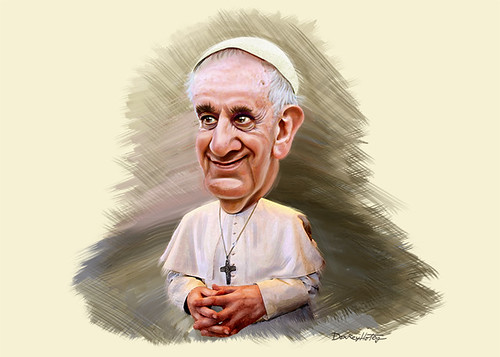
Pope Francis - Caricature

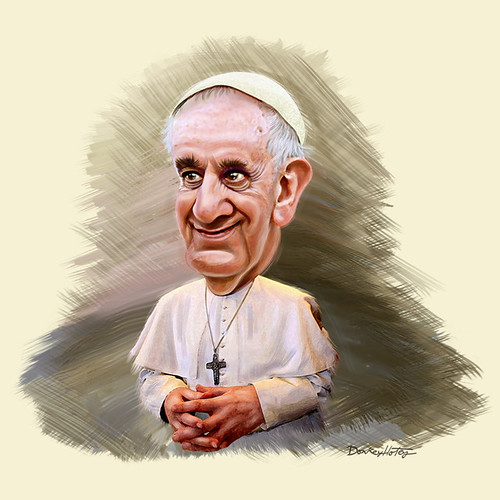


The Bergoglio Legacy
Jorge Mario Bergoglio's ascent to the papacy in 2013 was a watershed moment in Catholic history. Born in Buenos Aires, Argentina, on December 17, 1936, his early life was marked by a profound spiritual awakening following a severe illness, which led him to embrace the Jesuit path in 1958. His subsequent career within the Society of Jesus saw him rise to the position of Jesuit provincial superior in Argentina from 1973 to 1979, demonstrating early leadership acumen.
He was appointed Archbishop of Buenos Aires in 1998 and elevated to cardinal in 2001 by Pope John Paul II. His election as Pope Francis was historic: he was the first Jesuit pope, the first from the Americas, and the first non-European pope since Gregory III in the 8th century. This marked a significant shift in the global representation and perspective within the Church's highest office, signaling a new era of engagement with diverse cultures and challenges.
Radical Humility and the Embrace of the 'Peripheries'
Pope Francis's pontificate is characterized by a profound emphasis on humility and a deliberate turning towards the 'peripheries' of society. His decision to reside in the Domus Sanctae Marthae guesthouse, rather than the Apostolic Palace, and his preference for simpler vestments and a less ostentatious pectoral cross, symbolized a rejection of papal pomp and a commitment to living alongside the faithful. This ethos extended to his theological approach, which prioritized God's mercy and inclusivity.
He actively sought to make the Church more welcoming, notably by appointing women and laypeople to leadership roles within the Roman Curia and by advocating for a more compassionate approach to individuals with same-sex attraction, stating that while blessings of same-sex unions were not permitted, individuals could be blessed in non-liturgical contexts. The convening of the Synod on Synodality, a process of listening and discernment, was hailed as a culmination of his papacy, aiming to foster a more participatory and responsive Church.
A Prophetic Voice on Global Crises
Pope Francis emerged as a powerful and prophetic voice on critical global issues, challenging prevailing economic and political paradigms. He was a staunch critic of 'trickle-down' economics, consumerism, and unchecked development, advocating instead for an economy that prioritizes human dignity and environmental sustainability. His encyclical 'Laudato si'' placed climate change at the forefront of his agenda, urging decisive action to protect the planet, which he viewed as a shared home.
Furthermore, he took a definitive stance against capital punishment, declaring it inadmissible in all circumstances and campaigning for its global abolition. He also confronted the rise of right-wing populism and anti-immigration politics, framing the protection of migrants as a fundamental 'duty of civilization' and calling for the decriminalization of homosexuality, thereby advocating for the rights and dignity of marginalized groups worldwide.
Diplomatic Architect of Peace and Reconciliation
On the international stage, Pope Francis actively pursued peace and reconciliation through astute diplomacy. He played a pivotal role in the historic restoration of diplomatic relations between Cuba and the United States, a diplomatic feat that had eluded previous administrations for decades. His engagement with the People's Republic of China led to a significant agreement regarding the appointment of Chinese bishops, navigating complex geopolitical and ecclesiastical challenges.
He consistently advocated for peace between Israelis and Palestinians, signing the Vatican's first treaty with the State of Palestine and, from 2023 onwards, condemning military operations in Gaza and calling for investigations into alleged war crimes. In a profound act of historical reckoning, he issued a formal apology in 2022 for the Catholic Church's complicity in the cultural genocide of Canadian Indigenous peoples through the residential school system, a significant step towards truth and reconciliation.
The Enduring Impact of a Transformative Pontificate
Pope Francis's papacy, which concluded with his passing on April 21, 2025, left an indelible mark on the Catholic Church and the global community. His legacy is defined by his radical humility, his unwavering commitment to the poor and marginalized, and his courageous engagement with complex social and environmental issues. He challenged the Church to be more inclusive, merciful, and responsive to the signs of the times.
His diplomatic efforts fostered dialogue and peace between nations, while his advocacy for climate action and human rights resonated far beyond religious boundaries. The election of his successor, Leo XIV, who also hailed from the Americas, underscored the enduring influence of Francis's groundbreaking pontificate and the continuing evolution of the Church's global presence and mission.
Go deeper
Based on content from Wikipedia · Licensed under CC BY-SA 4.0