

Ponte Milvio
Images

Ponte Milvio




Geographical and Strategic Linchpin of Rome
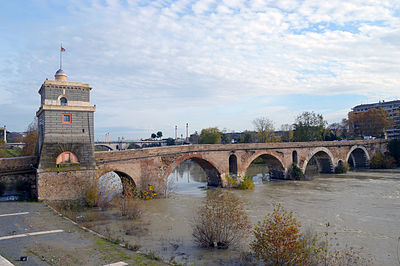
Ponte Milvio, historically known as Pons Milvius or Pons Mulvius, is a venerable bridge spanning the Tiber River in the northern sector of Rome, Italy. Its geographical placement is not incidental; it has historically served as a critical nexus, facilitating movement and control over the vital Tiber artery. Situated on the Via Flaminia, one of the most important Roman roads, the bridge was indispensable for military campaigns, trade routes, and communication linking Rome with its northern territories.
The Tiber River, a defining feature of Rome's landscape, has always dictated much of the city's development, and Ponte Milvio’s position ensured its enduring strategic significance. The Mediterranean climate, characterized by hot, dry summers and mild, wet winters, has influenced the preservation and weathering of its ancient stonework over millennia, contributing to its aged, yet robust, character. Its location has made it a constant point of interaction between the city and the wider world.
The Crucible of Imperial Succession
The historical narrative of Ponte Milvio is indelibly marked by the momentous Battle of the Milvian Bridge in 312 AD. This conflict was not merely a territorial dispute but a defining struggle for the imperial throne of the Roman Empire. Emperor Constantine I, facing his rival Maxentius, achieved a decisive victory that irrevocably altered the trajectory of Roman and Western history.
The traditional account, particularly from Eusebius of Caesarea and Lactantius, describes Constantine's vision of a Christian symbol (the Chi-Rho) and the accompanying divine message, 'In Hoc Signo Vinces' (In this sign, you will conquer). This event is widely credited with Constantine's conversion to Christianity and his subsequent Edict of Milan in 313 AD, which granted religious tolerance throughout the empire. The battle's outcome thus paved the way for Christianity's ascendancy, transforming it from a persecuted sect into the dominant religion of the Roman Empire and, subsequently, much of Europe.
The bridge itself became a symbol of this profound shift in power and ideology.
Evolution of a Monument
While the exact date of its original construction is debated, Ponte Milvio existed in some form by the 3rd century BC, undergoing numerous reconstructions and modifications throughout its long history. The Romans were renowned engineers, and the initial structure likely showcased their mastery of arch construction and durable materials. Over centuries, successive emperors and rulers repaired, widened, and reinforced the bridge to accommodate evolving needs and withstand the test of time and conflict.
The medieval and Renaissance periods saw further alterations, reflecting changing architectural styles and defensive requirements. Today, the bridge is a composite of various historical periods, with visible remnants of its Roman foundations alongside later additions. It continues to function as a vital urban artery, carrying vehicular and pedestrian traffic, a testament to its enduring utility and the continuous adaptation of ancient infrastructure to modern demands.
Its presence is a constant reminder of Rome's layered history.
Socio-Economic Significance and Cultural Resonance
Beyond its military and religious implications, Ponte Milvio has consistently been a cornerstone of Rome's socio-economic fabric. As a key point on the Via Flaminia, it facilitated the flow of goods, agricultural produce, and raw materials into the city, directly impacting Rome's economy. It served as a conduit for cultural exchange, allowing ideas and people to travel between Rome and its northern provinces.
In more recent centuries, the area around Ponte Milvio has developed into a vibrant urban district, retaining its historical character while embracing modern life. The bridge itself has become a popular meeting point and a symbol of Roman resilience and continuity. Its enduring presence in the cityscape, coupled with its profound historical narrative, imbues it with significant cultural resonance, attracting scholars, tourists, and locals who seek to connect with the deep historical strata of the Eternal City.
It represents a tangible link to the past that continues to shape the present.
See also
Frequently Asked Questions
What is Ponte Milvio?+
Why is Ponte Milvio important in history?+
How old is Ponte Milvio?+
Where is Ponte Milvio located?+
What can people do on Ponte Milvio today?+
Based on content from Wikipedia · Licensed under CC BY-SA 4.0