

Peloponnesian League
Images
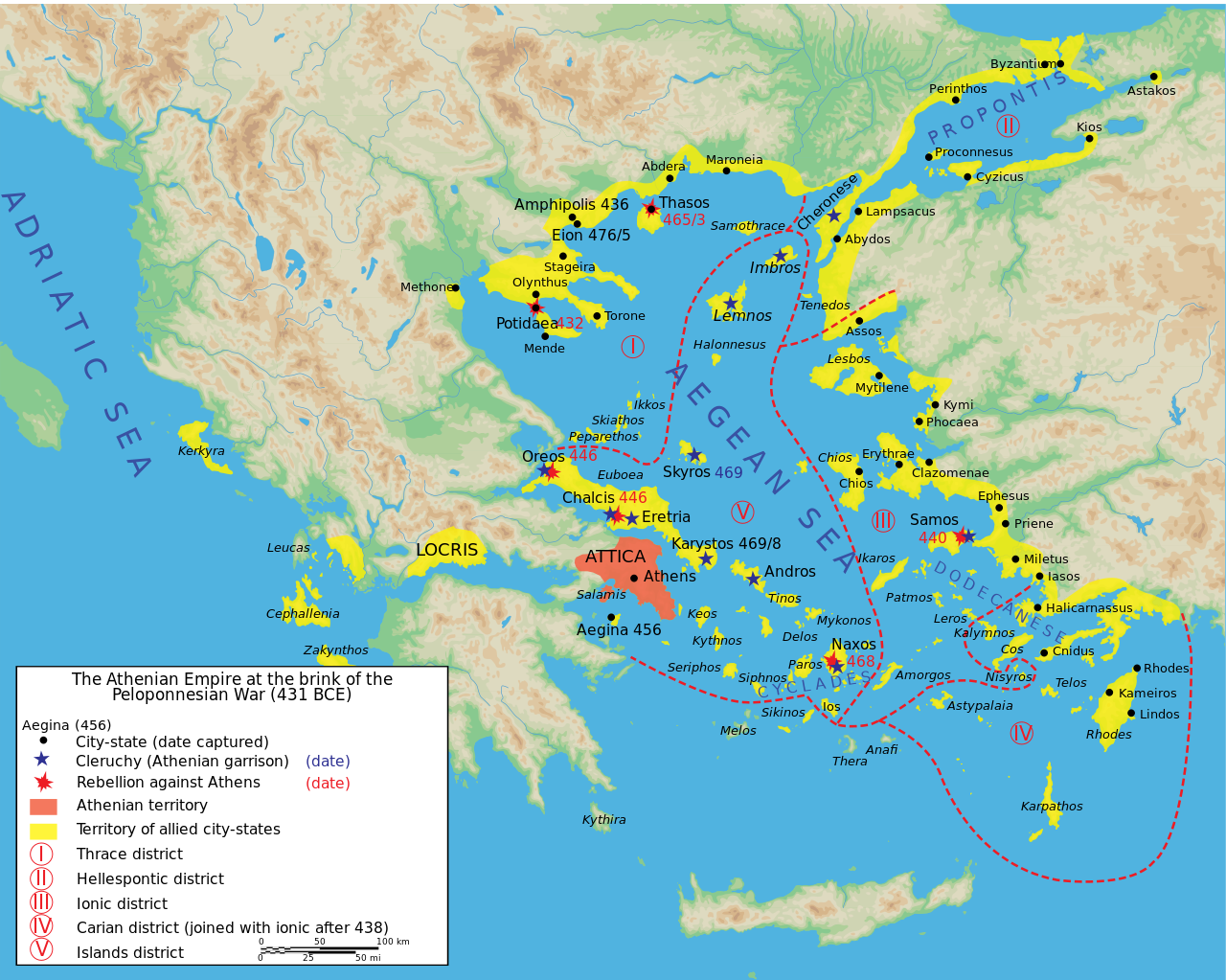
Map athenian empire 431 BC-en


Genesis and Consolidation of Spartan Power
The Peloponnesian League, emerging around the mid-6th century BC (c. 550 BC), represented a significant evolution in ancient Greek political organization. It was not a monolithic state but a hegemonic alliance, centered on the Peloponnese peninsula and dominated by the militaristic city-state of Sparta. Unlike the Delian League, which was more of an empire built on tribute, the Peloponnesian League was characterized by a system of mutual defense and loyalty, albeit one heavily dictated by Spartan interests.
Cities joined this league primarily seeking security and stability, often in response to the growing power of other entities, particularly Athens. Sparta's leadership was solidified through its formidable military prowess and its reputation for upholding traditional Peloponnesian values. The league's structure allowed Sparta to leverage the collective military might of its allies, creating a powerful counterweight to Athenian influence and establishing a period of Spartan dominance in Greek affairs.
The Crucible of War
The Peloponnesian League's historical significance is inextricably linked to the protracted and devastating Peloponnesian War (431–404 BC), a conflict that pitted it against the Athenian-led Delian League. This war was not merely a clash of armies but a profound ideological and geopolitical struggle for supremacy in the Hellenic world. Thucydides, the ancient historian, famously identified the 'growth of the power of Athens, and the alarm which this inspired in Lacedaemon' (Sparta) as the truest cause of the war.
The Peloponnesian League, with its strong land army, faced off against Athens' powerful navy and its network of subject allies. The war saw brutal sieges, devastating plagues (most notably in Athens), and complex diplomatic maneuvers. Its conclusion, with the defeat of Athens, marked the end of its golden age and ushered in a period of Spartan hegemony, though this too proved to be short-lived.
Mechanisms of the Alliance
The operational framework of the Peloponnesian League was designed to maintain Spartan leadership while ensuring allied participation. Membership was typically initiated through oaths and treaties, binding city-states to Sparta and to each other. The league operated through a system of congresses or assemblies where member states could voice their opinions, but Sparta held the ultimate decision-making authority, particularly concerning matters of war and foreign policy. Allies were obligated to provide military contingents when called upon by Sparta, contributing to the league's formidable land forces.
In return, Sparta offered protection and intervention in disputes, though this often meant imposing its will. This hierarchical structure, while effective in mobilizing resources and projecting power, also sowed seeds of resentment among some allies, contributing to later instability and the eventual dissolution of Spartan dominance.
Enduring Legacies
The Peloponnesian League and the war it fought left an indelible mark on the trajectory of ancient Greece and Western thought. Militarily, the conflict spurred innovations in siege warfare and naval strategy, and Thucydides' detailed account remains a foundational text in the study of military history and political realism. Politically, the war's outcome fundamentally reshaped the Greek world.
The decline of Athenian power created a power vacuum, leading to a series of shifting hegemonies involving Sparta, Thebes, and eventually Macedon. The league's existence demonstrated the potential and the pitfalls of large-scale military alliances, highlighting the challenges of balancing collective security with the autonomy of member states. Its legacy continues to inform discussions on international relations, power dynamics, and the cyclical nature of conflict and dominance in human history.
Beyond the Battlefield
While often viewed through the lens of military conflict, the Peloponnesian League and the ensuing war had significant cultural and societal ramifications. The prolonged conflict disrupted trade routes, devastated agricultural lands, and led to widespread population displacement and suffering. The intellectual and artistic flourishing of Athens, often referred to as its Golden Age, was severely curtailed by the war's pressures and the eventual Athenian defeat.
Conversely, the period of Spartan hegemony, though brief, saw a different set of cultural values emphasized, prioritizing austerity and military discipline. The intense ideological rivalry between the democratic, naval power of Athens and the oligarchic, land-based power of Sparta also fueled philosophical and political discourse, influencing thinkers who grappled with questions of governance, justice, and the nature of power. The very concept of 'Greekness' was tested and redefined through this monumental struggle.
Go deeper
Frequently Asked Questions
What was the Peloponnesian League?+
Who led the Peloponnesian League?+
Why did cities join the Peloponnesian League?+
How did the Peloponnesian League fight against Athens?+
What happened after the Peloponnesian War?+
Based on content from Wikipedia · Licensed under CC BY-SA 4.0