

Osaka Prefecture
Images

Yao in Osaka Prefecture Ja


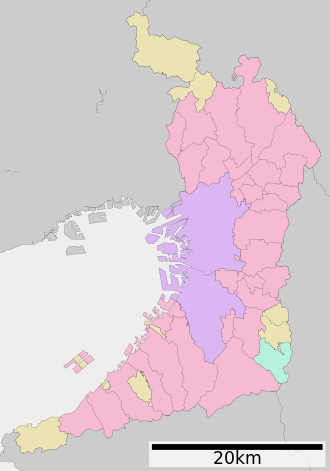
Geographical Foundation and Strategic Position
Osaka Prefecture occupies a strategically significant position on the western coast of the Kii Peninsula, forming the gateway to Osaka Bay. This geographical placement has historically facilitated its role as a crucial center for trade and maritime activity. The prefecture's area of 1,905 square kilometers makes it the second-smallest prefecture in Japan, a fact that dramatically influences its population density.
It shares borders with Hyogo Prefecture to the northwest, Kyoto Prefecture to the north, Nara Prefecture to the southeast, and Wakayama Prefecture to the south, integrating it deeply within the Kansai region's network. The landscape is predominantly urbanized, especially around the capital, Osaka City, but also encompasses coastal areas and proximity to mountainous terrain, offering a diverse physical environment that supports a vast population.
Historical Trajectory and Urban Evolution
Osaka's history is deeply intertwined with its development as a commercial hub. Originally a fishing village, it rose to prominence during the Edo period (1603-1868) as a vital center for rice trading and merchant activity, earning the nickname 'the nation's kitchen.' This commercial foundation laid the groundwork for its modern economic strength. The prefecture's urban evolution is marked by continuous growth and development, particularly in its capital, Osaka City, which is now Japan's third-largest city.
Significant historical events and periods of rapid industrialization have shaped its urban fabric, leading to the dense, dynamic environment seen today. The designation of Osaka as an 'urban prefecture' (fu) rather than the standard 'ken' highlights its unique status and administrative importance within Japan.
Demographic Dynamics and Cultural Identity
With a population of approximately 8.8 million people as of April 2022, Osaka Prefecture stands as the third-most-populous prefecture in Japan. Its small land area results in an exceptionally high population density, making it the second most densely populated prefecture nationwide, surpassed only by Tokyo. This concentration of people has fostered a distinct and vibrant cultural identity.
Osaka is renowned for its unique dialect, Kansai-ben, and its people are often characterized by their outgoing nature, humor, and strong sense of community. The prefecture is a melting pot of traditions, from its historical merchant culture to its modern entertainment and culinary scenes, famously including dishes like takoyaki and okonomiyaki, which are integral to its identity.
Economic Powerhouse and Keihanshin Metropolis
Osaka Prefecture is a cornerstone of Japan's economy, forming the central element of the Keihanshin metropolitan area. This vast urban region, encompassing Osaka, Kobe, and Kyoto, is the second-most populated metropolitan area in Japan and ranks among the most productive globally in terms of GDP. Osaka Prefecture itself is a major industrial and commercial center, historically driven by trade and manufacturing.
Today, its economy is diverse, encompassing advanced manufacturing, technology, finance, and a thriving service sector. Its strategic location and robust infrastructure continue to support its role as a key player in both domestic and international commerce, contributing significantly to Japan's overall economic output.
Governance, Education, and Future Outlook
As an urban prefecture, Osaka operates under a governmental structure similar to other prefectures, headed by a governor and a prefectural assembly, responsible for regional administration, public services, and development planning. Its educational landscape is robust, featuring numerous universities, vocational schools, and a comprehensive public school system designed to cater to its large student population. Institutions like Osaka University are globally recognized for their research and academic excellence.
The prefecture faces the ongoing challenge of managing its high population density while fostering sustainable economic growth and preserving its rich cultural heritage. Its future outlook remains strong, driven by its established economic prowess and its continuous adaptation to global trends.
Go deeper
Frequently Asked Questions
What is Osaka Prefecture and where is it located?+
Why is Osaka called "the nation's kitchen"?+
How many people live in Osaka Prefecture?+
What are some famous foods from Osaka?+
What is special about Osaka's dialect and people?+
Based on content from Wikipedia · Licensed under CC BY-SA 4.0