

Nome (Egypt)
Images

Nome u 8 11






The Nome as a Fundamental Administrative Unit
The nome (from Ancient Greek: νομός, nomós, 'district') represented the primary territorial and administrative division of ancient Egypt. These divisions were not merely geographical markers but served as the backbone of the Egyptian state's governance for millennia. Each nome possessed a degree of autonomy, often with its own administrative hierarchy, economic specialization, and religious cults centered around local deities.
The number of nomes fluctuated considerably throughout Egypt's long history, from the Early Dynastic Period through the Old Kingdom, Middle Kingdom, and New Kingdom, and into later periods. For instance, during the Old Kingdom, there were fewer nomes, often reflecting the consolidation of power. By the Middle Kingdom, the number stabilized around 42 (20 in Upper Egypt and 22 in Lower Egypt), a configuration that persisted for a significant duration.
This administrative structure was essential for managing resources, collecting taxes, organizing labor for monumental construction projects, and maintaining social order across a vast and diverse territory. The nome system provided a framework that allowed the centralized authority of the pharaoh to extend its influence effectively throughout the land.
The Nomarch
At the apex of each nome stood the nomarch, whose ancient Egyptian title was 'ḥrj tp ꜥꜣ', meaning 'Great Chief' or 'Overseer of the Province'. The nomarch was a pivotal figure, acting as the pharaoh's representative and the chief administrator of their nome. Their responsibilities were extensive, encompassing judicial functions, economic management, tax collection, and the organization of corvée labor for public works.
In certain periods, particularly during times of weakened central authority like the First Intermediate Period, nomarchs wielded considerable power, often becoming hereditary rulers within their domains, effectively acting as semi-independent lords. This led to significant regional variations and sometimes inter-nome rivalries. However, with the reassertion of strong central government, especially during the Middle Kingdom, the power of the nomarchs was often curtailed, with the pharaoh appointing officials directly or ensuring their loyalty.
The evolution of the nomarch's power reflects the ongoing tension between central authority and regional autonomy throughout ancient Egyptian history.
Socio-Economic and Religious Dimensions of the Nome
Beyond their administrative function, nomes were vibrant centers of socio-economic and religious life. Each nome often developed distinct economic specializations based on its geography and resources, whether it was agricultural production along the fertile Nile floodplains, quarrying in desert regions, or trade routes. This economic diversity contributed to the overall wealth and complexity of the Egyptian economy.
Religiously, each nome typically had a principal deity or a group of deities who were considered its patrons. This fostered strong local religious traditions and cult practices, often distinct from those in other nomes. The capital city of a nome, usually the residence of the nomarch, was often a significant religious and administrative center.
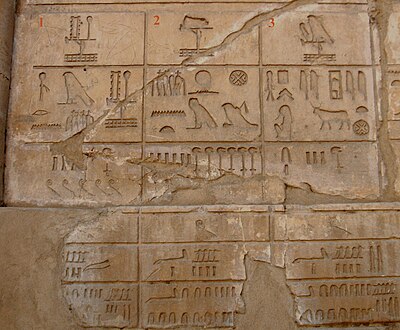
The nome's unique identity was frequently symbolized by a totem, such as an animal, plant, or object, which was incorporated into its standards and iconography. This religious and cultural distinctiveness reinforced the sense of local identity within the broader framework of Egyptian civilization.
Historical Fluctuations and the Legacy of the Nome System
The administrative structure of the nomes was not static; it underwent significant transformations throughout Egypt's history. During the Old Kingdom, the nomes were established and consolidated, with nomarchs gaining considerable influence. The subsequent First Intermediate Period saw a decentralization of power, with nomarchs ruling more independently.
The Middle Kingdom marked a period of reunification and reassertion of central control, often involving reforms to the nome system and the curtailment of nomarchal power. The New Kingdom generally maintained a strong central administration, though the underlying nome structure persisted. Even as Egypt evolved and faced foreign rule, the concept of territorial division remained, influencing later administrative systems.
The legacy of the nome system lies in its demonstration of a sophisticated and adaptable approach to governing a large, complex civilization. It provided a resilient framework that facilitated the development of one of the world's most enduring ancient cultures, showcasing the long-term impact of effective administrative organization.
See also
Frequently Asked Questions
What is a nome in ancient Egypt?+
How many nomes were there during the Middle Kingdom?+
Who was a nomarch and what did they do?+
Why were nomes important for building big monuments?+
Did each nome have its own special god or animal?+
Based on content from Wikipedia · Licensed under CC BY-SA 4.0