

Narmer: The King Who United Egypt!
Images
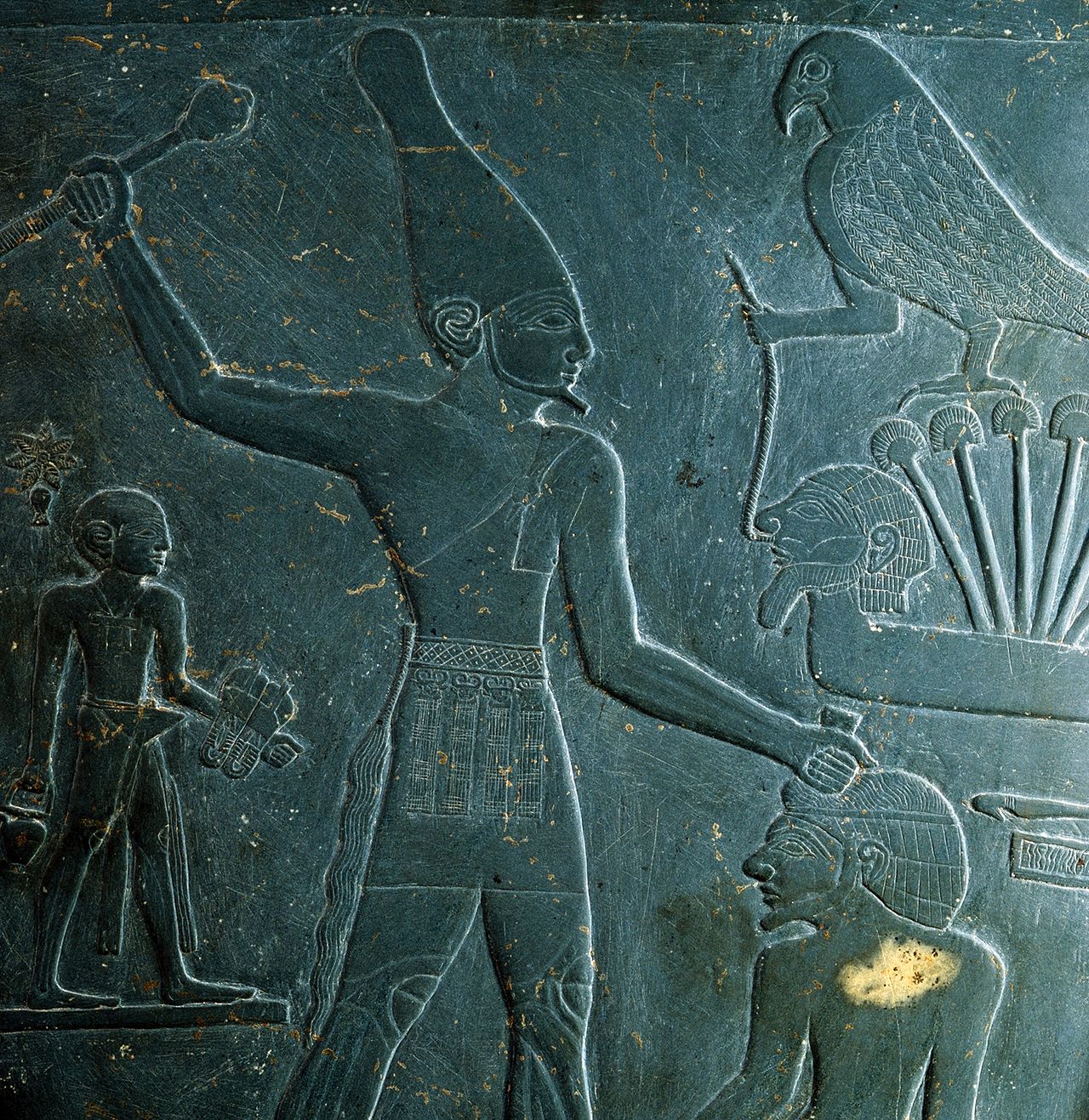
Narmer
Narmer's Unification of Egypt
Narmer stands as a pivotal figure at the cusp of Egyptian prehistory and dynastic history, reigning around 3100 BCE. His primary historical significance lies in the unification of the two distinct regions of Egypt: Upper Egypt (the Nile Valley) and Lower Egypt (the Nile Delta). This was not merely a territorial conquest but the establishment of a centralized state, a fundamental shift that enabled the development of complex administration, monumental architecture, and a cohesive national identity.
Prior to Narmer, these regions operated largely independently, with distinct cultural and political entities. Narmer's success in consolidating power laid the essential groundwork for the First Dynasty and the subsequent millennia of pharaonic rule, transforming Egypt into a formidable power in the ancient Near East. The very concept of a unified Egypt, ruled by a single divine king, is largely attributed to his actions.
Iconography of Power
The Narmer Palette, a masterfully crafted slate artifact discovered at Hierakonpolis, serves as the most compelling evidence for Narmer's achievements. This ceremonial object is replete with symbolic imagery that articulates the ideology of kingship and unification. It depicts Narmer wearing the white crown of Upper Egypt (Hedjet) and the red crown of Lower Egypt (Deshret), often sequentially or in a composite form, visually representing his dominion over both lands.
The palette also features scenes of Narmer triumphing over his enemies, a common motif in Egyptian royal art that reinforces the king's role as a protector and enforcer of cosmic order (Ma'at). The intertwined necks of the serpopards, mythical beasts, are widely interpreted as a metaphor for the merging of the two lands. This sophisticated iconography established visual conventions for royal power that would persist throughout Egyptian history.
The Narmer Palette
Beyond its artistic merit, the Narmer Palette functions as a crucial historical document, akin to a proto-Rosetta Stone for understanding the early dynastic period. Its detailed reliefs offer insights into the political landscape, military strategies, and religious beliefs of the era. The presence of early hieroglyphic inscriptions, including Narmer's name written in a serekh, provides vital linguistic data, marking a significant step in the development of Egyptian writing.
The palette's discovery at Hierakonpolis, a major Predynastic center, underscores the city's importance in this formative period. Its intricate narrative structure and symbolic language offer a window into the complex processes of state formation and the construction of royal ideology that characterized the transition from prehistory to the unified kingdom.
Narmer's Enduring Influence
Narmer's legacy is profound; he is widely regarded as the first pharaoh of a unified Egypt, the individual who initiated the First Dynasty and set the stage for one of the world's longest-lasting civilizations. His unification enabled the concentration of resources and labor necessary for ambitious state projects, such as the construction of early administrative centers and, eventually, the iconic pyramids of the Old Kingdom. The establishment of a strong, centralized monarchy under Narmer facilitated the development of a sophisticated bureaucracy, a complex religious system centered on the divine king, and a unified cultural identity that would define Egypt for over three millennia.
While archaeological and textual evidence continues to be debated, Narmer remains the most prominent candidate for the unifier, embodying the transition from fragmented chiefdoms to a powerful, cohesive nation-state.
Debates and Discoveries
While the Narmer Palette provides strong evidence, the precise details of Narmer's reign and the exact nature of the unification process remain subjects of scholarly debate. Some archaeologists propose that unification may have been a gradual process, with Narmer playing a crucial role in its final stages or consolidating existing gains. Others point to the Scorpion Macehead, another artifact from the same period, which also depicts a ruler potentially named Scorpion, suggesting a complex political landscape.
Ongoing archaeological work, particularly at sites like Abydos and Hierakonpolis, continues to unearth new artifacts and refine our understanding of this foundational period. These discoveries challenge and enrich our interpretations, highlighting Narmer not just as a singular conqueror, but as a key figure within a dynamic era of state formation.
Go deeper
Frequently Asked Questions
What did Narmer do to make Egypt one big country?+
Why is the Narmer Palette a special artifact?+
Where was the Narmer Palette discovered?+
When did Narmer live?+
How did Narmer's unification help Egypt build big things?+
Based on content from Wikipedia · Licensed under CC BY-SA 4.0