

Scorpions: Creepy Crawlies with Stingers!
Images

Scorpion




Ancient Lineage and Evolutionary Resilience
Scorpions represent an ancient lineage of arachnids, with fossil evidence indicating their presence for over 430 million years, making them among the earliest terrestrial arthropods. Their evolutionary journey has equipped them with a suite of remarkable adaptations that have allowed them to persist through major extinction events and colonize nearly every terrestrial biome. The development of a robust exoskeleton provided crucial protection against desiccation and physical damage, while the evolution of book lungs facilitated respiration in terrestrial environments.
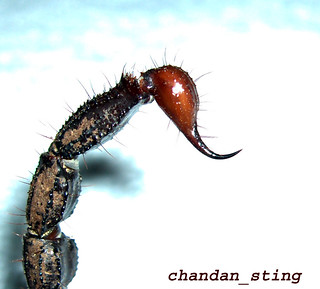
Their characteristic segmented tail with a venomous telson is a highly specialized predatory and defensive weapon, refined over eons. The diversification into over 2,500 described species, distributed across 22 families, highlights their remarkable evolutionary success and ability to exploit a wide array of ecological niches. Their ancient origins mean they have witnessed profound changes in Earth's geology and climate, adapting and surviving where many other groups have vanished, underscoring their status as true evolutionary survivors.
Global Distribution and Habitat Specialization
Scorpions exhibit a cosmopolitan distribution, found on all continents except Antarctica, thriving in an astonishing variety of habitats. Their presence spans from hyper-arid deserts and semi-arid grasslands to temperate forests, tropical rainforests, and even high-altitude mountain ranges. This broad distribution is a testament to their physiological plasticity and behavioral flexibility.
In arid environments, scorpions are masters of thermoregulation, often exhibiting crepuscular or nocturnal activity patterns to avoid extreme daytime temperatures. They seek refuge in burrows, under rocks, or within plant debris, which helps maintain a stable microclimate and conserve water. In more mesic habitats, they might inhabit leaf litter, decaying wood, or rock crevices.
This habitat specialization is often species-specific, with different scorpions evolving unique strategies for foraging, shelter, and predator avoidance tailored to their particular environment. Their ability to tolerate extreme temperatures and low humidity makes them key indicators of ecosystem health in many of these sensitive biomes.
Predatory Prowess and Venomous Arsenal
As apex predators within many invertebrate food webs, scorpions employ sophisticated hunting strategies. Their diet is primarily composed of arthropods, including insects and other arachnids, but larger species are capable of preying on small vertebrates like lizards, rodents, and birds. Their sensory apparatus, including pectines (comb-like sensory organs on the underside), allows them to detect vibrations in the substrate, alerting them to the presence of prey.
Once prey is detected, scorpions utilize their powerful pedipalps (pincers) to capture and restrain it. For larger or more resistant prey, the venom delivered via the metasomal stinger is crucial. Scorpion venom is a complex mixture of proteins, including neurotoxins, enzymes, and peptides, evolved to rapidly immobilize or kill prey.
The composition and potency of venom vary significantly among species; while the venom of most scorpions is only mildly irritating to humans, a few species possess venom that is medically significant and potentially lethal. This venomous arsenal is also a vital defense mechanism against predators such as birds, mammals, and other scorpions.
Reproductive Strategies, Development, and Biofluorescence
Scorpion reproduction is characterized by elaborate courtship rituals, often involving a 'promenade a deux' where the male guides the female via his pedipalps to deposit a spermatophore. This ensures accurate sperm transfer and minimizes the risk of cannibalism. Females are viviparous, giving birth to live young known as scorplings.
The number of scorplings can range from a few to over a hundred, depending on the species. Immediately after birth, the scorplings ascend to their mother's dorsal side, where they remain for a period of protection and development, typically until their first post-embryonic molt. This maternal care is crucial for their survival.
A striking biological phenomenon observed in scorpions is biofluorescence. Their cuticle contains fluorescent compounds that emit light, typically in the blue-green spectrum, when exposed to ultraviolet (UV) radiation. The precise ecological function of this fluorescence is still a subject of scientific inquiry, with hypotheses including roles in mate recognition, predator deterrence, light detection, or even as a mechanism to absorb harmful UV radiation.
This unique trait, coupled with their ancient lineage and ecological importance, makes scorpions a compelling subject for biological research.
Go deeper
Frequently Asked Questions
What are scorpions and why do they glow under blacklights?+
How have scorpions survived for so long?+
Where can scorpions be found around the world?+
What do scorpions eat and how do they catch their food?+
Why do scorpions prefer to be active at night?+
Based on content from Wikipedia · Licensed under CC BY-SA 4.0