

NATO's Awesome Alliance: Countries Working Together!
Images

Through the Eyes of a Paratrooper: 173rd Jumps in Ukraine for Rapid Trident 2011


![PRT Farah visits Voice of Women facility in Farah City [Image 3 of 22]](https://live.staticflickr.com/8248/8509494327_d68f83a244_n.jpg)


![US Consul General and PRT Farah meet with provincial governor [Image 4 of 7]](https://live.staticflickr.com/8386/8643416700_b8dea43896_n.jpg)
Genesis of an Alliance
The North Atlantic Treaty Organization (NATO) emerged from the ashes of World War II and the escalating tensions of the early Cold War. Established on April 4, 1949, with the signing of the North Atlantic Treaty, its primary objective was to provide collective security against the perceived threat of the Soviet Union. The initial 12 founding member states, primarily from Western Europe and North America, recognized the need for a unified defense strategy to deter aggression and maintain peace.
This foundational treaty, particularly Article 5, established a groundbreaking principle of collective defense, where an armed attack against one member would be considered an attack against all. This commitment was crucial in fostering a sense of security and stability in a region grappling with post-war recovery and ideological division. The alliance’s geographical scope, initially focused on the North Atlantic area, was meticulously defined to ensure clarity and prevent unintended escalations, though its interpretation and application have evolved significantly over time.
Article 5 and Its Implications
Article 5 of the North Atlantic Treaty is the cornerstone of NATO’s collective defense policy, a powerful commitment that underpins the entire alliance. It stipulates that an armed attack against one member state in Europe or North America shall be considered an attack against all members. This clause is not merely symbolic; it obligates other member states to assist the attacked party, including the use of armed force if necessary.
This mutual defense pact has been invoked only once in NATO's history, following the September 11, 2001, terrorist attacks on the United States. The invocation of Article 5 demonstrated the alliance's solidarity and its willingness to act in concert against common threats. While the treaty’s original scope was geographically specific, its spirit of mutual assistance has been adapted to address a wider range of security challenges, including terrorism and cyber warfare, reflecting NATO's continuous evolution to meet contemporary threats.
An Expanding Circle
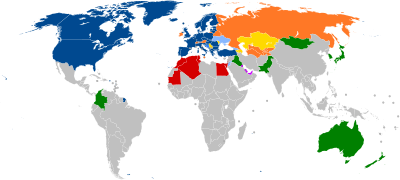
NATO's membership has grown substantially since its inception, reflecting shifting geopolitical landscapes and the evolving security needs of nations. From the original 12 founding members, the alliance has expanded to include 32 states, with 30 located in Europe and two in North America. This expansion has been a gradual process, with significant waves of enlargement occurring after the end of the Cold War.
Between 1999 and 2024, 16 new members joined, many of them former Eastern Bloc countries seeking security assurances and integration into Western structures. This growth has diversified NATO’s military capabilities, cultural perspectives, and strategic interests. Notably, three member states – France, the United Kingdom, and the United States – possess nuclear weapons, adding a significant dimension to the alliance's deterrence posture. Iceland, while a member, is unique in that it does not maintain a standing army, relying on its Coast Guard and civilian specialists for NATO operations, highlighting the varied contributions within the alliance.
Beyond Defense
While NATO is fundamentally a military alliance, its role extends beyond collective defense to encompass a broader spectrum of security cooperation and crisis management. The alliance has actively fostered partnerships with non-member countries through initiatives like the Partnership for Peace program, the Mediterranean Dialogue, and the Euro-Atlantic Partnership Council. These frameworks facilitate dialogue, joint training, and cooperation on issues ranging from disaster relief to counter-terrorism, promoting regional stability and interoperability.
NATO also plays a crucial role in out-of-area operations, deploying forces to address crises in regions beyond its immediate borders, such as in Afghanistan. Furthermore, NATO is increasingly focused on emerging threats, including cyber warfare, hybrid threats, and the security implications of climate change, demonstrating its adaptability and commitment to addressing the complex security challenges of the 21st century. The alliance also recognizes aspiring members, such as Bosnia and Herzegovina, Georgia, and Ukraine, through its Open Door policy, signaling its continued commitment to enlargement and democratic values.
See also
Frequently Asked Questions
What is NATO and why did it start?+
How does NATO protect its members?+
How many countries are in NATO and who are they?+
Why does Iceland not have a standing army?+
What kinds of weapons do some NATO countries have?+
Based on content from Wikipedia · Licensed under CC BY-SA 4.0