

Mecklenburg-Vorpommern
Images

Mecklenburg-Vorpommern relief location map

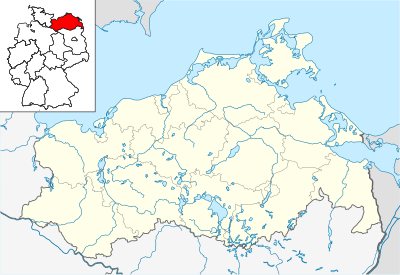


Geographical Identity
Mecklenburg-Vorpommern occupies a significant geographical position in northeastern Germany, covering an expansive 23,300 km², making it the sixth-largest German state by area. Its identity is intrinsically linked to its extensive Baltic Sea coastline, stretching for hundreds of kilometers and featuring numerous holiday resorts and unspoiled natural landscapes. This coastal strip is complemented by a rich inland topography, most notably the Mecklenburg Lake District, a vast network of over 2,000 lakes and waterways that forms one of Germany's most important freshwater ecosystems.
The state's commitment to conservation is evident in its three national parks and numerous nature reserves, safeguarding biodiversity and providing crucial habitats. Notable islands such as Rügen, famous for its dramatic chalk cliffs, and Usedom, with its long sandy beaches, are integral to the state's appeal and ecological significance. The maritime influence moderates the climate, resulting in milder temperatures and significant rainfall, shaping both the natural environment and the regional economy.
Historical Trajectory
The formation of Mecklenburg-Vorpommern is a direct consequence of post-World War II geopolitical realignments. Established in 1945 by the Soviet military administration, it was a merger of the historical Duchy of Mecklenburg and the Prussian Province of Pomerania (Vorpommern). This new entity became a constituent state of the German Democratic Republic (GDR) in 1949.
However, the GDR's administrative reforms in 1952 led to the dissolution of the state and the division of its territory into three districts: Rostock, Schwerin, and Neubrandenburg. The state's modern iteration was re-established in 1990 following German reunification, marking a significant return to its historical administrative structure and integrating it into the Federal Republic of Germany. This history of fusion, dissolution, and re-establishment has imbued the region with a unique historical consciousness and a complex cultural identity, reflecting its experiences within different political systems.
Socio-Cultural Fabric
Mecklenburg-Vorpommern's cultural landscape is characterized by a blend of traditional influences and modern developments. While standard German is the official language, the historical presence of Low German (Plattdeutsch) persists, contributing to regional linguistic diversity. The state's rich heritage is visible in its well-preserved Hanseatic cities like Stralsund and Wismar, both UNESCO World Heritage sites, showcasing medieval architecture and maritime history.
The region is a popular tourist destination, drawing visitors to its natural beauty and cultural sites. A standout feature is its profound educational legacy. The state is home to two of Europe's oldest universities: the University of Rostock, founded in 1419, and the University of Greifswald, established in 1456.
These venerable institutions have historically been centers of intellectual and scientific advancement, continuing to play a vital role in research and higher education today, attracting students and scholars from across the globe.
Economic Drivers
The economy of Mecklenburg-Vorpommern is significantly influenced by its geography and historical development. Tourism is a cornerstone industry, capitalizing on the state's extensive Baltic coastline, numerous lakes, and islands, which attract a substantial number of domestic and international visitors. The maritime sector is also crucial, with major ports like Rostock serving as vital hubs for freight and passenger transport, as well as shipbuilding and offshore wind energy industries.
Agriculture remains an important employer, utilizing the state's fertile lands. While historically facing economic challenges due to its location and post-reunification transition, Mecklenburg-Vorpommern is actively diversifying its economy, with growing sectors in renewable energy, biotechnology, and research, often linked to its established universities. The state's strategic position on the Baltic Sea also presents opportunities for international trade and logistical development.
Governance and Political Landscape
As one of Germany's sixteen federal states (Bundesländer), Mecklenburg-Vorpommern possesses its own government and legislative powers within the framework of the German Basic Law. The state capital is Schwerin, home to its parliament (Landtag) and government. The Landtag is responsible for enacting state laws, overseeing the administration, and electing the Minister President, who heads the state government.
The political landscape reflects national trends but also addresses specific regional concerns, such as economic development in structurally weaker areas, environmental protection, and the management of its extensive coastline and natural resources. The state plays a role in federal decision-making through its representation in the Bundesrat, the upper house of the German parliament, ensuring its interests are considered at the national level. The administrative structure is designed to provide public services efficiently across its diverse geographical areas.
See also
Based on content from Wikipedia · Licensed under CC BY-SA 4.0