

Marcello Mastroianni
Images

Marcello Mastroianni

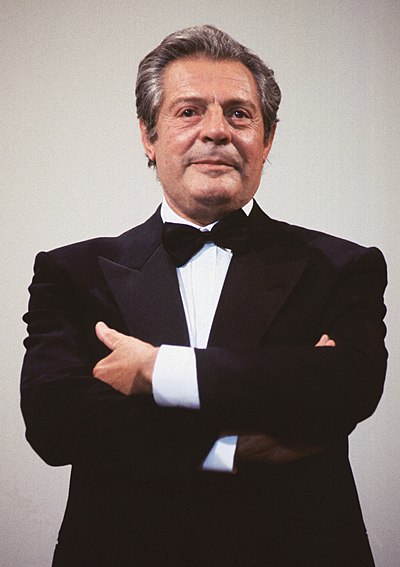


The Genesis of a Cinematic Chameleon
Marcello Mastroianni's path to international stardom was not a direct one. Born in 1924, his early life was marked by the turbulence of World War II, and he initially pursued a career in architecture. However, a chance encounter with a theater director led him to the stage, where his natural talent for performance quickly became apparent.
His early film roles were often in comedies and dramas that showcased his developing charisma, but it was his collaboration with Federico Fellini that would redefine his career and cement his status as a cinematic icon. Mastroianni possessed an innate ability to convey complex emotions with subtle gestures and a captivating gaze, making him a compelling figure on screen.
Fellini's Muse and the 'Sweet Life' Revolution
The 1960 release of Federico Fellini's 'La Dolce Vita' was a watershed moment for both the director and Mastroianni. The film, a sprawling, episodic exploration of Roman high society, its decadence, and its spiritual emptiness, cast Mastroianni as Marcello Rubini, a jaded gossip columnist. His portrayal was so authentic and nuanced that he became inextricably linked with the film's themes and its iconic imagery, such as Anita Ekberg in the Trevi Fountain. 'La Dolce Vita' was not just a commercial success; it was a cultural phenomenon that captured the zeitgeist of post-war Italy and propelled Mastroianni to global superstardom, earning him international awards and critical adoration.
This role established him as the quintessential embodiment of modern European ennui and charm.
Artistic Depth Beyond the Persona
While 'La Dolce Vita' defined a certain image, Mastroianni's true artistic brilliance lay in his remarkable versatility and his willingness to explore challenging roles. His subsequent collaborations with Fellini, particularly in '8½' (1963), where he played a tormented film director grappling with creative block and personal crises, showcased a profound depth and vulnerability. He seamlessly transitioned between comedic and dramatic performances, working with a pantheon of Italian and international directors, including Luchino Visconti, Vittorio De Sica, and Robert Altman.
Mastroianni's performances were characterized by an understated intensity and a profound understanding of the human condition, allowing him to inhabit characters from various social strata and emotional landscapes with remarkable authenticity.
A Legacy of Enduring Influence
Marcello Mastroianni's career spanned over four decades, during which he starred in more than 140 films. He received numerous accolades, including three Academy Award nominations for Best Actor, and was honored with lifetime achievement awards at major film festivals. His influence can be seen in subsequent generations of actors who have been inspired by his ability to blend charisma with profound emotional truth.
He remains a towering figure in the history of cinema, representing the golden age of Italian filmmaking and the power of an actor to transcend cultural boundaries through sheer talent and artistry. His films continue to be studied for their artistic merit and Mastroianni's unforgettable performances, solidifying his place as an enduring icon.
The Actor as Cultural Mirror
Mastroianni's career is a fascinating study in how an actor can become a cultural mirror, reflecting the anxieties, desires, and transformations of society. Through his roles, particularly in the films of Fellini, he captured the spirit of an era grappling with modernity, existentialism, and the search for meaning in a rapidly changing world. His characters often embodied a certain intellectual detachment mixed with a deep well of human feeling, resonating with audiences who felt similarly adrift.
This ability to embody complex societal moods, combined with his undeniable screen presence, made him more than just an actor; he became a symbol of European cultural identity and artistic exploration during a pivotal period in the 20th century.
See also
Frequently Asked Questions
Who was Marcello Mastroianni?+
How did he become an actor?+
What movie made him a superstar?+
Did he work with other famous directors?+
How many films did he act in?+
Based on content from Wikipedia · Licensed under CC BY-SA 4.0