

Trevi Fountain
Images
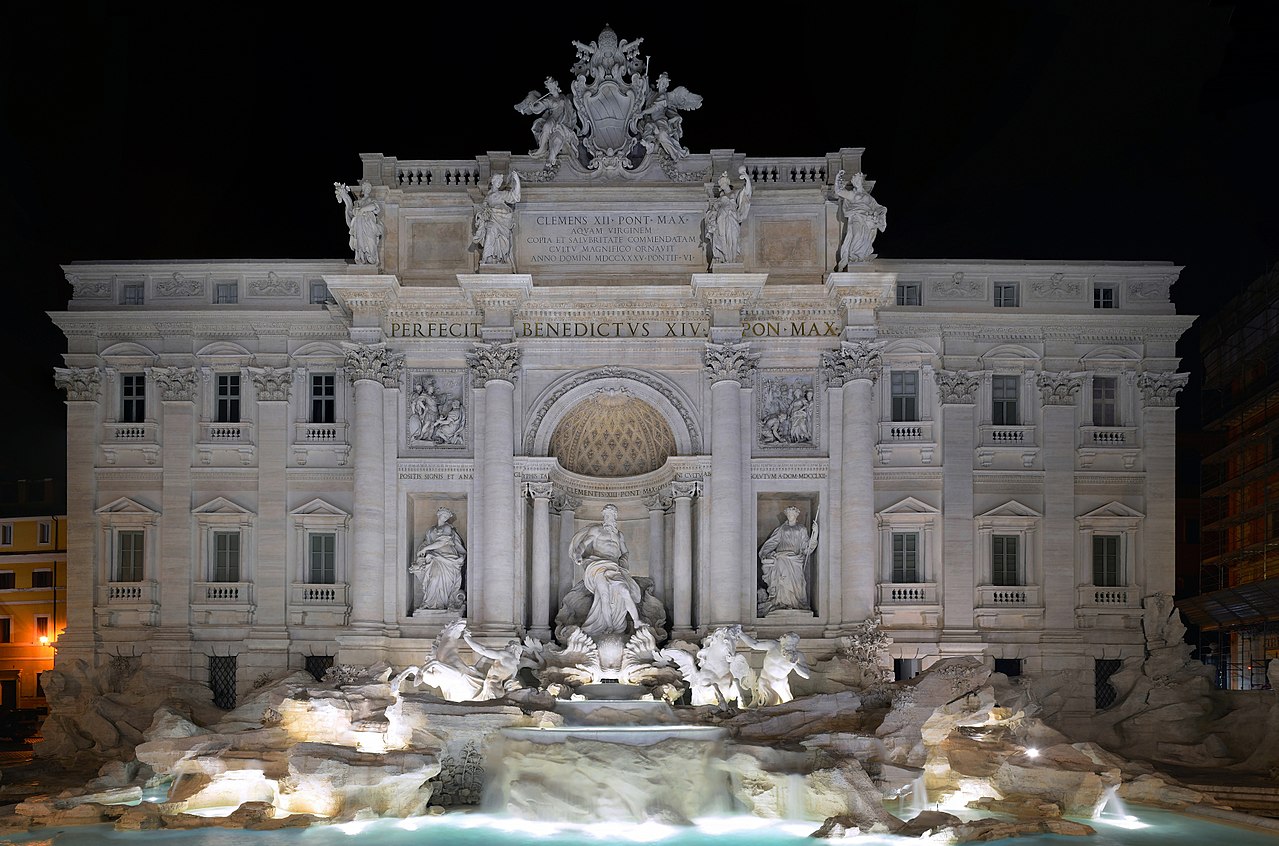
File:Panorama of Trevi fountain 2015.jpg


A Baroque Spectacle
The Trevi Fountain, or Fontana di Trevi, is not merely a public water feature; it is the zenith of Baroque art in Rome, a monumental theatrical production carved from travertine limestone. Completed in 1762, it stands as a testament to the opulence and dramatic flair characteristic of the Baroque period. Designed initially by Nicola Salvi and brought to fruition by Giuseppe Pannini and others, the fountain is an astonishing 86 feet high and 161.3 feet wide.
Its design is a complex narrative, dominated by the powerful figure of Oceanus, the primordial god of the sea, commanding his chariot pulled by two sea horses, one representing the turbulent sea and the other its calm. Flanking Oceanus are allegorical statues of Abundance and Salubrity, further enriching the thematic depth. The sheer scale and intricate detail transform the piazza into an open-air stage, where water, sculpture, and architecture converge to create an unforgettable visual and auditory experience that has captivated artists and visitors for centuries.
Engineering Legacy
The enduring power of the Trevi Fountain is intrinsically linked to its sophisticated water source: the Aqua Virgo. This ancient Roman aqueduct, constructed in 19 BCE by Marcus Vipsanius Agrippa, is one of the few that has remained operational for over two millennia. It was designed to bring pure water from the Salone springs, located about 13 miles from Rome, into the city for public baths and fountains.
The Trevi Fountain was conceived as the magnificent terminal point of this vital water artery, a grand finale that celebrated the engineering prowess of ancient Rome. The continuous flow of water, meticulously managed, is not just decorative; it's a living connection to Rome's past, demonstrating how ancient infrastructure can be integrated into contemporary urban life and artistic expression, providing a constant, dynamic element to the monument.
The Coin Toss Tradition
The ritual of tossing a coin into the Trevi Fountain is a global phenomenon, deeply ingrained in the experience of visiting Rome. While the specific origins of the coin-tossing tradition are debated, the popular belief is that one coin ensures a return to Rome, two coins lead to romance, and three coins signify marriage. This widespread practice generates an astonishing amount of revenue.
It is estimated that approximately €3,000 to €4,000 is collected daily from the fountain. Crucially, this collected money is not merely a tourist attraction's windfall; it is consistently donated to Caritas Roma, a Catholic charity organization. Caritas utilizes these funds to operate soup kitchens, food banks, and other social services, providing essential support to Rome's homeless and impoverished population.
Thus, the Trevi Fountain serves a dual purpose: a cultural icon and a significant source of charitable funding.
From Conception to Completion
The design and construction of the Trevi Fountain represent a significant undertaking spanning decades and involving multiple artistic hands. Nicola Salvi, an architect known for his work on the Trevi Fountain and the Spanish Steps, won a competition in 1730 to design the fountain. His vision was to create a dynamic, theatrical structure that would integrate seamlessly with the Palazzo Poli behind it, making the palace itself appear to be the source of the water.
Construction began in 1732 but was plagued by delays and interruptions. Salvi passed away in 1751, leaving his ambitious project unfinished. Giuseppe Pannini took over, ensuring Salvi's original intentions were respected while completing the final details.
Other sculptors and artisans contributed to the intricate carvings and statues, culminating in the fountain's inauguration in 1762. This collaborative effort over thirty years resulted in a unified artistic statement that remains one of Rome's most cherished landmarks.
Go deeper
Based on content from Wikipedia · Licensed under CC BY-SA 4.0