

Mamut: The Woolly Giants!
Images

Mamut recursivo







The Mammoth Lineage
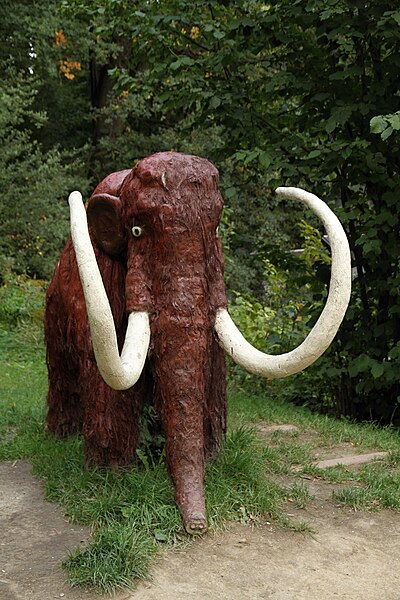
The genus Mammuthus, commonly known as mamuts or mammoths, represents a diverse group of extinct proboscideans that dominated terrestrial ecosystems for millions of years. Evolving from earlier elephant ancestors, these giants displayed remarkable adaptations to a range of environments, most notably the cold, arid conditions of the Pleistocene. Anatomically, they are distinguished by their immense size, often exceeding that of modern elephants, and their characteristic long, spirally curved tusks.
These tusks, present in both sexes but typically larger in males, served multiple functions, including defense against predators like dire wolves and saber-toothed cats, intraspecific combat for mating rights, and crucially, as tools for foraging. Evidence suggests they were used to scrape away snow to access vegetation, dig for roots and tubers, and even to break ice. Their bodies were covered in a dense, woolly coat, consisting of an outer layer of long guard hairs and an inner layer of fine underfur, providing insulation against extreme cold.
Some species, like the Steppe Mammoth (Mammuthus trogontherii), were more adapted to temperate grasslands, while others, such as the Woolly Mammoth (Mammuthus primigenius), were specialized for Arctic tundra environments. The variation in tusk morphology, body size, and dentition across different Mammuthus species reflects their adaptation to distinct ecological niches and dietary preferences throughout their evolutionary history.
Ecological Engineers
Mamuts played a significant role as keystone species and ecosystem engineers in Pleistocene environments. Their immense size and herbivorous diet meant they consumed vast quantities of vegetation, influencing plant community structure and biodiversity. By grazing and browsing, they maintained open grasslands and savannas, preventing the encroachment of dense forests.
Their trampling and digging activities also contributed to soil aeration and nutrient cycling. In cold regions, their ability to scrape away snow and ice to reach food was vital for their own survival and indirectly affected other herbivores that relied on similar food sources. The presence of large predators like Smilodon and Canis dirus suggests a complex predator-prey dynamic, where mamuts, particularly juveniles and weakened individuals, formed a significant prey base.
The extinction of mamuts led to profound ecological shifts, altering vegetation patterns, reducing habitat complexity, and potentially impacting the populations of associated flora and fauna, a phenomenon sometimes referred to as 'Pleistocene megafauna turnover'.
The Great Extinction
The extinction of Mammuthus around 10,000 years ago, coinciding with the end of the last glacial period, is a classic example of megafaunal extinction. While the precise causes remain a subject of scientific inquiry, a consensus points towards a synergistic combination of environmental change and anthropogenic pressures. The rapid warming and dramatic shifts in climate at the Pleistocene-Holocene boundary led to significant alterations in vegetation, habitat fragmentation, and the collapse of productive grassland ecosystems that supported large herbivores.
Simultaneously, the expansion of anatomically modern humans across the globe introduced a novel and highly effective predator. Early human hunting strategies, coupled with potential competition for resources, likely placed immense pressure on already vulnerable mamut populations. The 'overkill hypothesis' suggests that human hunting alone could have driven species to extinction, but in the case of mamuts, it is more probable that climate change weakened populations, making them more susceptible to human predation.
The extinction of mamuts serves as a stark reminder of the fragility of large mammal populations in the face of rapid environmental change and increasing human impact.
Legacy and Scientific Significance
Despite their extinction, mamuts continue to fascinate and inform scientific understanding. The discovery of remarkably well-preserved specimens, particularly in permafrost regions of Siberia, has provided unparalleled insights into their biology, diet, behavior, and even their genetic makeup. These 'frozen mammoths' have allowed scientists to reconstruct their DNA, study their physiology, and gain a deeper appreciation for their lives.
The study of mamuts contributes to our understanding of evolutionary processes, paleoclimatology, and paleoecology. Furthermore, the ongoing research into mamut genetics has fueled discussions about de-extinction and the potential for reintroducing extinct species into modern ecosystems, raising complex ethical and ecological questions. The mamut's story is not just a tale of ancient giants but a crucial chapter in Earth's biological history, offering lessons relevant to contemporary conservation efforts and our relationship with the natural world.
See also
Frequently Asked Questions
What did a Mamut look like?+
What did the Mamut's tusks do?+
Why did Mamut have a woolly coat?+
How did Mamut help the forest and grasslands?+
When and why did Mamut disappear?+
Based on content from Wikipedia · Licensed under CC BY-SA 4.0