

Malala Yousafzai
Images

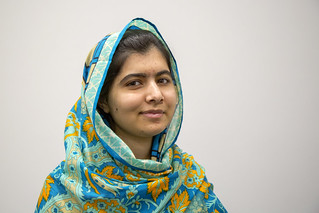
Malala Yousafzai speaks to DFID staff




Roots of Resilience
Malala Yousafzai was born on July 12, 1997, in the picturesque Swat Valley of Pakistan. Her upbringing was deeply influenced by her father, Ziauddin Yousafzai, an educator and activist himself, who instilled in her a profound belief in the power of education. This environment fostered a strong sense of justice and a commitment to learning.
However, her childhood was dramatically altered by the rise of the Tehrik-i-Taliban Pakistan (TTP), a militant group that imposed a harsh ideology, including the ban on girls attending school. This suppression of education, a fundamental human right, became the catalyst for Malala's activism, transforming her from a student into a vocal advocate for her peers.
The Power of the Pen
At the tender age of 11, Malala began her public advocacy through a BBC Urdu blog under the pseudonym 'Gul Makai.' This platform allowed her to anonymously detail her life under Taliban rule and the devastating impact of their ban on girls' education. Her writings offered a stark, personal account of the fear and disruption that characterized daily life, but also highlighted the resilience and determination of those who sought to continue learning. The blog served as an early warning and a powerful testament to the injustices faced by girls, drawing international attention to the crisis in Swat Valley and establishing Malala as a courageous voice.
Targeted for Her Truth
Malala's growing prominence and outspokenness made her a direct threat to the Taliban's agenda. On October 9, 2012, a Taliban gunman boarded her school bus and shot her in the head in an assassination attempt. The attack, intended to silence her, had the opposite effect.
Malala's critical condition and subsequent recovery in the United Kingdom garnered immense global sympathy and condemnation of the TTP's violence. This event galvanized international support for her cause, transforming her into a symbol of defiance and the global struggle for girls' education. The attack underscored the extreme risks faced by activists and the urgent need for protective measures.
From Survivor to Global Advocate
Following her recovery, Malala's commitment to education intensified. She co-founded the Malala Fund with Shiza Shahid, a non-profit organization dedicated to ensuring that every girl receives 12 years of free, safe, quality education. Her memoir, 'I Am Malala,' published in 2013, became an international bestseller, further amplifying her message.
In recognition of her tireless efforts and profound impact, Malala was awarded the Nobel Peace Prize in 2014, at the age of 17, making her the youngest laureate in history. This award cemented her status as a leading global figure advocating for human rights and educational equity.
A Continued Legacy
Malala's journey has continued beyond her Nobel Prize. She has addressed world leaders, received honorary citizenship from Canada, and completed her studies at Oxford University, earning a degree in Philosophy, Politics, and Economics. Her work through the Malala Fund continues to support education initiatives in various countries, empowering girls to overcome barriers and achieve their full potential.
Malala Yousafzai represents not just a survivor, but a powerful testament to the enduring strength of the human spirit and the transformative power of education in shaping a more just and equitable world.
See also
Frequently Asked Questions
Who is Malala Yousafzai?+
Why did Malala start writing a blog?+
What happened to Malala in 2012?+
What is the Malala Fund?+
Why did Malala win the Nobel Peace Prize?+
Based on content from Wikipedia · Licensed under CC BY-SA 4.0