

The World's Biggest Money Makers!
Images
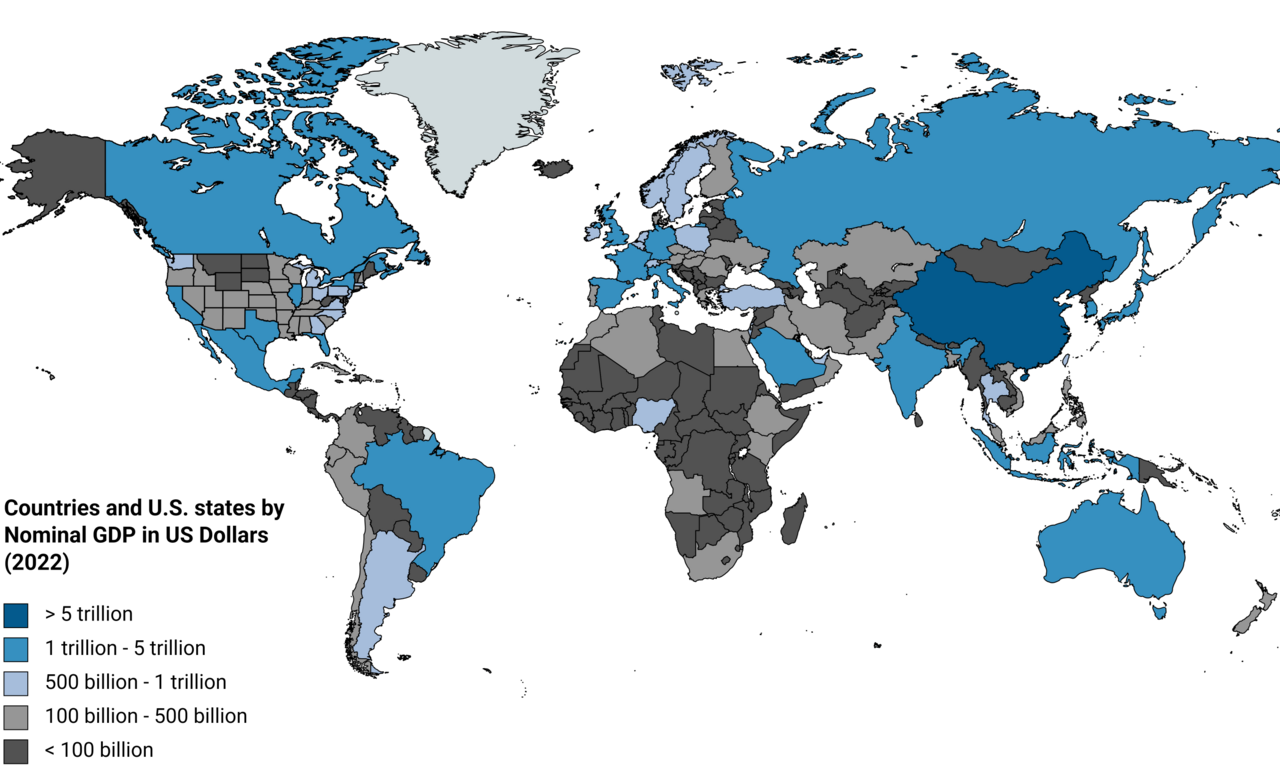
USA-World Nominal GDP
The Engine of Nations
Gross Domestic Product (GDP) is the cornerstone metric for assessing a nation's economic output, representing the market value of all final goods and services produced within its borders over a specific period, typically a year. Nominal GDP, specifically, measures this output at current market prices or official exchange rates, offering a snapshot of the economy's size without accounting for inflation or differences in the cost of living. This figure is crucial for understanding a country's economic scale and its position in the global marketplace.
The United States consistently ranks as the largest economy by nominal GDP, a testament to its diverse and robust sectors, including technology, finance, and entertainment. Following closely is China, whose rapid industrialization and market reforms have propelled it to become a global economic powerhouse. The fluctuations in exchange rates can significantly impact nominal GDP rankings year-to-year, sometimes creating dramatic shifts that may not reflect actual changes in a population's standard of living.
This dynamic nature highlights the importance of considering multiple economic indicators for a comprehensive understanding of national wealth and well-being.
A Shifting Global Landscape
The rankings of national economies are not static; they are a dynamic reflection of global economic shifts and policy changes. Historically, the United States surpassed the British Empire in economic output around 1916, marking a significant transition in global power. The post-World War II era witnessed Japan's remarkable ascent, transforming from a war-torn nation into the world's second-largest economy by the 1970s, driven by its focus on manufacturing and export-led growth.
More recently, China's economic trajectory has been nothing short of extraordinary. From its position at ninth place in 1978, following the implementation of market-oriented reforms, China surged to become the second-largest economy by 2010. These historical shifts underscore the impact of technological innovation, trade policies, and geopolitical events on a nation's economic standing.
Understanding these historical trends is vital for anticipating future economic developments and the evolving balance of global influence.
Beyond the Price Tag
While nominal GDP is a widely used indicator, it has inherent limitations that necessitate a broader economic perspective. Crucially, it does not account for the cost of living or purchasing power differences between countries. For instance, a dollar might buy significantly more goods and services in one nation than another.
This is why economists often use Gross Domestic Product adjusted for Purchasing Power Parity (PPP) to provide a more accurate comparison of living standards. Furthermore, nominal GDP can be heavily influenced by currency exchange rate volatility. A country's currency weakening against the US dollar, for example, can artificially lower its nominal GDP in dollar terms, even if its domestic production remains strong.
Metrics like nominal GDP per capita and PPP per capita are also employed to offer insights into the average economic well-being of individuals within a nation, providing a more granular view than aggregate GDP figures alone.
The Interconnectedness of Global Economies
The countries leading in nominal GDP are not just economic giants; they are also central players in global trade and international relations. Their production capacities and consumption patterns significantly influence global supply chains, commodity prices, and investment flows. The sheer scale of their economies means that their economic policies and performance have ripple effects worldwide.
For example, changes in consumer demand in the United States or manufacturing output in China can impact businesses and employment in numerous other countries. The inclusion of non-sovereign entities and states with limited recognition in GDP lists, such as Taiwan, also highlights the complex and often politically charged nature of economic measurement. As global economic power continues to shift, understanding the drivers and implications of nominal GDP rankings remains essential for navigating the complexities of the 21st-century world economy.
See also
Frequently Asked Questions
What is nominal GDP and why is it important?+
Why is the United States usually the biggest money maker?+
How did China become the second biggest money maker?+
Why can the ranking of money makers change from year to year?+
What is PPP and why do people use it instead of just nominal GDP?+
Based on content from Wikipedia · Licensed under CC BY-SA 4.0