

Levee
Images
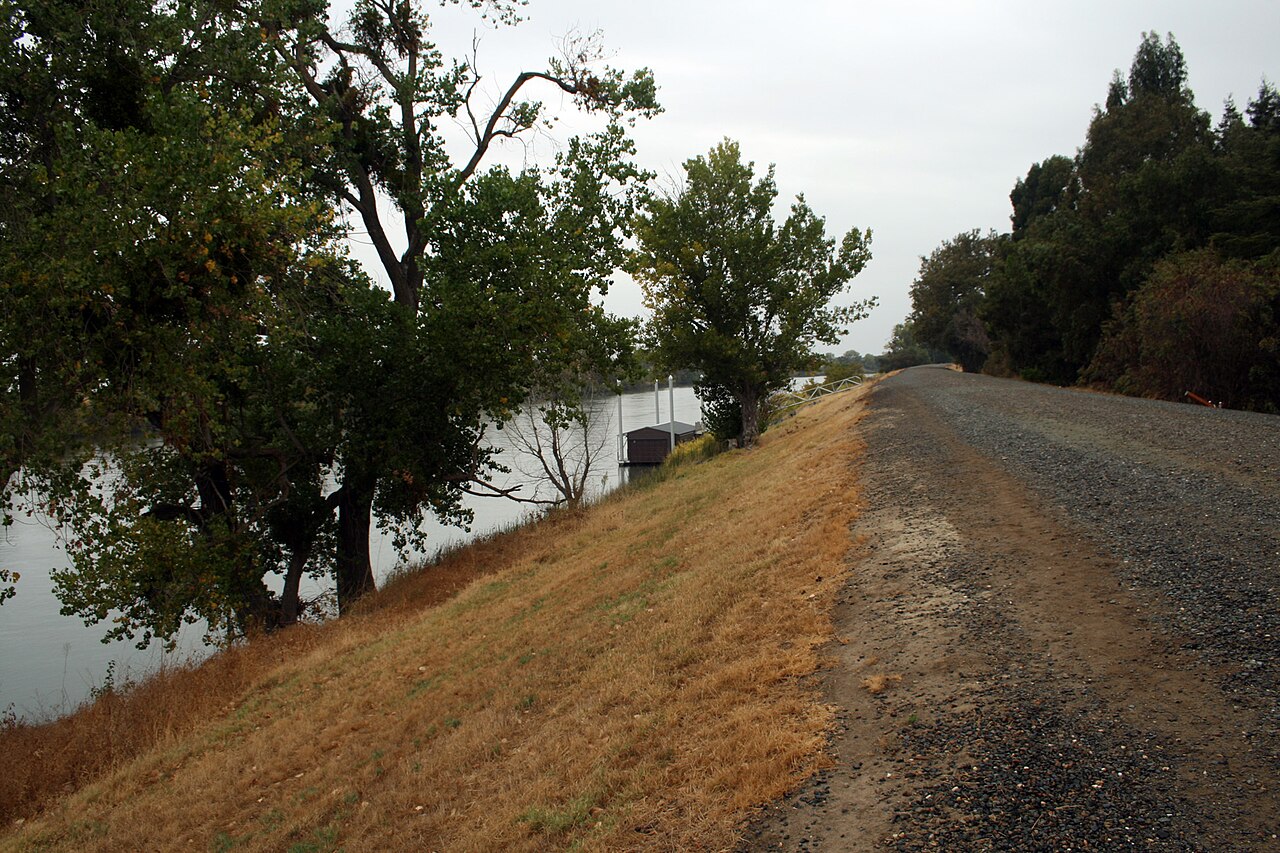
Levee
The Levee as a Hydraulic Engineering Construct
A levee, fundamentally an artificial embankment, is a cornerstone of hydraulic engineering designed to contain rivers within their channels and prevent inundation of surrounding lands. These structures are not merely passive barriers; they represent a deliberate intervention in natural hydrological processes. Their design and construction are dictated by complex calculations involving river discharge, flood frequency analysis, soil mechanics, and geotechnical engineering principles.
The scale can range from localized floodwalls protecting urban centers to vast systems spanning hundreds of miles along major river arteries like the Mississippi. The integrity of a levee is paramount, as its failure can lead to catastrophic and widespread devastation, underscoring the critical importance of robust design, meticulous construction, and ongoing maintenance.
A Millennia-Long Evolution
The practice of levee construction is deeply rooted in human history, dating back to ancient civilizations that sought to harness the power of rivers for agriculture and survival. Early examples, such as those found in Mesopotamia along the Tigris and Euphrates rivers as early as the 4th millennium BCE, demonstrate an early understanding of flood control. The Romans further refined these techniques, integrating them into their extensive infrastructure projects.
The development of sophisticated levee systems, often termed 'dikes,' became a defining feature of Dutch history, where they were crucial for land reclamation (polders) and protection against both riverine and coastal flooding. The 20th and 21st centuries have seen advancements in materials science, surveying technology, and computational modeling, enabling the creation of larger, more resilient, and precisely engineered levees, often incorporating advanced materials and monitoring systems.
Socio-Economic and Environmental Ramifications of Levee Systems
The significance of levees extends far beyond mere flood prevention. They have profoundly shaped human settlement patterns, enabling the development of cities and agricultural lands in areas that would otherwise be uninhabitable due to flood risk. This has led to substantial economic benefits by protecting valuable infrastructure, agricultural output, and population centers.
However, levees also have environmental consequences. By confining rivers, they can alter natural sediment deposition patterns, reduce floodplain connectivity essential for ecosystems, and impact aquatic habitats. Furthermore, the reliance on levees can create a false sense of security, potentially leading to increased development in high-risk areas and exacerbating the consequences of levee failure.
Modern approaches increasingly emphasize integrated flood management, considering levees as part of a broader strategy that may include land use planning, wetland restoration, and early warning systems.
The Mechanics of Containment
The operational principle of a levee is straightforward: to provide a physical barrier that exceeds the maximum anticipated water level during flood events. This containment is achieved through careful design considerations. The crest elevation of the levee must be sufficiently high to accommodate freeboard, an additional margin of safety above the design flood level, to account for wave action and uncertainties.
The levee's cross-section is critical for stability; a wider base provides greater resistance to overturning and sliding forces exerted by the water. Impermeability is also crucial; materials are selected and compacted to minimize seepage, which can undermine the levee's structure. Drainage systems, such as relief wells or toe drains, are often incorporated to manage hydrostatic pressure and prevent internal erosion.
The overall length and continuity of the levee system are also vital for effective flood protection.
Global Levee Networks
Levee systems are ubiquitous in flood-prone regions worldwide. The Mississippi River system in the United States exemplifies a vast, complex network of levees, floodwalls, and associated structures designed to protect millions of people and significant economic assets. In contrast, the Netherlands' extensive dike system, a testament to centuries of struggle against the sea and rivers, showcases remarkable engineering achievements in land reclamation and protection.
Major river systems in Asia, such as the Yangtze in China and the Ganges-Brahmaputra delta, are protected by extensive levee networks critical for supporting dense populations and agricultural economies. However, these systems face ongoing challenges, including aging infrastructure, the impacts of climate change leading to more extreme weather events, and the ever-present risk of catastrophic failure, as tragically demonstrated by events like Hurricane Katrina in New Orleans.
Go deeper
Frequently Asked Questions
What is a levee?+
Why do people build levees?+
How do engineers make sure a levee is strong enough?+
What can happen if a levee breaks?+
How do levees affect nature?+
Based on content from Wikipedia · Licensed under CC BY-SA 4.0