

Khoisan Languages: The Clicky-Clacky Tongues!
Images
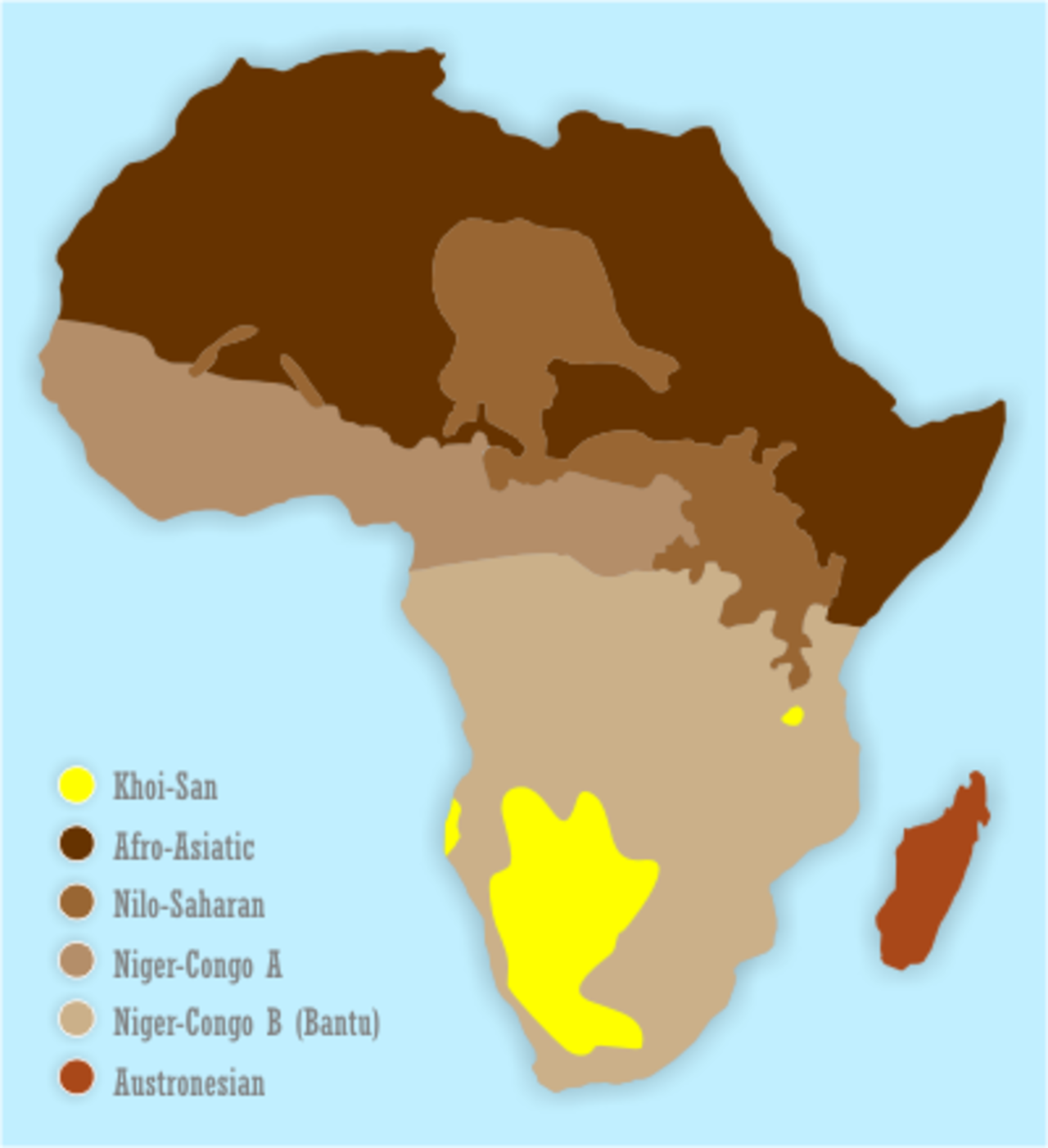
Khoisan languages
The Enigmatic Khoisan Languages
Khoisan languages represent a fascinating and complex linguistic grouping primarily situated in southern Africa, encompassing countries like Botswana, Namibia, and South Africa. Their most striking and globally recognized characteristic is the extensive use of click consonants. These are not merely decorative sounds but phonemes that are integral to word meaning, distinguishing them from the vast majority of the world's languages, which predominantly use pulmonic egressive airstreams.
The Khoisan family is characterized by a diverse array of click types, including dental, alveolar, lateral, and palatal clicks, often produced with varying degrees of voicing and aspiration. These clicks are typically integrated with other speech sounds, such as vowels and non-click consonants, to form a rich and intricate phonological system. While often grouped together, the Khoisan languages are not a single genetic unit but rather a collection of distinct language families and isolates that share this typological feature, suggesting a long history of linguistic contact and influence in the region.
Deep Roots
The historical depth of Khoisan languages is truly remarkable, with evidence suggesting they are among the oldest surviving language families on Earth. While precise dating is challenging, linguistic and genetic studies indicate that the Khoisan peoples and their languages have a lineage that could stretch back tens of thousands of years, potentially to the very origins of modern human language. This ancient heritage makes them invaluable for understanding human linguistic evolution, early migrations out of Africa, and the development of complex communication systems.
The geographic concentration of these languages in southern Africa further supports theories of their antiquity, as this region is considered a cradle of human diversity. Studying their historical phonology and comparative grammar allows linguists to reconstruct proto-languages and trace the divergence of these ancient tongues over millennia.
Cultural Keystone
Khoisan languages are far more than just communication tools; they are the bedrock of the cultural identity, heritage, and social fabric of the Khoisan peoples. For millennia, these languages have served as the primary medium for transmitting oral traditions, ancestral knowledge, spiritual beliefs, and intricate social structures. Their unique linguistic features, particularly the clicks, are deeply interwoven with cultural practices and worldviews.
The historical marginalization and assimilation pressures faced by Khoisan communities have placed many of these languages at risk of endangerment. Consequently, their preservation is a critical issue for cultural diversity and human rights, ensuring that the rich tapestry of human expression is not diminished. Linguists and communities are working collaboratively on documentation, revitalization, and educational initiatives to safeguard this invaluable linguistic heritage for future generations.
The Mechanics of Clicks
The production of click consonants in Khoisan languages is a sophisticated phonetic process that distinguishes them from most other languages. It involves creating a velaric ingressive airstream, meaning air is drawn inward into the mouth, rather than pushed outward from the lungs. This is achieved by creating a seal within the mouth, typically with the tongue, and then breaking that seal suddenly.
For instance, a dental click involves forming a seal with the tongue tip against the upper teeth, then releasing it with a sharp pull, producing a sound akin to 'tsk.' A lateral click involves a similar process but with the sides of the tongue against the molars. These clicks can be modified by accompanying sounds, such as voicing (vibration of the vocal cords) or nasalization, further expanding the phonetic inventory. The intricate coordination required to produce these sounds highlights the remarkable adaptability and complexity of the human vocal apparatus.
Khoisan's Influence and Modern Relevance
The influence of Khoisan languages extends beyond the communities that speak them. The presence of click consonants in some neighboring Bantu languages, such as Xhosa and Zulu, is a direct result of historical contact and linguistic borrowing, a phenomenon that continues to fascinate historical linguists. This diffusion of clicks provides tangible evidence of ancient interactions and cultural exchanges between different language groups in southern Africa.
In contemporary times, Khoisan languages are increasingly recognized for their intrinsic value and the unique insights they offer into human cognition and linguistic diversity. Efforts to document, revitalize, and promote these languages are crucial not only for the speakers themselves but also for the global understanding of human language and culture. Their continued existence is a powerful reminder of the vast, complex, and ancient history of human communication on the African continent.
Go deeper
Frequently Asked Questions
What are Khoisan languages?+
Why do Khoisan languages have click sounds?+
Where can you find Khoisan languages spoken?+
How old are Khoisan languages?+
Are Khoisan languages at risk?+
Based on content from Wikipedia · Licensed under CC BY-SA 4.0