

John Lithgow: The Actor Who Plays Everyone!
Images

John Lithgow, Jennifer Carpenter, Julie Benz, Michael C. Hall


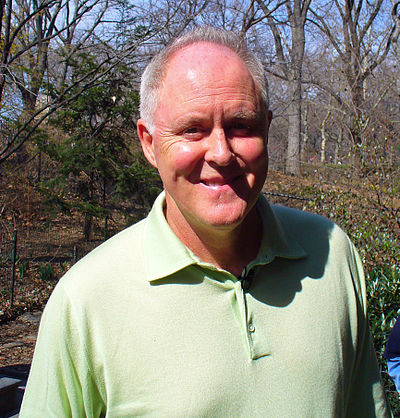
The Foundation of a Thespian's Craft
John Lithgow's artistic journey is rooted in a rigorous academic and theatrical education. His time at Harvard University provided a strong intellectual grounding, while his studies at the London Academy of Music and Dramatic Art immersed him in the classical traditions of acting. This dual foundation allowed him to develop a nuanced understanding of character and performance.
His Broadway debut in 'The Changing Room' in 1972 was a critical success, earning him his first Tony Award and immediately establishing him as a formidable talent. This early recognition set a precedent for a career marked by consistent critical acclaim and a willingness to explore the full spectrum of human experience through his roles. His early stage work demonstrated a remarkable ability to connect with audiences on an emotional level, a skill that would serve him exceptionally well in his subsequent ventures.
Mastering the Mediums
Lithgow's television career is a masterclass in versatility. His portrayal of the alien Dick Solomon in '3rd Rock from the Sun' (1996-2001) is a landmark comedic performance, earning him three Primetime Emmy Awards for Best Actor in a Comedy Series. This role showcased his exceptional talent for physical comedy and his ability to imbue an outlandish premise with genuine heart.
He then pivoted to dramatic intensity, winning an Emmy for his chilling turn as Arthur Mitchell in 'Dexter,' a serial killer whose facade of normalcy hid a terrifying darkness. His more recent work as Winston Churchill in Netflix's 'The Crown' (2016-2019) earned him another Emmy, demonstrating his capacity to embody complex historical figures with gravitas and profound insight. These diverse roles highlight his unparalleled ability to adapt his performance to the demands of different genres and character archetypes.
Cinematic Depth and Acclaimed Film Roles
On the cinematic front, John Lithgow has garnered significant critical attention, including two Academy Award nominations for Best Supporting Actor. His role as Roberta Muldoon, a transgender former football player, in 'The World According to Garp' (1982) was groundbreaking for its time, showcasing his empathy and courage in portraying a marginalized character. He followed this with another impactful performance as a lonely banker in 'Terms of Endearment' (1983).
Lithgow's filmography spans a wide range of genres, from the musical drama 'Footloose' and the sci-fi epic 'Interstellar' to the animated hit 'Shrek,' where he voiced the villainous Lord Farquaad. His collaborations with renowned directors like Bob Fosse ('All That Jazz') and Brian De Palma ('Blow Out') further underscore his standing in the film industry. His recent work in 'Killers of the Flower Moon' (2023) continues to demonstrate his enduring power as a screen actor.
A Continuing Legacy on Stage and Screen
Lithgow's commitment to the theatrical arts remains a vital part of his career. He has continued to grace the Broadway stage with compelling performances in plays such as 'The Columnist' and 'A Delicate Balance,' earning further Tony nominations and critical praise. His recent portrayal of Roald Dahl in the play 'Giant' in London's West End earned him the prestigious Laurence Olivier Award for Best Actor, proving his continued relevance and mastery of live performance.
Beyond his acting achievements, Lithgow has also explored other creative avenues, including writing children's books and releasing music albums. This multifaceted approach to his artistry, coupled with his consistent dedication to excellence across all mediums, solidifies John Lithgow's status as one of the most respected and accomplished actors of his generation.
See also
Based on content from Wikipedia · Licensed under CC BY-SA 4.0