

Broadway: The Street of Stars!
Images

Broadway Tower




Defining the Landscape of American Theater
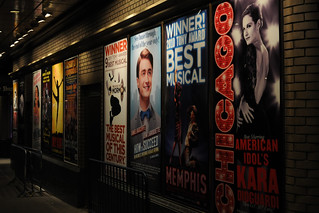
Broadway represents the pinnacle of professional theater in the United States, a designation tied to specific venues within Manhattan's Theater District. These approximately 40 large-capacity houses are the stages for productions that set the standard for artistic quality, innovation, and commercial success in the performing arts. The term 'Broadway' has transcended its geographical origin to become synonymous with a certain caliber of theatrical production, characterized by sophisticated storytelling, elaborate staging, and exceptional talent.
It is a dynamic ecosystem where creativity meets commerce, attracting global audiences and influencing theater worldwide. The concentration of theaters in this district fosters a unique environment of competition and collaboration, driving the industry forward. Broadway's enduring appeal lies in its ability to offer immersive, live experiences that resonate deeply with diverse audiences, exploring the human condition through compelling narratives and breathtaking performances.
The Genesis and Evolution of a Theatrical Mecca
The development of Broadway as a theatrical hub is a narrative of gradual centralization and artistic maturation. While New York City has a long history of theater dating back to the 18th century, the late 19th and early 20th centuries saw a significant shift towards the area now known as the Theater District. Initially, theaters were scattered, but the advent of the musical play, evolving from operettas and vaudeville, began to concentrate productions.
Key developments, such as the integration of plot, song, and dance into the 'book musical' in the mid-20th century, solidified Broadway's identity. This era saw masterpieces that defined American musical theater, influencing subsequent generations. Broadway has consistently adapted, navigating economic challenges, technological advancements, and evolving social landscapes, demonstrating remarkable resilience and a capacity for reinvention that has maintained its relevance and prestige over more than a century.
Broadway's Multifaceted Significance
The significance of Broadway is profound and multifaceted, extending far beyond its role as an entertainment venue. Culturally, it serves as a vital platform for artistic expression, showcasing groundbreaking works that reflect and shape American identity and values. Broadway productions are often critical in introducing new playwrights, composers, and performers to the national stage, and winning a Tony Award is a career-defining achievement.
Economically, the Broadway industry is a substantial contributor to New York City's economy, generating billions of dollars annually through ticket sales, tourism, and related services, supporting tens of thousands of jobs. Socially, Broadway plays a crucial role in public discourse. Many productions tackle complex social, political, and historical issues, prompting reflection and dialogue among audiences.
The shared experience of live theater fosters a sense of community and empathy, offering a unique space for collective emotional engagement and understanding.
The Intricate Machinery of Broadway Production
Mounting a Broadway production is an extraordinarily complex undertaking, demanding meticulous planning, extensive collaboration, and substantial financial investment. The process begins with securing rights to a play or musical, followed by a rigorous casting phase to identify performers who embody the characters. The creative team, including directors, playwrights, composers, lyricists, and designers (set, costume, lighting, sound, choreography), then works to translate the script into a tangible performance.
This involves extensive script development, musical composition, and design conceptualization. The production phase includes building elaborate sets, crafting detailed costumes, and developing intricate lighting and sound plots. Rehearsals are intensive, often spanning months, during which actors hone their performances and the technical crew integrates all elements.
Stage management is critical for ensuring the seamless execution of each performance, coordinating hundreds of cues and personnel. The entire operation requires a deep understanding of artistic vision, logistical coordination, and financial management.
Broadway's Enduring Legacy and Future Trajectory
Broadway's legacy is one of continuous innovation and adaptation, solidifying its position as a global cultural touchstone. Its ability to consistently produce critically acclaimed and commercially successful shows speaks to its robust infrastructure and the enduring appeal of live theater. The industry has demonstrated a capacity to evolve, embracing new technologies and diverse storytelling approaches while maintaining its core commitment to artistic excellence.
Looking forward, Broadway faces challenges and opportunities, including the need to remain accessible to broader audiences, adapt to changing media consumption habits, and continue to champion diverse voices and narratives. The integration of digital platforms, the exploration of new theatrical forms, and a continued focus on impactful storytelling will likely shape its future. Despite the rise of other entertainment forms, the unique, communal, and immediate experience offered by Broadway ensures its continued relevance and power.
Go deeper
Frequently Asked Questions
What is Broadway and why is it called the Street of Stars?+
How did Broadway become the center of theater in New York?+
Why are Broadway shows so special?+
What happens when a new Broadway show is made?+
How does Broadway help people and the city?+
Based on content from Wikipedia · Licensed under CC BY-SA 4.0