

Television
Images

Television


The Genesis of Electronic Imaging and Broadcasting
The invention of television was not a singular event but a culmination of scientific inquiry and engineering innovation spanning decades. Early attempts at transmitting images relied on mechanical scanning systems, such as Nipkow's disk, but these were limited in resolution and practicality. The breakthrough came with the development of fully electronic television systems. Philo Farnsworth’s 1927 demonstration of his 'Image Dissector' camera tube and Vladimir Zworykin’s 'Iconoscope' were pivotal, laying the groundwork for electronic image capture and display.
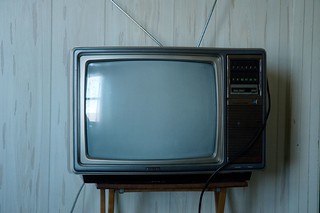
The subsequent development of the cathode ray tube (CRT) as a display device further propelled the technology. The transition from experimental prototypes to commercially viable products was gradual, marked by the establishment of broadcasting standards, the expansion of transmission infrastructure, and the increasing affordability of sets, which began to enter households in significant numbers after World War II.
Television's Profound Influence on Culture and Information Dissemination
Television rapidly evolved from a novelty into a dominant force shaping public opinion, culture, and social norms. Its ability to deliver visual and auditory information simultaneously created unprecedented opportunities for mass communication. During critical historical junctures, such as the Civil Rights Movement, the Vietnam War, or the Cold War, television broadcasts brought events into living rooms, fostering a sense of shared national experience and influencing public discourse.
It democratized access to information and entertainment, exposing diverse audiences to a wide range of perspectives, artistic expressions, and lifestyles. The medium’s power also extended to advertising and political campaigning, demonstrating its capacity to persuade and mobilize large populations, thereby profoundly altering the fabric of modern society and interpersonal communication.
The Technical Architecture of Image and Sound Reproduction
The fundamental principle of television operation involves the conversion of light and sound into electrical signals, their transmission, and subsequent reconversion into images and sound at the receiver. In analog television, scenes were scanned line by line, with brightness and color information encoded into a radio frequency signal. Modern digital television employs a more sophisticated process.
High-definition (HD) and ultra-high-definition (UHD) signals contain significantly more data, allowing for greater detail and clarity. Technologies like LCD, LED, OLED, and QLED panels are responsible for image reproduction. These panels utilize millions of pixels, each capable of emitting or modulating light to create specific colors and brightness levels.
The rapid refresh rates of these displays (e.g., 60Hz, 120Hz) ensure the smooth rendering of motion, creating the illusion of a continuous, lifelike visual experience. Audio is similarly encoded and decoded, often using surround sound formats for an immersive experience.
The Digital Transformation
The advent of digital technology and the internet has fundamentally redefined the television's role. The transition from analog to digital broadcasting (DTV) offered improved picture and sound quality and more efficient use of spectrum. The subsequent integration of internet connectivity has given rise to 'smart TVs.' These devices are essentially networked computers capable of running applications, streaming content from various platforms (e.g., Netflix, Hulu, YouTube), accessing online services, and even facilitating two-way communication through video conferencing.
This evolution has shifted television from a primarily passive medium to an interactive entertainment and information hub. The convergence of television with computing and networking technologies continues to drive innovation, blurring the lines between different media platforms and creating new paradigms for content consumption and user engagement.
Television's Enduring Legacy and Future Trajectories
Despite the rise of streaming services and on-demand content platforms, television remains a significant cultural and technological artifact. Its historical impact on shaping global narratives, fostering shared experiences, and driving technological advancement is undeniable. The medium's adaptability, evident in its evolution from bulky CRTs to ultra-thin smart displays, suggests its continued relevance. Future developments may involve further integration with artificial intelligence for personalized content curation, enhanced interactivity through augmented or virtual reality, and more immersive viewing experiences.
As technology progresses, television’s core function of visual storytelling and information sharing is likely to persist, albeit in increasingly sophisticated and integrated forms, continuing to influence how we perceive and interact with the world around us.
Go deeper
Frequently Asked Questions
What is a television and how does it show pictures and sound?+
How did television start and become a big part of homes?+
Why was television important during events like the Civil Rights Movement or the Vietnam War?+
How do modern TVs show clearer pictures than old ones?+
What is a smart TV and how is it different from older TVs?+
Based on content from Wikipedia · Licensed under CC BY-SA 4.0