

Igor Stravinsky: The Music Magician!
Images
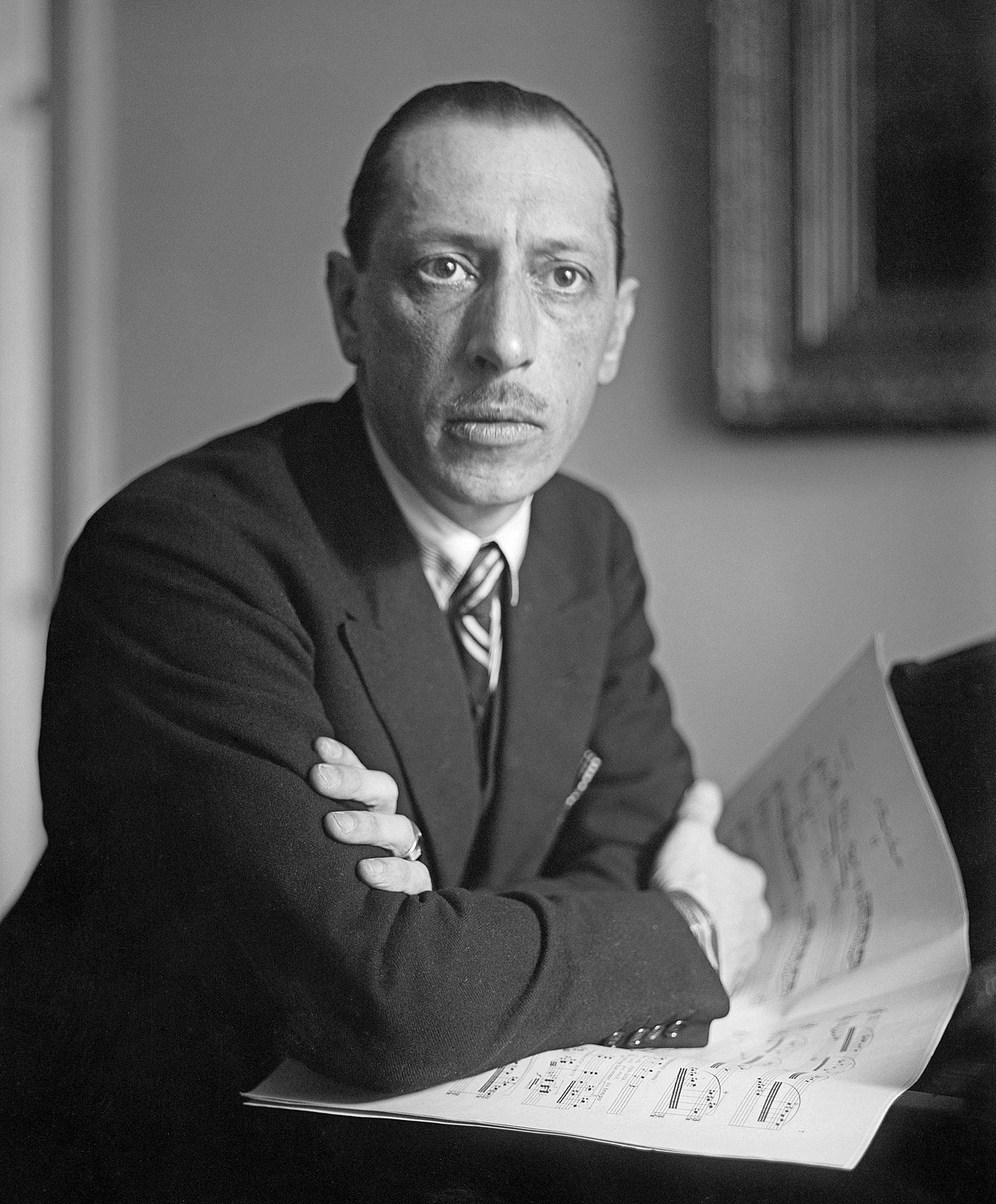
Igor Stravinsky
Genesis of a Musical Revolutionary
Igor Fyodorovich Stravinsky was born on June 17, 1882, in Saint Petersburg, Russia, into a family deeply involved in music; his father was a bass singer at the Mariinsky Theatre. Though he initially pursued law at the University of Saint Petersburg, his true calling lay in composition. His studies under Nikolai Rimsky-Korsakov, a leading figure of the Russian Five, provided a foundational understanding of orchestration and musical structure.
A pivotal moment arrived when Stravinsky met Sergei Diaghilev, the visionary impresario of the Ballets Russes. Diaghilev recognized Stravinsky's prodigious talent and commissioned him to compose a series of ballets that would become cornerstones of 20th-century music. 'The Firebird' (1910) established Stravinsky's reputation with its lush orchestration and Russian folk influences. 'Petrushka' (1911) further showcased his innovative rhythmic and harmonic language. However, it was 'The Rite of Spring' (1913) that cemented his status as a radical innovator.
Its premiere in Paris ignited a near-riot, a testament to its jarring dissonances, complex polyrhythms, and primal energy, which challenged the very foundations of musical convention and irrevocably altered the perception of rhythm and musical form.
Stylistic Metamorphosis
Stravinsky's compositional journey is characterized by remarkable stylistic shifts, often categorized into three main periods. The 'Russian Period' (ending around 1920) drew heavily on Russian folklore, folk poetry, and traditional melodies, as heard in works like 'Renard' (1916) and 'Les noces' (1923). He masterfully integrated these elements with contemporary popular forms, including ragtime and tango, in 'L'Histoire du soldat' (1918), demonstrating an early willingness to blend disparate musical traditions.
Following this, the 'Neoclassical Period' (roughly 1920-1951) saw Stravinsky consciously engaging with the forms, techniques, and aesthetic ideals of the Baroque and Classical eras. Works like his 'Octet' (1923) employed sonata form, while ballets such as 'Apollon musagète' (1927) and operas like 'Oedipus Rex' (1927) explored Greek mythological themes, reinterpreting classical structures through a distinctly modern lens. This period highlighted his intellectual rigor and his ability to synthesize historical styles with his unique voice.
The final major phase, the 'Serial Period' (1954-1968), marked a profound turn towards the compositional methods of the Second Viennese School, particularly Arnold Schoenberg's twelve-tone technique. His 'In Memoriam Dylan Thomas' (1954) was his first fully serial composition, and 'Canticum Sacrum' (1956) utilized a tone row. This late embrace of serialism demonstrated Stravinsky's enduring commitment to exploring new musical territories, even late in his career.
The Enduring Legacy
While Stravinsky's frequent stylistic changes often perplexed contemporary audiences and critics, later generations recognized his profound impact on the development of modernist music. His willingness to constantly reinvent himself and explore diverse compositional avenues made him a pivotal figure. Stravinsky's innovative spirit challenged established norms and inspired a vast array of composers, including Aaron Copland, Philip Glass, Béla Bartók, and Pierre Boulez.
They were compelled to reconsider traditional approaches to tonality, rhythm, and musical form. His influence extended beyond mere stylistic imitation; he fostered an environment where musical experimentation and innovation were paramount. Time magazine's inclusion of Stravinsky among the 100 most influential people of the 20th century underscores his monumental significance.
He died on April 6, 1971, in New York City, leaving behind a rich body of work and a legacy that continues to resonate, shaping contemporary musical thought and practice. His memoirs and writings also offer invaluable insights into his creative process and the musical landscape of his time.
Go deeper
Frequently Asked Questions
What is Igor Stravinsky known for?+
Why did the premiere of The Rite of Spring cause a riot?+
How did Stravinsky's style change over his career?+
What were some famous ballets Stravinsky wrote for the Ballets Russes?+
Who were some composers inspired by Stravinsky?+
Based on content from Wikipedia · Licensed under CC BY-SA 4.0