

The Firebird
Images

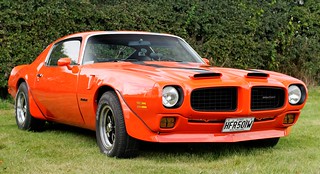
K.I.T.T. (Pontiac Firebird Trans Am from the TV series 'Knight Rider')




The Genesis of Enchantment
The Firebird (L'Oiseau de feu) emerged from the fertile imagination of Sergei Diaghilev's Ballets Russes, a company renowned for its avant-garde approach to ballet and opera. Commissioned for the 1910 Paris season, the ballet drew heavily upon Russian folk tales, particularly the legend of the Zhar-ptitsa, a mystical bird whose capture could bring either great fortune or ruin. Composer Igor Stravinsky, then relatively unknown, was tasked with creating the score, while Michel Fokine, the company's resident choreographer, developed the narrative and movement. Alexandre Benois contributed to the visual design, aiming to recreate the exoticism and grandeur of Russian folklore for a sophisticated Parisian audience.
The premiere at the Opéra de Paris on June 25, 1910, was an unqualified triumph, immediately establishing Stravinsky as a major force in contemporary music and cementing the Ballets Russes' reputation for groundbreaking artistic collaborations. This success was pivotal, setting the stage for future Stravinsky-Diaghilev collaborations that would redefine 20th-century music and dance.
Orchestral Alchemy
Stravinsky's score for The Firebird is a masterclass in orchestral color and dramatic effect, pushing the boundaries of musical language. He employed a sophisticated system of 'leit-harmony,' where distinct harmonic progressions and melodic fragments are associated with specific characters and dramatic situations-the radiant, ethereal motifs for the Firebird contrasting sharply with the menacing, dissonant harmonies representing the sorcerer Koschei. This technique imbues the music with a psychological depth, guiding the listener through the narrative's emotional landscape.
Furthermore, Stravinsky deliberately incorporated a wide array of specialized orchestral techniques to achieve unprecedented sonic textures. Effects such as 'ponticello' (bowing near the bridge for a thin, glassy sound), 'col legno' (striking strings with the wood of the bow for a percussive effect), 'flautando' (a flute-like tone on strings), 'glissando' (sliding between pitches), and 'flutter-tonguing' (rapidly vibrating the tongue while playing wind instruments) were utilized not merely as novelties, but as integral elements to evoke the magical, otherworldly atmosphere of the fairy tale and the primal energy of the 'Infernal Dance'.
Narrative Arc
The ballet's plot centers on Prince Ivan's fateful journey into the domain of Koschei the Deathless, an immortal and malevolent sorcerer who holds captive a host of princesses. Koschei's castle is a place of dread, where he uses his dark magic to preserve his own life and imprison others in eternal servitude. Prince Ivan stumbles upon the magical Firebird, a creature of incandescent beauty and power, whose plumage glows with an inner fire.
In a pivotal moment, the Firebird gifts Ivan one of its luminous feathers, bestowing upon him a magical defense against Koschei's enchantments. This enchanted feather becomes instrumental in Ivan's subsequent confrontation with the sorcerer. The ballet builds to a dramatic climax where Ivan, aided by the Firebird's magic, forces Koschei to reveal the location of his soul (an egg) and ultimately destroys it, thereby vanquishing the sorcerer and liberating his captives.
The narrative is a classic archetypal struggle between light and darkness, order and chaos, with the Firebird serving as the divine catalyst for salvation.
The Firebird's Enduring Resonance
The Firebird's artistic impact has been profound and multifaceted, extending far beyond its initial balletic form. Stravinsky himself recognized the concert potential of his score, meticulously crafting three distinct concert suites. The first, from 1911, concluded with the electrifying 'Infernal Dance.' The 1919 suite, revised and condensed, remains the most frequently performed and recorded version today, offering a potent distillation of the ballet's dramatic essence.
A third suite, created in 1945, featured significant reorchestration and structural alterations, reflecting Stravinsky's evolving compositional voice. The ballet's legacy is further amplified by continuous choreographic re-imaginings. While many productions pay homage to Fokine's seminal 1910 choreography, numerous contemporary choreographers have developed entirely new interpretations, exploring diverse thematic and stylistic approaches.
This enduring fascination has resulted in a vast discography, beginning with the first recording of the 1911 suite in 1928, and has permeated popular culture, including a notable film version of the Sadler's Wells Ballet production in 1959. The Firebird continues to be a touchstone in the repertoire, inspiring new generations of artists and audiences alike.
Go deeper
Frequently Asked Questions
What is the Firebird ballet about?+
Who created the music for The Firebird?+
When did The Firebird first perform?+
What special musical tricks did Stravinsky use?+
Why is the Firebird important in music and dance history?+
Based on content from Wikipedia · Licensed under CC BY-SA 4.0