

Ballets Russes
Images
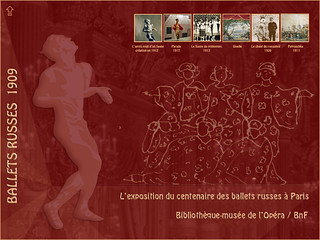
Exposition du centenaire des ballets russes à Paris (Opéra)


Diaghilev's Vision
The Ballets Russes, established in Paris in 1909 by Sergei Diaghilev, transcended the definition of a mere ballet company to become a pivotal nexus of 20th-century artistic modernism. Despite its name, the company never performed in Russia, its operations being entirely based abroad following its initial Parisian seasons, a consequence of the Russian Revolution. Diaghilev, an impresario of unparalleled vision, curated an ensemble that was inherently transnational, drawing talent from across Europe and fostering an environment where artistic disciplines converged.
This itinerant nature allowed the company to tour extensively throughout Europe and the Americas, disseminating its revolutionary aesthetic far and wide and establishing itself as the most influential ballet company of the century. Its success was predicated on Diaghilev's astute ability to identify and champion emerging talents, creating a dynamic platform for avant-garde expression.
The Alchemy of Collaboration
The true genius of the Ballets Russes lay in its radical approach to artistic collaboration. Diaghilev actively commissioned works from the leading avant-garde figures of his time, forging unprecedented partnerships between choreographers, composers, visual artists, and designers. Composers like Igor Stravinsky, Claude Debussy, and Erik Satie were tasked with creating scores that pushed the boundaries of musical language, often eliciting shock and controversy, as famously seen with Stravinsky's 'The Rite of Spring.' Simultaneously, visual artists such as Vasily Kandinsky, Pablo Picasso, and Henri Matisse were invited to design sets and costumes, transforming the stage into a vibrant canvas.
This interdisciplinary synergy meant that ballet productions became total works of art, where music, dance, and visual design were intrinsically linked, challenging traditional notions of theatrical presentation and influencing the development of multimedia performance.
A Cultural Catalyst
The Ballets Russes exerted a profound and multifaceted influence on the trajectory of 20th-century culture. Beyond revitalizing the art of ballet, the company served as a crucial incubator for modernist ideas, significantly impacting musical composition, visual arts, and fashion. By drawing inspiration from Russian folklore and reinterpreting it through a contemporary artistic lens, the company introduced a rich tapestry of cultural motifs to Western audiences, fostering cross-cultural dialogue.
The company's embrace of bold, experimental aesthetics directly contributed to broader artistic movements, most notably influencing the emergence and popularization of the Art Deco style. Its legacy lies not only in its groundbreaking productions but also in its demonstration of how collaborative artistic endeavors could drive cultural innovation and shape public taste.
Repertoire as a Mirror of Modernity
The repertoire of the Ballets Russes serves as a compelling chronicle of early 20th-century artistic experimentation. Productions like 'The Firebird,' 'Petrushka,' and 'The Rite of Spring' showcased a daring fusion of Russian folk traditions with avant-garde sensibilities. Choreographers such as Michel Fokine and Vaslav Nijinsky developed new movement vocabularies that broke away from classical ballet conventions, emphasizing emotional expression and dramatic narrative.
The visual designs were equally revolutionary; Léon Bakst's opulent costumes and sets for 'Scheherazade' or Coco Chanel's minimalist designs for 'Le Train Bleu' demonstrated the diverse aesthetic range the company explored. This constant innovation and willingness to challenge established norms ensured that the Ballets Russes remained at the cutting edge of artistic expression, leaving behind a body of work that continues to be studied and celebrated for its enduring artistic merit and historical significance.
Go deeper
Frequently Asked Questions
What was the Ballets Russes?+
Why did the Ballets Russes never perform in Russia?+
How did the Ballets Russes change ballet and music?+
What famous shows did the Ballets Russes put on?+
How did the Ballets Russes influence fashion and art?+
Based on content from Wikipedia · Licensed under CC BY-SA 4.0