

Human Evolution: Our Amazing Journey!
Images

Human evolution


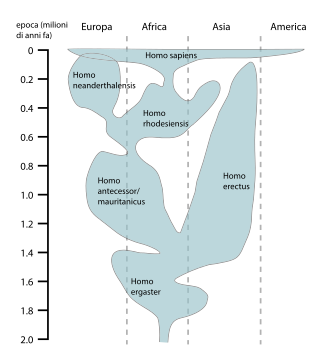


The Hominin Lineage
Human evolution is a fascinating narrative spanning millions of years, detailing the transformation of our ancestors from ape-like primates to modern Homo sapiens. Our story begins in Africa, where the hominin lineage diverged from other apes. Early hominins, such as Sahelanthropus tchadensis (around 7 million years ago) and Ardipithecus ramidus (around 4.4 million years ago), show a mosaic of traits, indicating a gradual transition towards bipedalism.
The genus Australopithecus, which flourished between 4 and 2 million years ago, is particularly significant. Species like Australopithecus afarensis (famously represented by the 'Lucy' fossil) clearly demonstrated habitual bipedalism, though they retained adaptations for arboreal life. This shift to upright walking was a pivotal moment, freeing the hands and altering the pelvis and foot structure.
It allowed for more efficient locomotion across varied terrains and facilitated carrying resources, which likely played a crucial role in survival and social dynamics. The development of bipedalism also influenced the skull and spine, preparing the way for the significant brain expansion that would follow.
The Rise of the Genus Homo
Around 2.8 million years ago, the genus Homo emerged, characterized by a marked increase in brain size (encephalization) and the development of more sophisticated stone tool technologies, beginning with the Oldowan industry. Homo habilis, often called 'handy man', is associated with these early tools and had a larger brain than Australopithecines. However, it was Homo erectus, appearing around 1.9 million years ago, that truly revolutionized human potential. Homo erectus possessed a significantly larger brain, a more modern body plan, and was the first hominin species to migrate out of Africa.
They developed more advanced Acheulean tools, like handaxes, and crucially, learned to control fire. The control of fire provided warmth, protection from predators, and enabled cooking, which made food more digestible and nutrient-rich, potentially fueling further brain growth. This species’ adaptability and technological prowess allowed them to colonize diverse environments across Asia and Europe, laying the groundwork for future human expansion.
Diversification and the Emergence of Homo Sapiens
Following Homo erectus, the evolutionary path became more complex, with several hominin species coexisting and evolving. In Europe and Western Asia, Neanderthals (Homo neanderthalensis) evolved, adapting to cold climates with robust bodies and large brains, developing their own sophisticated Mousterian tool culture and evidence of symbolic behavior. In Asia, species like Homo heidelbergensis (often considered a common ancestor to both Neanderthals and Homo sapiens) and later Denisovans emerged.
Our own species, Homo sapiens, arose in Africa approximately 300,000 years ago, as evidenced by fossils from Jebel Irhoud in Morocco. Early Homo sapiens exhibited a more gracile skeleton and a distinct cranial shape, with a high, rounded braincase. Crucially, they developed complex language, abstract thought, and advanced symbolic behaviors, including art and sophisticated burial rituals, which facilitated unprecedented levels of cooperation and cultural transmission.
Global Dispersal and Modern Human Success
Around 70,000 to 50,000 years ago, Homo sapiens began a significant migration out of Africa, eventually populating every habitable continent. This 'Out of Africa' expansion was driven by a combination of factors, including population growth, climate change, and the advanced cognitive and social capabilities of our species. Genetic studies reveal that as Homo sapiens spread, they encountered and interbred with other hominin groups, such as Neanderthals and Denisovans, leaving traces of their DNA in modern non-African populations.
The success of Homo sapiens can be attributed to our remarkable adaptability, complex social structures, innovation in tool technology, and the development of sophisticated communication systems. This evolutionary journey, marked by adaptation, migration, and innovation, has shaped our species into the dominant force on the planet today, continually influencing our biology, culture, and relationship with the environment.
Go deeper
Frequently Asked Questions
What does it mean that humans walked on two legs?+
Why did Homo erectus learn to use fire?+
Who was Lucy and why is she famous?+
How did Neanderthals adapt to cold climates?+
When did humans first leave Africa?+
Based on content from Wikipedia · Licensed under CC BY-SA 4.0