

Fire
Images
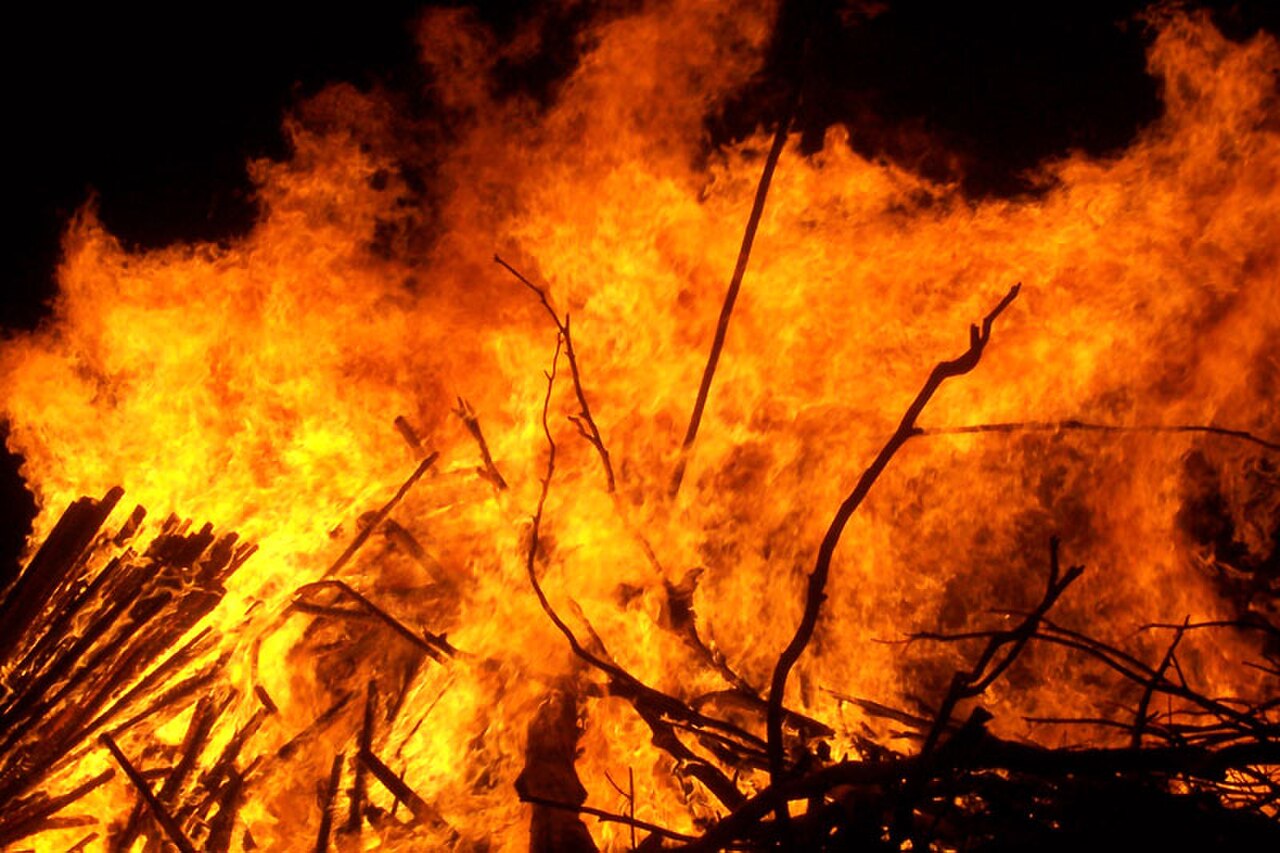
Fire
The Thermodynamics of Flame
Fire is fundamentally an exothermic chemical reaction, specifically rapid oxidation. This process involves a fuel rapidly combining with an oxidizer, most commonly atmospheric oxygen, to produce heat and light. The energy released during combustion is a result of the breaking and forming of chemical bonds.
When a fuel reaches its ignition point, the molecules gain enough kinetic energy to overcome the activation energy barrier, initiating a chain reaction. The visible flames are a plasma, a state of matter where gases are ionized, emitting light. The composition of these flames varies with the fuel; hydrocarbon flames, for instance, primarily consist of carbon dioxide, water vapor, oxygen, and nitrogen.
The color and intensity are dictated by the fuel type, the presence of impurities, and the surrounding atmospheric gases. Understanding the thermodynamics of combustion is crucial for controlling fire, from optimizing industrial furnaces to developing advanced fire suppression systems. The efficiency and byproducts of combustion also have significant implications for energy production and environmental pollution.
Fire as a Civilizational Catalyst
The mastery of fire represents one of the most pivotal advancements in human history, fundamentally altering our evolutionary trajectory. Early hominids likely utilized naturally occurring fires, but the ability to intentionally create and control fire provided unprecedented advantages. It enabled the cooking of food, making nutrients more bioavailable and reducing the risk of foodborne pathogens, which may have contributed to brain development.
Fire provided warmth, allowing humans to inhabit colder climates and extend their activity into the night, fostering social cohesion and storytelling. It served as a powerful tool for defense against predators and for clearing land for agriculture, a practice that reshaped landscapes and supported growing populations. In later eras, fire became indispensable for technological progress, powering the smelting of ores to produce metals, driving early industrial machinery, and facilitating the development of ceramics and glass.
The historical reliance on fire for energy and industry has left an indelible mark on human civilization, shaping our settlements, economies, and even our cultural practices.
Ecological Fire Regimes
Fire is not merely an environmental hazard; it is an integral component of many natural ecosystems, shaping their structure, function, and biodiversity. These ecosystems have evolved under specific fire regimes – patterns of frequency, intensity, and seasonality of fires. In fire-dependent ecosystems, such as certain grasslands, savannas, and coniferous forests, fire plays a critical role in nutrient cycling, clearing dead biomass, and promoting the regeneration of specific plant species.
For example, the heat from fire can break the dormancy of seeds, or the ash left behind can provide essential nutrients like potassium and phosphorus. However, the removal of vegetation by fire can also lead to negative consequences, such as soil erosion, particularly in areas with heavy rainfall. Furthermore, the burning of vegetation releases nitrogen into the atmosphere, a nutrient that is not retained in the ash and can lead to a long-term reduction in soil fertility, which is then replenished by nitrogen-fixing plants or other natural processes.
Understanding these complex ecological interactions is vital for effective land management and conservation efforts, especially in the face of climate change, which can alter fire behavior.
The Global Impact of Fire
The consequences of fire extend far beyond the immediate vicinity of a blaze, impacting local environments, human health, and the global atmosphere. Uncontrolled fires, or conflagrations, can result in catastrophic loss of life and property, necessitating sophisticated firefighting techniques and urban planning strategies. The atmospheric pollution generated by fires, including particulate matter, carbon monoxide, and nitrogen oxides, poses significant health risks, exacerbating respiratory conditions and contributing to smog.
On a global scale, the combustion of biomass releases vast amounts of greenhouse gases, such as carbon dioxide, contributing to climate change. Conversely, fire also plays a role in the global carbon cycle by consuming vegetation that would otherwise store carbon. The interaction between fire and the atmosphere is complex, with factors like temperature, humidity, and wind influencing fire behavior and the subsequent atmospheric impact.
Managing fire effectively requires a holistic approach that considers its ecological roles, human safety, and its contribution to global environmental challenges.
Fire Science and Management
The scientific study of fire, known as fire science, encompasses a broad range of disciplines, from chemistry and physics to ecology and meteorology. This knowledge is applied to fire management, which involves strategies for preventing, detecting, controlling, and suppressing fires. Modern firefighting relies on advanced technology, including satellite monitoring for early detection, sophisticated weather forecasting to predict fire behavior, and specialized equipment for suppression.
Fire management also includes prescribed burning, a technique where fires are intentionally set under controlled conditions to achieve specific ecological goals, such as reducing fuel loads to prevent larger wildfires or promoting habitat regeneration. The development of fire-resistant materials and building codes also plays a crucial role in mitigating fire risk in human settlements. As climate change intensifies, leading to more frequent and severe wildfires in many regions, the science and management of fire are becoming increasingly critical for protecting both natural landscapes and human communities.
Go deeper
Based on content from Wikipedia · Licensed under CC BY-SA 4.0