

Hawaiian Islands
Images
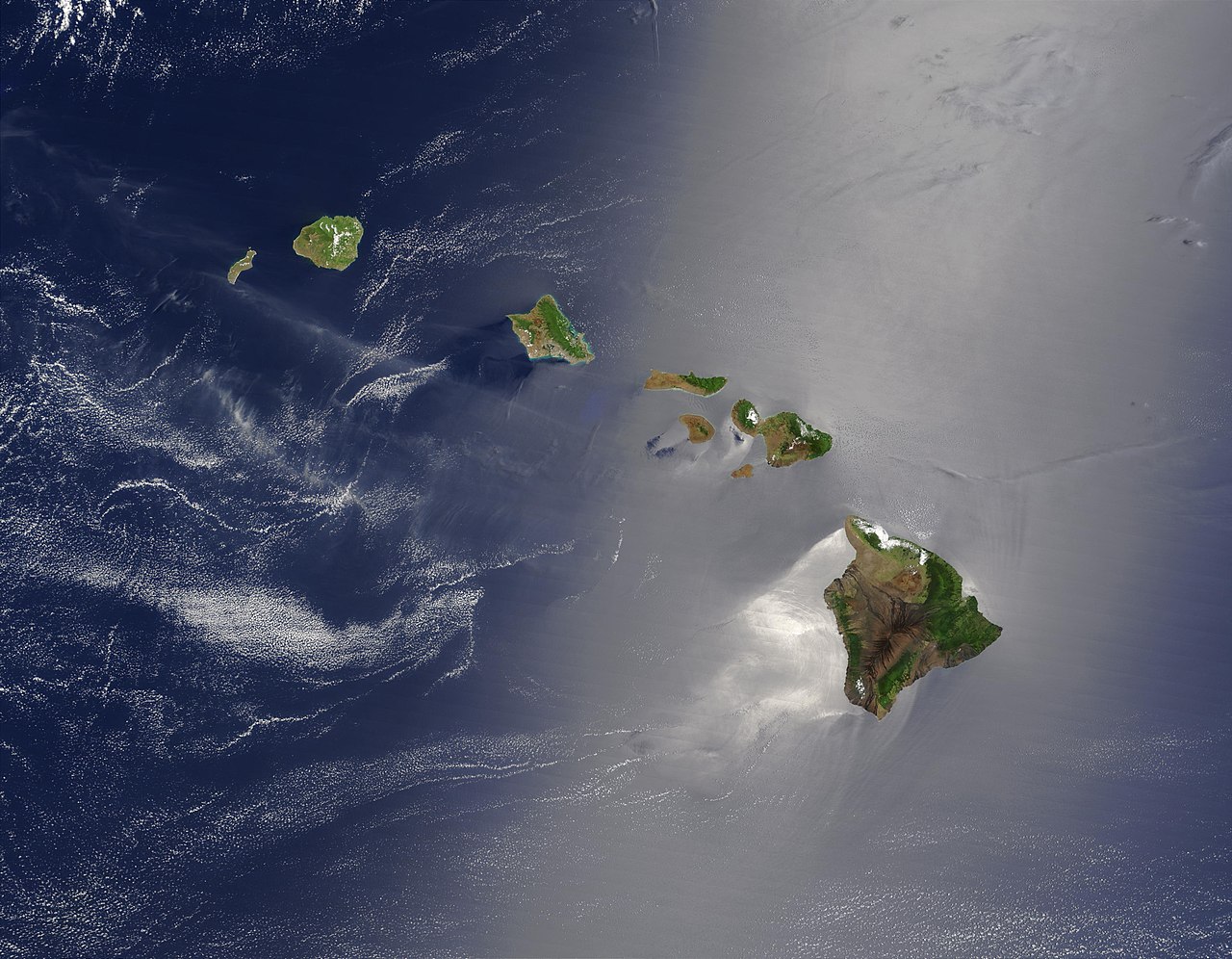
Hawaje NoRedLine


Islands Born of Fire
Imagine a chain of islands stretching over 1,500 miles across the vast North Pacific Ocean. That's the Hawaiian Islands! These aren't just any islands; they're the tops of massive underwater mountains, created by fiery volcanic activity deep beneath the ocean's surface.
This volcanic hotspot is like a giant blowtorch, constantly creating new land as the Pacific Plate drifts over it. The islands are incredibly isolated, with the nearest continent being about 1,860 miles away – that's like flying across the entire United States multiple times!
The archipelago is made up of eight main volcanic islands, plus many smaller islets and atolls. The largest island, Hawaiʻi, is the namesake for the entire group. The climate here is tropical, meaning it's generally warm and humid year-round, perfect for lush rainforests and stunning coastlines.
The dramatic landscapes range from towering volcanoes, some still active, to lush valleys and pristine beaches. It's a place where the raw power of nature is on full display, from the creation of new land to the shaping of dramatic cliffs and coastlines by the ocean's waves.
From Ancient Voyages to Statehood
The story of the Hawaiian Islands begins with incredible feats of navigation. Ancient Polynesian voyagers, using their knowledge of the stars and ocean currents, sailed thousands of miles across the Pacific to discover and settle these remote islands. Over centuries, they developed a unique culture and society.
Later, European explorers, like Captain James Cook, arrived in the late 1700s and initially called them the Sandwich Islands.
Over time, the islands were unified under a single Hawaiian Kingdom. However, this kingdom eventually faced significant changes, including the overthrow of the monarchy in 1893. Following a period as a republic, Hawaii was annexed by the United States in 1898.
It officially became the 50th U.S. state in 1959, a momentous event that integrated the islands into the United States while preserving their distinct identity. The Northwestern Hawaiian Islands, a chain of smaller, mostly uninhabited islands, are now protected as a national monument and World Heritage Site, recognizing their immense ecological and historical importance.
Culture & People
The culture of Hawaii is a vibrant fusion, a testament to its history of exploration and settlement. The indigenous Hawaiian people have a rich heritage, with traditions deeply connected to the land and sea. This includes their unique language, hula dancing, and intricate storytelling.
Over the years, immigrants from various parts of the world – including China, Japan, the Philippines, and Portugal – have brought their own customs, foods, and languages, creating a wonderfully diverse society.
This mix of cultures is evident in everyday life, from the delicious local cuisine, which often features a blend of Asian and Pacific flavors, to the festivals and celebrations that occur throughout the year. The concept of 'aloha' is central to Hawaiian culture, representing love, peace, compassion, and mutual respect. It's more than just a greeting; it's a way of life that emphasizes community and harmony.
This spirit of aloha is what many visitors experience and remember most about the islands, contributing to Hawaii's reputation as a welcoming and unique place.
Tourism and More
The Hawaiian Islands have a unique economy, heavily influenced by their geography and isolation. Tourism is by far the biggest industry. Millions of visitors flock to the islands each year, drawn by the stunning natural beauty, warm climate, and rich culture. This influx of tourists supports a wide range of jobs, from hotel staff and tour guides to restaurant workers and shopkeepers.
Beyond tourism, agriculture plays a significant role. Historically, sugar cane and pineapples were major exports, though their importance has decreased. Today, other crops like coffee, macadamia nuts, and tropical fruits are grown.
The U.S. military also has a substantial presence in Hawaii, contributing to the economy through bases and personnel. Due to the islands' isolation, many goods need to be imported, which can make the cost of living higher than on the mainland. However, the islands also produce many of their own resources, and there's a growing focus on sustainable practices and local businesses.
A U.S. State with Unique Challenges
As the 50th state of the United States, Hawaii operates under the U.S. federal system of government. This means it has a governor as its chief executive, a state legislature made up of a Senate and House of Representatives, and its own court system. The state is divided into five counties, each with its own local government responsible for services like roads, parks, and public safety.
However, Hawaii's unique island geography and its history as an independent kingdom present distinct governmental challenges. Managing resources, transportation between islands, and environmental protection are major concerns. The state government plays a crucial role in balancing the needs of its residents with the demands of tourism and the preservation of its natural environment.
The protection of the Northwestern Hawaiian Islands as a national monument and World Heritage Site highlights the government's commitment to conservation and recognizing the islands' global significance.
Nurturing Future Generations
The Hawaiian Islands have a comprehensive educational system designed to serve a diverse student population across its many islands. The Hawaii State Department of Education oversees public schools, aiming to provide quality education from kindergarten through 12th grade. Given the geographical spread, innovative approaches are often used to ensure students on different islands have access to the same opportunities.
Beyond K-12, Hawaii is home to the University of Hawaii system, which includes several campuses, most notably the University of Hawaiʻi at Mānoa. This university is a major research institution, with a strong focus on fields relevant to the Pacific region, such as marine biology, tropical agriculture, and Hawaiian studies. There are also private schools and specialized educational programs that cater to various needs and interests.
The educational system plays a vital role in fostering a sense of community, preserving cultural heritage, and preparing students for careers in a unique island environment, whether in tourism, conservation, or other emerging industries.
See also
Frequently Asked Questions
What are the Hawaiian Islands made of?+
How far are the Hawaiian Islands from the nearest continent?+
Why were the Hawaiian Islands once called the Sandwich Islands?+
What does the word "aloha" mean in Hawaiian culture?+
How did the Hawaiian Islands become a U.S. state?+
Based on content from Wikipedia · Licensed under CC BY-SA 4.0