

The Grand Principality of Moscow: A Kingdom's Rise!
Images
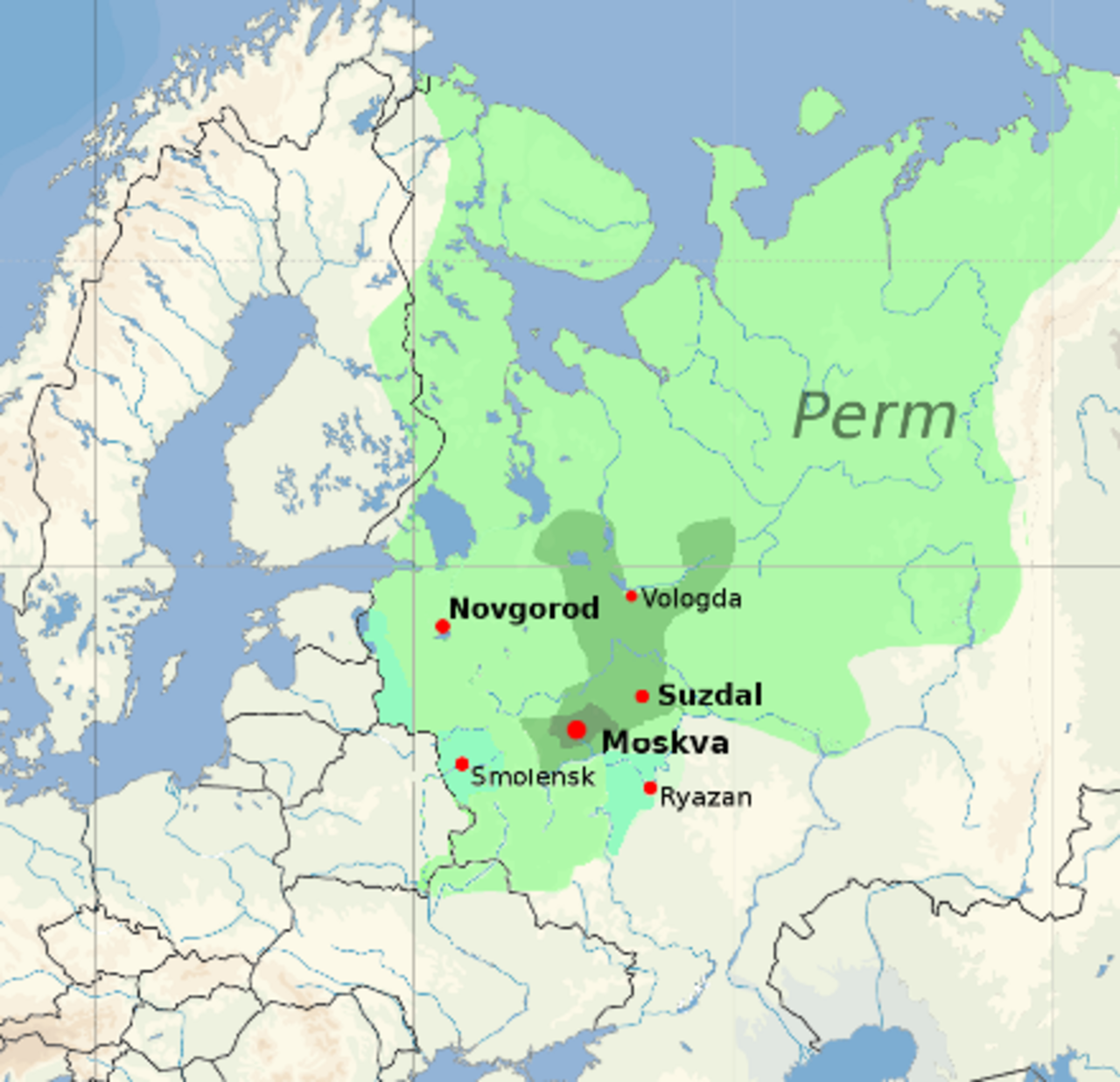
Grand Principality of Moscow
The Crucible of Power
The emergence of the Grand Principality of Moscow as a dominant force in Eastern Europe was a complex process, deeply intertwined with its geographical advantages and the political landscape of the 13th to 15th centuries. Situated on the upper reaches of the Volga River system, Moscow possessed crucial riverine trade routes and was relatively well-protected by dense forests and marshlands, offering a degree of natural defense against invaders. Initially a minor principality under the suzerainty of the Golden Horde, Moscow's princes proved exceptionally adept at leveraging their position.
They skillfully navigated the intricate web of tribute payments, diplomatic alliances, and military engagements with both their Mongol overlords and rival Russian principalities. This period was characterized by a pragmatic approach to state-building, where the acquisition of land through purchase, inheritance, and strategic marriages was as vital as military conquest. The Grand Princes of Moscow cultivated a reputation for shrewd governance, gradually consolidating their authority and laying the administrative and fiscal foundations for a larger, more centralized state.
This era was not merely about territorial expansion but about the sophisticated development of institutions that would support future imperial ambitions.
Ivan III
Ivan III Vasilyevich (reigned 1462–1505), often hailed as 'Ivan the Great,' stands as a pivotal figure in the consolidation of Russian lands under Moscow's dominion. His reign marked a decisive break from the legacy of the Golden Horde. In 1480, Ivan III famously refused to pay tribute, effectively ending the 'Tatar Yoke' and asserting Moscow's full sovereignty.
This act was not just symbolic; it represented a fundamental shift in geopolitical power. Ivan III systematically incorporated neighboring principalities, most notably the powerful Republic of Novgorod, into the Muscovite state through a combination of diplomacy, economic pressure, and military force. He adopted the Byzantine imperial symbolism, including the double-headed eagle, and began styling himself as 'Gosudar' (Sovereign) of all Rus'.
This was a deliberate claim to the inheritance of Kievan Rus' and a clear statement of Moscow's destiny as the unifier of the East Slavic lands. His legal reforms, culminating in the Sudebnik of 1497, further strengthened central authority and standardized legal practices across his expanding realm.
Forging a State
The Grand Principality of Moscow's transformation into a formidable state involved more than just territorial expansion; it required the development of robust governance, a functioning economy, and a cohesive sense of identity. The Muscovite administration evolved from a relatively simple princely court to a more complex bureaucracy, with specialized departments (prikazy) emerging to manage various aspects of state affairs, such as foreign relations, military organization, and justice.
The economy, while largely agrarian, benefited from Moscow's central location, facilitating trade networks that connected Northern Europe with Central Asia. The construction of monumental architecture, particularly within the Moscow Kremlin, served not only as a symbol of power and defense but also as a focal point for religious and political life. The Orthodox Church played a crucial role in fostering a shared cultural and religious identity, reinforcing Moscow's position as the spiritual center of the Russian lands.
This period witnessed the gradual articulation of a distinct Muscovite identity, one that was increasingly defined by its independence from external powers and its ambition to lead the Russian world.
The Grand Principality's Enduring Impact
The Grand Principality of Moscow's legacy is profound, serving as the direct precursor to the Tsardom of Russia and, subsequently, the Russian Empire. The political structures, administrative innovations, and territorial gains achieved during this period created the essential framework upon which later rulers would build. Ivan III's assertion of sovereignty and Ivan IV's coronation as Tsar in 1547 were logical culminations of the Grand Principality's trajectory.
The concept of a unified, centralized Russian state, with Moscow as its unassailable heart, was firmly established. The Grand Principality demonstrated the viability of a powerful, independent Russian polity capable of projecting influence far beyond its initial borders. Its success provided a blueprint for state-building in a challenging geopolitical environment and laid the groundwork for Russia's emergence as a major Eurasian power, shaping the course of global history for centuries to come.
See also
Frequently Asked Questions
What was the Grand Principality of Moscow?+
How did Moscow grow into a strong kingdom?+
Why did Ivan the Great stop paying tribute?+
Where was Moscow located that helped it grow?+
What was the Sudebnik of 1497?+
Based on content from Wikipedia · Licensed under CC BY-SA 4.0