

Gideon Welles
Images
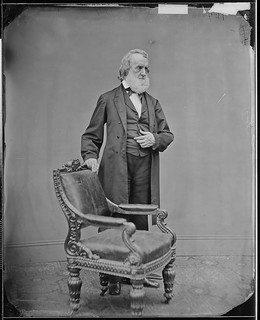
Hon. Gideon Welles, Conn


Navigating Political Currents and Naval Strategy
Gideon Welles, born in 1802, brought a wealth of political experience to his role as Secretary of the Navy, a position he assumed in 1861 following his instrumental support for Abraham Lincoln's presidential campaign. His appointment was significant, placing a seasoned administrator and former newspaper editor at the helm of a critical branch of the military during an unprecedented national crisis. Lincoln's affectionate moniker, 'Neptune,' underscored Welles's perceived mastery over the seas and his vital role in the Union's war effort.
Welles was not merely a figurehead; he was a strategic thinker who grappled with the complex challenges of modernizing and expanding the Navy under the immense pressures of the Civil War. His initial reservations about the efficacy of a total blockade evolved into a determined execution of the strategy, demonstrating his capacity for adapting policy to wartime realities and his unwavering commitment to preserving the Union.
The Engine of the Anaconda
Welles's tenure is inextricably linked to the success of the Union's Anaconda Plan, a comprehensive strategy designed to cripple the Confederacy. While the plan encompassed land campaigns, its naval component, spearheaded by Welles, was arguably its most effective element. He oversaw a remarkable expansion of the U.S.
Navy, increasing its size nearly tenfold. This rapid growth was essential for establishing and maintaining the blockade of Southern ports, effectively strangling Confederate trade and access to vital foreign armaments and supplies. The blockade prevented the Confederacy from exporting its cotton, its primary source of revenue, and importing the matériel necessary to sustain its war effort.
This strategic success, largely attributable to Welles's organizational prowess and the expanded fleet under his command, is widely considered a pivotal factor in the Union's ultimate victory, demonstrating the profound impact of naval power on the outcome of the conflict.
Institutionalizing Valor
Beyond the strategic imperatives of wartime naval operations, Gideon Welles left an enduring legacy through his role in establishing the Medal of Honor. Recognizing the need to formally acknowledge and commemorate extraordinary acts of bravery, Welles was instrumental in the Navy's creation of this prestigious award in 1861. This initiative was groundbreaking, providing a standardized and highly esteemed recognition for valor that transcended mere duty.
The Medal of Honor, which was later extended to the Army, has since become the highest military decoration awarded by the United States. Welles's foresight in institutionalizing the recognition of exceptional courage has had a profound and lasting impact, shaping military culture and ensuring that the most heroic deeds are forever honored, serving as an inspiration for generations of service members and a testament to the values of sacrifice and valor.
Legacy and Lasting Impact on American Naval Power
Gideon Welles's leadership during the Civil War fundamentally reshaped the United States Navy. He transformed it from a relatively modest force into a powerful, modern instrument of national policy. The dramatic expansion he orchestrated not only secured Union victory but also laid the critical groundwork for the U.S.
Navy's future global prominence. His administrative acumen in managing such rapid growth, his strategic implementation of the blockade, and his pioneering efforts in establishing the Medal of Honor highlight a career marked by significant and lasting contributions. Welles's legacy is that of a steadfast public servant who, during a period of existential threat, successfully navigated complex challenges to strengthen a vital national institution and preserve the Union, leaving an indelible mark on American history and naval tradition.
See also
Frequently Asked Questions
What did Gideon Welles do as Secretary of the Navy?+
Why was Gideon Welles called "Neptune"?+
How did Gideon Welles help the Union win the Civil War?+
When did Gideon Welles create the Medal of Honor?+
What is the Medal of Honor and why is it important?+
Based on content from Wikipedia · Licensed under CC BY-SA 4.0