

Ghardaïa Province
Images
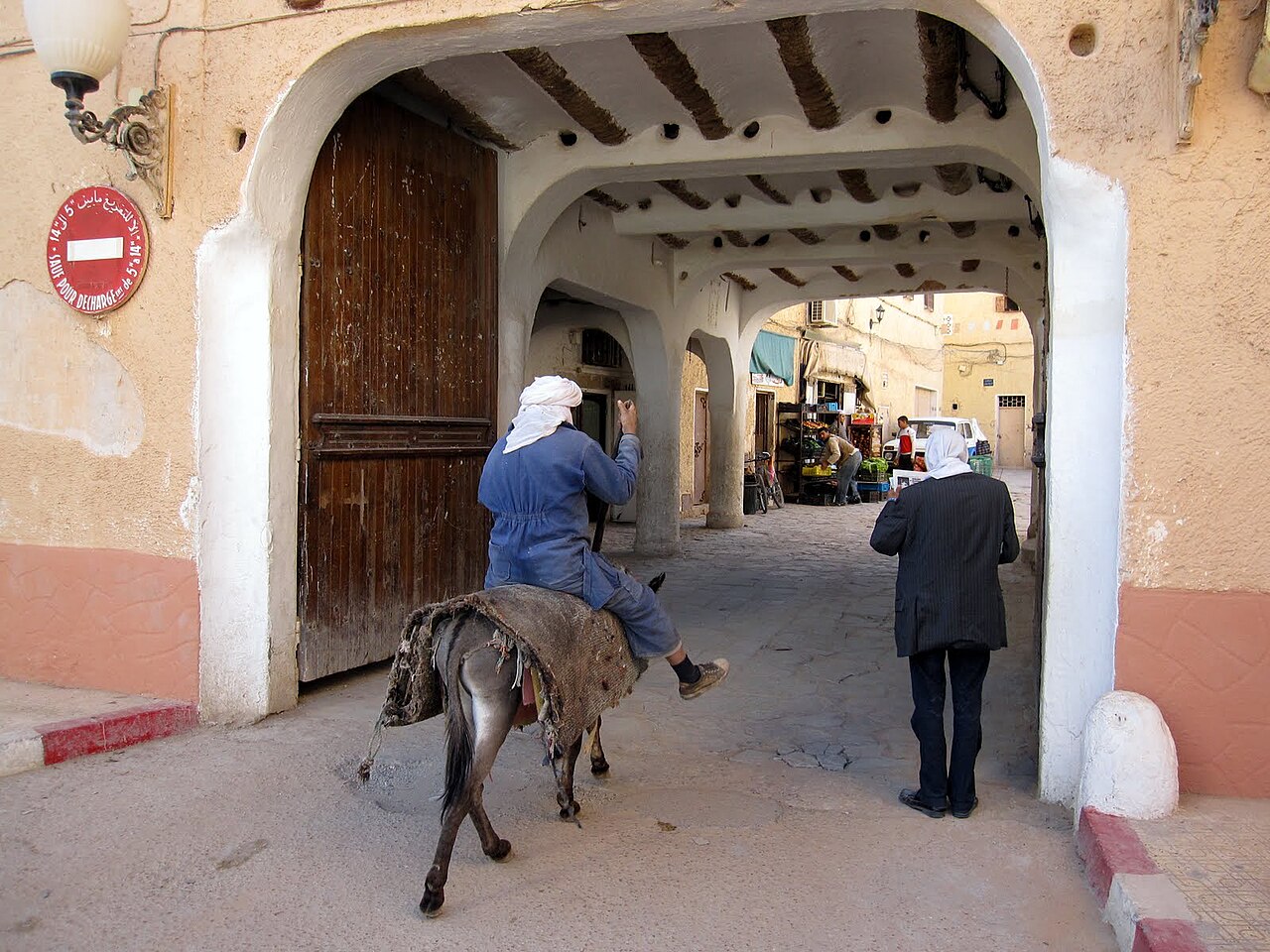
M'Zab Ghardaia Province - Algeria


Geomorphology and Climate of the Northern Sahara
Ghardaïa Province is situated in the northern expanse of the Algerian Sahara, a region characterized by its arid and hyper-arid climate. The province's geographical coordinates place it approximately 600 kilometers south of the Mediterranean coast and the capital, Algiers. Its total area spans 21,224.03 square kilometers, presenting a landscape predominantly composed of rocky plains (hamada), sandy ergs, and wadis (dry riverbeds that can flood seasonally).
The elevation averages around 486 meters above sea level, contributing to significant diurnal temperature variations. Summers are intensely hot, often exceeding 40°C, while winters can bring surprisingly cool nights. Precipitation is scarce, averaging less than 50 mm annually, making water management a critical factor for survival and development. This extreme environment has historically dictated settlement patterns and human activity, favoring locations with access to limited groundwater sources.
Historical Resilience and Architectural Ingenuity
The historical narrative of Ghardaïa Province is deeply rooted in the remarkable resilience and architectural innovation of its inhabitants, particularly the Mozabites. The M'zab Valley, a UNESCO World Heritage site encompassing several ancient cities including Ghardaïa, El Atteuf, and Beni Isguen, stands as a testament to centuries of human adaptation. These cities were meticulously planned and constructed, often on elevated plateaus for defensive purposes and to escape flash floods.
Traditional Mozabite architecture features densely packed, cube-shaped houses made from local materials like earth and stone. The design emphasizes passive cooling through narrow streets, shaded courtyards, and ventilation shafts. This vernacular architecture is not merely aesthetic; it is a sophisticated response to the extreme desert climate, demonstrating a profound understanding of environmental engineering that has allowed these communities to thrive for over a millennium.
Socio-Cultural Fabric and Ibadism
The cultural identity of Ghardaïa Province is intrinsically linked to the Mozabite people and their adherence to Ibadism, a moderate branch of Islam. This religious affiliation has profoundly shaped their social structures, legal systems, and daily practices, fostering a strong sense of community cohesion and egalitarianism. The Mozabite language, a distinct Berber dialect, persists alongside official Arabic, preserving a unique linguistic heritage.
Their social organization often emphasizes collective decision-making and mutual support, which has been crucial for managing resources and maintaining social order in a challenging environment. Traditional crafts, such as pottery, carpet weaving, and leatherwork, remain vital cultural expressions and economic activities, reflecting a deep connection to ancestral skills and artistic traditions.
Economic Landscape and Modern Challenges
The economy of Ghardaïa Province is a blend of traditional practices and modern economic drivers. Historically, agriculture, particularly date cultivation from hardy palm trees, has been a cornerstone, supported by sophisticated irrigation systems like the 'foggara'. Trade and commerce have also been significant, leveraging Ghardaïa's position as a historical crossroads for trans-Saharan routes. In contemporary times, the province benefits from the exploitation of natural resources and a growing tourism sector, drawn by its unique cultural heritage and desert landscapes.
However, challenges persist, including water scarcity, the need for economic diversification beyond traditional sectors, and adapting to the impacts of climate change. Educational attainment is a key focus for future development, aiming to equip the younger generation with the skills needed to navigate these complexities and contribute to the province's sustainable future.
Governance and Educational Imperatives
Ghardaïa Province operates within Algeria's administrative framework, with a Wali (governor) appointed by the central government overseeing provincial affairs. The provincial administration is responsible for implementing national policies, managing local resources, and ensuring public services. Local governance structures exist at the commune level, allowing for some degree of decentralized decision-making. Education is a critical component of the province's development strategy.
The educational system aims to provide comprehensive schooling from primary to secondary levels, with efforts to improve infrastructure and teacher training. Higher education opportunities are also available, often through regional institutions or by students pursuing studies in larger Algerian cities. The curriculum emphasizes both national Algerian identity and the preservation of local Mozabite culture and history, fostering a sense of belonging and preparing students for future roles within the province and the nation.
See also
Frequently Asked Questions
What is Ghardaïa Province like?+
Why are the cities in Ghardaïa built on high places?+
How do people keep cool in the hot desert?+
What is the main food that people grow in Ghardaïa?+
Who are the Mozabites and what do they do?+
Based on content from Wikipedia · Licensed under CC BY-SA 4.0