

Germany's Amazing Football Stars!
Images

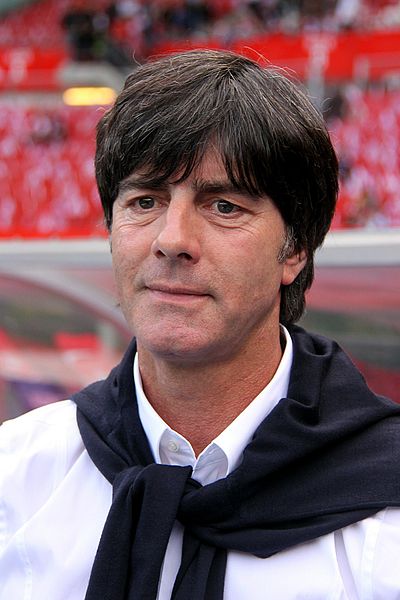
File:Toni Kroos, Germany national football team (02).jpg


Geopolitical Echoes
Germany's geographical position in Central Europe has long placed it at a crossroads of cultures and political landscapes. This has profoundly shaped its national football team. The DFB, established in 1900, has navigated complex historical periods, most notably the post-World War II division of the country.
From 1949 to 1990, FIFA recognized separate German national teams: the DFB's team representing the Federal Republic of Germany (West Germany), the Saarland team (1950-1956), and the German Democratic Republic (East Germany) team. This era mirrors the broader geopolitical tensions of the Cold War, where sports often became a proxy for ideological competition.
The absorption of the Saarland and East German teams and their records into the unified German team in 1990 symbolizes not just a sporting reunion but a national one, creating a formidable entity that draws on a richer, albeit fragmented, history. The team's official designation evolved from 'Germany FR (FRG)' to 'Germany (GER)' post-reunification, marking a significant shift in its international identity.
A Dynasty Forged in Competition
The Germany national football team stands as one of the most decorated nations in international football. Their four FIFA World Cup titles (1954, 1974, 1990, 2014) place them among the elite, tied with Italy and trailing only Brazil. This consistent success across different eras highlights a remarkable ability to adapt and excel.
Furthermore, Germany's three European Championship victories (1972, 1980, 1996) rank them second only to Spain in continental dominance. Their trophy cabinet also boasts a FIFA Confederations Cup win in 2017, alongside multiple runner-up finishes and third-place standings in major tournaments. Notably, Germany is the only European nation to have won a World Cup in the Americas, a testament to their global reach and adaptability.
The team's historical performance is further underscored by achieving the second-highest Elo rating in national football history, a sophisticated measure of team strength.
The Cultural Fabric
In Germany, football transcends mere sport; it is deeply interwoven with national identity and culture. The success of the national team serves as a powerful unifying force, capable of galvanizing the populace and fostering a shared sense of pride, particularly during major tournaments. The DFB, as the governing body, manages a vast infrastructure that includes extensive youth development programs, contributing significantly to the nation's sporting prowess and providing pathways for aspiring athletes.
Beyond its cultural impact, professional football is a major industry in Germany, generating substantial revenue through broadcasting rights, sponsorships, merchandise, and stadium attendance. This economic significance extends to job creation and tourism, making the national team a valuable asset to the country's economy. The team's global brand recognition also enhances Germany's international image.
Strategic Depth
Germany's sustained success is not accidental; it's a product of meticulous planning, tactical innovation, and a robust player development system. The DFB's commitment to coaching education and youth academies ensures a continuous pipeline of talented players equipped with strong technical skills and tactical understanding. Historically, German teams have been renowned for their discipline, physical prowess, and tactical flexibility, often adapting their style to counter opponents effectively.
From the pragmatic efficiency of earlier eras to the more fluid, possession-based football seen in recent decades, the team has demonstrated an ability to evolve. This strategic depth allows them to remain competitive against diverse playing styles on the international stage, consistently producing world-class talent capable of performing under immense pressure.
Global Footprint
A truly remarkable achievement in the annals of international football is Germany's distinction as one of only two nations, alongside Spain, to have won both the FIFA Men's World Cup and the FIFA Women's World Cup. This dual supremacy highlights the depth and quality of football across both genders within the country. When combining the titles of the men's and women's national teams, Germany emerges as the most successful footballing nation in history, with a combined total of six World Cup victories.
This unparalleled success underscores a national commitment to football excellence at all levels and across all demographics, solidifying Germany's status as a global footballing superpower.
See also
Frequently Asked Questions
What makes the German football team so special?+
How many times has Germany won the World Cup?+
Why did Germany have different teams before 1990?+
What does the DFB do to help young players become stars?+
Where did Germany win its first World Cup?+
Based on content from Wikipedia · Licensed under CC BY-SA 4.0