

Galatia
Images

Saline County Illinois Incorporated and Unincorporated areas Galatia Highlighted


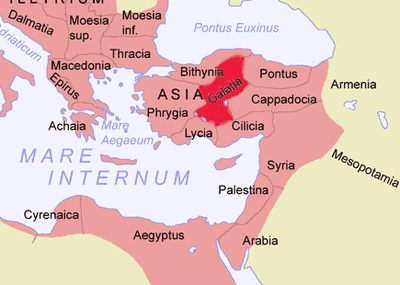

The Gallic Incursion into Anatolia
Galatia represents a fascinating chapter in ancient history, marked by the significant migration of Gallic tribes into the heart of Anatolia. These were not isolated wanderers but part of a larger Gallic expansion that swept through the Balkans following the pivotal event of 279 BC. Their arrival in the central highlands of Anatolia, a region roughly corresponding to modern Ankara and Eskişehir, was a profound geopolitical development.
The Gauls, known for their martial prowess, established themselves as a distinct tribal entity, creating a new political and cultural landscape. Their settlement was not merely a relocation but an assertion of presence in a territory already rich with history and diverse populations. This Gallic presence fundamentally altered the regional dynamics, introducing a new element into the complex tapestry of Anatolian civilizations.
The establishment of Galatia as a distinct territory underscores the far-reaching impact of Gallic movements across ancient Europe and into Asia Minor.
Cultural Synthesis and the 'Gallia' of the East
The designation of Galatia as the 'Gallia' of the East is a critical descriptor that encapsulates the essence of this region. It signifies more than just a geographical location; it points to a cultural transplantation. The Gallic settlers brought with them their distinct customs, languages, and social structures, which interacted with and influenced the existing indigenous Anatolian cultures.
This interaction led to a unique synthesis, where Gallic traditions were adapted to the new environment and, in turn, influenced local ways of life. The nickname 'Gallia' of the East served as a comparative marker for contemporary peoples, drawing parallels between the settlers in Anatolia and their kinsmen in Western Europe. This linguistic and cultural bridge helped to define Galatia's identity in the ancient world, positioning it as a distant outpost of Gallic influence.
The very name 'Gallacia' itself, with potential roots tracing back to northwest Spain, hints at an even more complex migratory history, suggesting that the Gauls who settled Galatia may have undertaken journeys spanning vast distances and diverse cultural landscapes before reaching their final destination.
The Strategic and Cultural Significance of Galatia
Galatia’s importance extends beyond its unique ethnic composition. Situated in the central highlands of Anatolia, it occupied a strategic position that influenced regional politics and trade. Its location made it a point of contact and potential conflict between various powers, including the Hellenistic kingdoms that emerged after Alexander the Great and later, the Roman Republic.
The presence of a formidable Gallic population meant that any power seeking dominance in Anatolia had to contend with Galatia. Furthermore, the cultural distinctiveness of the Galatians, while rooted in their European origins, also contributed to the rich mosaic of Anatolian civilization. Their integration into the broader Hellenistic world, and later Roman administration, demonstrates the adaptability of these migrating tribes and their ability to carve out a lasting legacy.
The study of Galatia provides invaluable insights into the processes of migration, cultural assimilation, and the formation of new identities in the ancient world, highlighting how distant lands could become home to peoples from vastly different origins.
Tracing the Gallic Footprint
The narrative of Galatia is intrinsically linked to the broader history of Gallic migrations. The journey from Thrace, following the Balkan invasions, was a monumental undertaking. These migrations were often driven by a combination of factors, including population pressures, political instability, and the search for new lands and resources.
The establishment of Galatia was one of several Gallic settlements that dotted the ancient world, showcasing their widespread influence. The fact that the name 'Gallacia' might have even earlier roots in northwest Spain suggests a long and complex migratory chain, possibly involving multiple waves of movement and settlement over centuries. This deep history of mobility is a defining characteristic of Gallic peoples.
Understanding Galatia, therefore, requires appreciating this extensive historical context, recognizing it not as an isolated event but as a significant point in a much larger story of ancient European peoples forging new identities in distant lands.
See also
Frequently Asked Questions
What is Galatia?+
Why were the Gallic tribes called the 'Gallia' of the East?+
Where did the Gallic tribes come from before they settled in Galatia?+
How did the Gallic settlers change life in Anatolia?+
Why was Galatia important to the Romans and other powers?+
Based on content from Wikipedia · Licensed under CC BY-SA 4.0