

Wild Strawberries: Tiny Treasures of the Forest!
Images

H20130117-6261—Fragaria vesca—RPBG


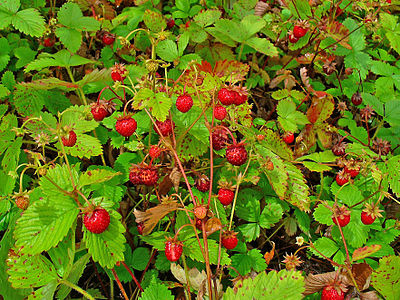
Botanical Profile and Geographic Distribution
Fragaria vesca, commonly known as the wild strawberry, woodland strawberry, or Alpine strawberry, is a perennial herbaceous plant belonging to the Rosaceae family, a diverse group that includes roses, apples, and pears. This species exhibits a circumboreal distribution, flourishing across temperate regions of the Northern Hemisphere, encompassing Europe, Asia, and North America.
Its adaptability allows it to colonize a variety of habitats, from the dappled shade of deciduous forests and the edges of coniferous woodlands to open meadows, alpine pastures, and even disturbed areas like roadsides. The plant typically grows to a height of 10-20 cm, forming dense mats through the proliferation of stolons, or runners. These runners are crucial for vegetative reproduction, enabling the plant to spread and colonize new territories efficiently.
The leaves are trifoliate, with serrated margins, and are arranged in basal rosettes. During spring and early summer, the plant produces small, actinomorphic white flowers, each with five petals. These flowers are typically hermaphroditic, capable of self-pollination, though cross-pollination by insects can enhance fruit set and seed viability.
The specific epithet 'vesca' is derived from the Latin word 'vescor,' meaning 'to eat,' directly referencing the plant's edible fruit, a characteristic that has been recognized and utilized by humans and animals for millennia.
Ecological Roles and Interactions
The ecological significance of Fragaria vesca extends far beyond its role as a producer of palatable fruit. As a foundational species in many temperate ecosystems, it provides a critical food resource for a wide array of fauna. The small, red, aggregate accessory fruits, commonly referred to as strawberries, are consumed by numerous invertebrates, including insects and gastropods, as well as by a variety of vertebrates.
Birds, such as thrushes and finches, are significant dispersers of its seeds, ingesting the fruits and excreting viable seeds in new locations, thereby facilitating gene flow and range expansion. Small mammals, including mice, voles, and squirrels, also rely on the berries for sustenance, particularly during seasonal food scarcity. Furthermore, the dense ground cover formed by Fragaria vesca provides essential microhabitats and shelter for ground-dwelling insects, amphibians, and small reptiles, contributing to overall biodiversity.
Its presence can influence soil structure and nutrient cycling through its root system and decomposition of leaf litter. The plant's ability to thrive in diverse conditions makes it a resilient component of forest understories and meadow ecosystems, acting as an indicator of habitat health and stability.
Historical Significance and Human Utilization
The relationship between humans and Fragaria vesca is ancient, with archaeological evidence suggesting its consumption by prehistoric populations. For millennia, wild strawberries were a valuable wild food source, gathered by indigenous peoples and early European settlers alike. Their intense flavor and aroma were highly prized, often surpassing that of larger, cultivated varieties in terms of sensory appeal.
This appreciation for the wild strawberry's fruit laid the groundwork for its eventual domestication and the development of modern strawberry cultivars. While modern agriculture primarily focuses on hybrid species like Fragaria x ananassa (the garden strawberry), Fragaria vesca remains significant. It is still cultivated in some regions, particularly for its superior flavor and aroma, often referred to as 'Alpine strawberries' or 'everbearing strawberries' when specific cultivars are grown.
Beyond direct consumption, the plant has historical medicinal uses, though these are largely anecdotal and not scientifically validated. Its enduring presence in both wild landscapes and specialized cultivation highlights its long-standing importance to human culture and diet, serving as a tangible link to ancestral foraging practices and the origins of our modern fruit crops.
Conservation Status and Future Perspectives
Fragaria vesca is currently classified as 'Least Concern' by most major botanical authorities. This designation reflects its widespread distribution across the Northern Hemisphere and its ability to thrive in a variety of habitats, including those that have been altered by human activity. Its resilience, coupled with effective seed dispersal mechanisms facilitated by wildlife, ensures its continued presence in many natural and semi-natural landscapes.
However, like many wild plant species, localized populations can be vulnerable to habitat destruction, intensive land management practices, and the introduction of invasive species. Maintaining healthy woodland and meadow ecosystems is crucial for the long-term survival of wild strawberry populations. Continued research into its genetic diversity and ecological interactions can provide valuable insights for conservation efforts.
Furthermore, its role as a genetic resource for breeding new strawberry varieties remains important, underscoring the value of preserving wild germplasm. The wild strawberry serves as a reminder of the intricate web of life and the importance of conserving even the seemingly common elements of our natural heritage.
See also
Based on content from Wikipedia · Licensed under CC BY-SA 4.0