

Perennial Plants: The Super Survivors!
Images
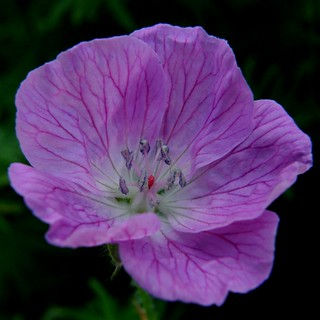
géranium vivace / perennial geranium


![Sun Star. Ornithogalum dubium {as O. aureum] Bulbous perennial endemic to South Africa. Blooms in winter and early spring. The Latin name 'dubium' denotes it is unlike others in the genus. The Botanical Cabinet vol. 12 (1826).](https://live.staticflickr.com/7570/15281996164_097d1aca01_n.jpg)


Defining Perenniality
In botanical classification, the term 'perennial' distinguishes plants based on their longevity, specifically their ability to live for more than two years. This contrasts sharply with annuals, which complete their entire life cycle-from germination to seed production-within a single growing season, and biennials, which require two years to complete their cycle. The definition is further nuanced by the distinction between herbaceous perennials and woody plants.
While trees and shrubs are technically perennials due to their long lifespan and secondary growth (increasing girth), the term 'perennial' is often used more narrowly to refer to plants with little or no persistent woody structure above ground. This distinction highlights different adaptations for survival. Astonishingly, an estimated 94% of all plant species are perennials, underscoring their dominance and fundamental importance in terrestrial ecosystems worldwide.
This prevalence suggests that long-term survival strategies are highly advantageous for plant evolution.
Adaptations for Overwintering
The ability to survive unfavorable conditions, particularly winter, is a hallmark of perennial plants. Herbaceous perennials exemplify a common strategy: they die back to the ground in autumn, with their above-ground stems and leaves withering. However, their vital underground structures, such as rhizomes, bulbs, tubers, or taproots, remain dormant and alive.
Upon the return of favorable spring conditions-adequate temperature, moisture, and light-these overwintering organs initiate new growth. The success of this strategy is heavily influenced by local climate factors like temperature extremes, soil moisture content, and microbial activity. In regions with milder winters, plants that are treated as annuals in colder climates (like tomatoes, which are tropical perennials) can thrive for multiple years.
This highlights the plasticity of plant life cycles in response to environmental pressures and human cultivation.
A Spectrum of Perennial Forms
The perennial life form encompasses a wide array of plant types beyond the typical herbaceous model. Woody plants, including trees and shrubs, are perennials characterized by persistent woody stems that increase in diameter annually through secondary growth. These structures allow them to withstand harsh weather and persist for decades or even centuries. Evergreen perennials, such as Bergenia, represent another category; they lack significant woody stems but retain foliage throughout the year, offering a continuous photosynthetic presence.
This contrasts with deciduous perennials that shed their leaves seasonally. An intermediate group, known as subshrubs or semi-shrubs, exhibits a combination of traits, possessing a partially woody base that survives winter while herbaceous stems may die back. Examples like Penstemon showcase this blend, bridging the gap between herbaceous and fully woody perennials and demonstrating the diverse evolutionary pathways to long-term survival.
Ecological and Horticultural Significance of Perennials
Perennials are foundational to ecosystem stability and function. Their long-lived nature and often extensive root systems provide crucial benefits, most notably in soil conservation. By binding soil particles, perennial root networks significantly reduce erosion caused by wind and water, thereby maintaining soil structure and fertility.
They contribute to carbon sequestration and play a vital role in nutrient cycling. Furthermore, perennials offer consistent habitat and food resources for a wide range of wildlife, supporting biodiversity throughout the year. In horticulture and agriculture, perennials simplify management by eliminating the need for annual replanting, reducing labor, seed costs, and soil disturbance.
This makes them invaluable for sustainable landscaping, permaculture, and long-term crop production, contributing to both environmental health and economic efficiency.
The Perennial Symbol and Its Astronomical Connection
Interestingly, the scientific symbol used to denote a perennial plant is , which is identical to the astronomical symbol for the planet Jupiter. This symbol, derived from the initial letter of the Greek god Zeus (the Greek equivalent of Jupiter), was adopted by Carl Linnaeus in his seminal work, Species Plantarum. While the direct connection between the plant symbol and Jupiter's astronomical symbol might seem coincidental, it's a fascinating piece of botanical history.
Jupiter, the largest planet in our solar system, could be metaphorically linked to the enduring and substantial nature of perennial plants, which form the backbone of many plant communities and have a significant, long-lasting presence in their environments. This shared symbol adds a touch of cosmic wonder to the study of these resilient plants.
Go deeper
Frequently Asked Questions
What is a perennial plant?+
How do herbaceous perennials survive winter?+
Are trees and shrubs perennials too?+
Why do most plant species live as perennials?+
What is the difference between evergreen and deciduous perennials?+
Based on content from Wikipedia · Licensed under CC BY-SA 4.0