

Fountain of Time
Images
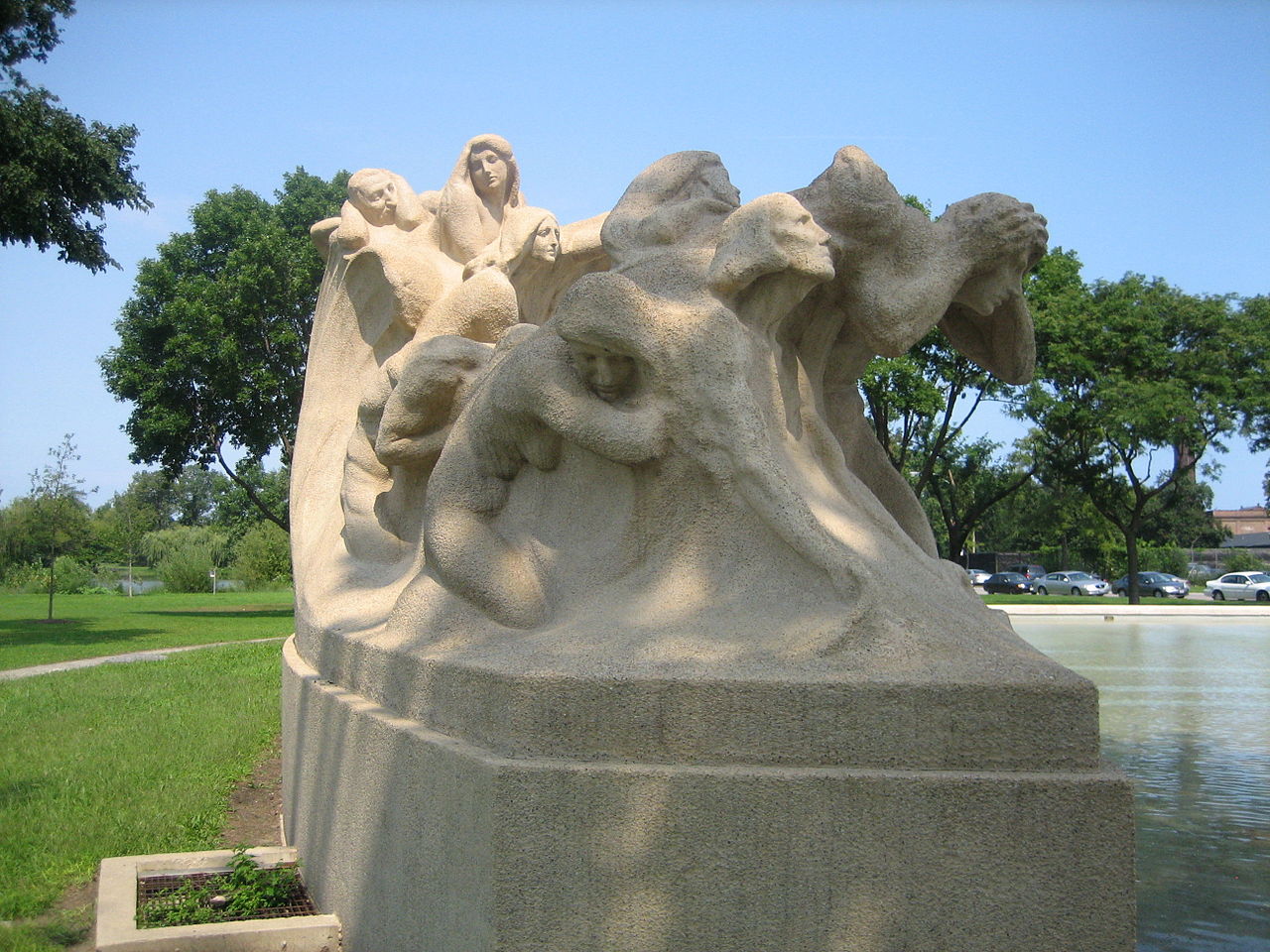
Fountain of Time rear6a


Narrative Sculpture and Symbolic Representation
The Fountain of Time, a monumental work by Lorado Taft, transcends mere decoration to become a profound symbolic statement. Spanning an impressive 126 feet 10 inches, its design is deeply rooted in literary inspiration, drawing from Henry Austin Dobson's poem 'Paradox of Time.' The sculpture's core narrative features 100 figures in a dynamic procession, symbolizing the relentless march of time and the progression of human experience.
These figures converge towards a central, stoic representation of Father Time, positioned across a water basin, creating a powerful visual metaphor for the passage of years and the observation of history. This artistic choice was specifically intended to commemorate the centennial of peace between the United States and the United Kingdom, established by the Treaty of Ghent in 1814.
The water's activation in 1920 and the sculpture's dedication in 1922 marked its formal integration into the urban landscape as a significant cultural artifact.
Pioneering Material and Construction Techniques
A critical aspect of the Fountain of Time's historical significance lies in its innovative use of materials. Constructed from a novel form of molded, steel-reinforced concrete, it represented a significant departure from traditional sculptural mediums. This material was lauded for its purported durability and cost-effectiveness, offering a more accessible alternative for large-scale public art.
The Fountain of Time is widely recognized as potentially the first finished work of art of its kind to utilize concrete. This pioneering application was not an isolated experiment but part of a broader civic initiative to enhance and beautify the Midway Plaisance. Taft's bold choice of concrete demonstrated a forward-thinking approach to art and architecture, anticipating the material's widespread adoption in the 20th century and beyond.
Cultural Significance and Artistic Legacy
For decades, the Fountain of Time stood as a preeminent artistic installation within the Chicago Park District, holding a position of considerable importance until the development of Millennium Park in 2004. Its existence is largely due to the philanthropic vision of Benjamin Ferguson, whose trust fund provided the financial backing for numerous public art projects in Chicago. The sculpture serves as a tangible reminder of the value of sustained peace and the importance of historical commemoration.
Its enduring presence and the continuous efforts toward its preservation underscore its deep cultural resonance and its role in articulating Chicago's identity as a city that values both artistic expression and historical reflection. It is a contributing structure to the Washington Park Registered Historic District, solidifying its place on the National Register of Historic Places.
Challenges of Longevity
The longevity of outdoor sculptures is invariably challenged by environmental factors. The Fountain of Time has, over its existence, succumbed to wear and tear from natural elements and the pressures of an urban setting. This has necessitated multiple restoration campaigns, particularly during the late 1990s and early 2000s, which aimed to rectify previous repair interventions and address ongoing deterioration.
These comprehensive renovations, with significant work completed as recently as 2005, have been crucial in stabilizing the structure. However, the commitment to its upkeep is ongoing, with advocates actively seeking resources for further enhancements, such as improved lighting systems. The nomination by the National Trust for Historic Preservation highlights its national heritage value and the continued need for dedicated conservation efforts.
See also
Frequently Asked Questions
What is the Fountain of Time?+
How many figures are in the Fountain of Time?+
Why is the Fountain of Time made of concrete?+
Where can I see the Fountain of Time?+
When was the Fountain of Time built and dedicated?+
Based on content from Wikipedia · Licensed under CC BY-SA 4.0