

Reinforced Concrete: Super Strong Buildings!
Images
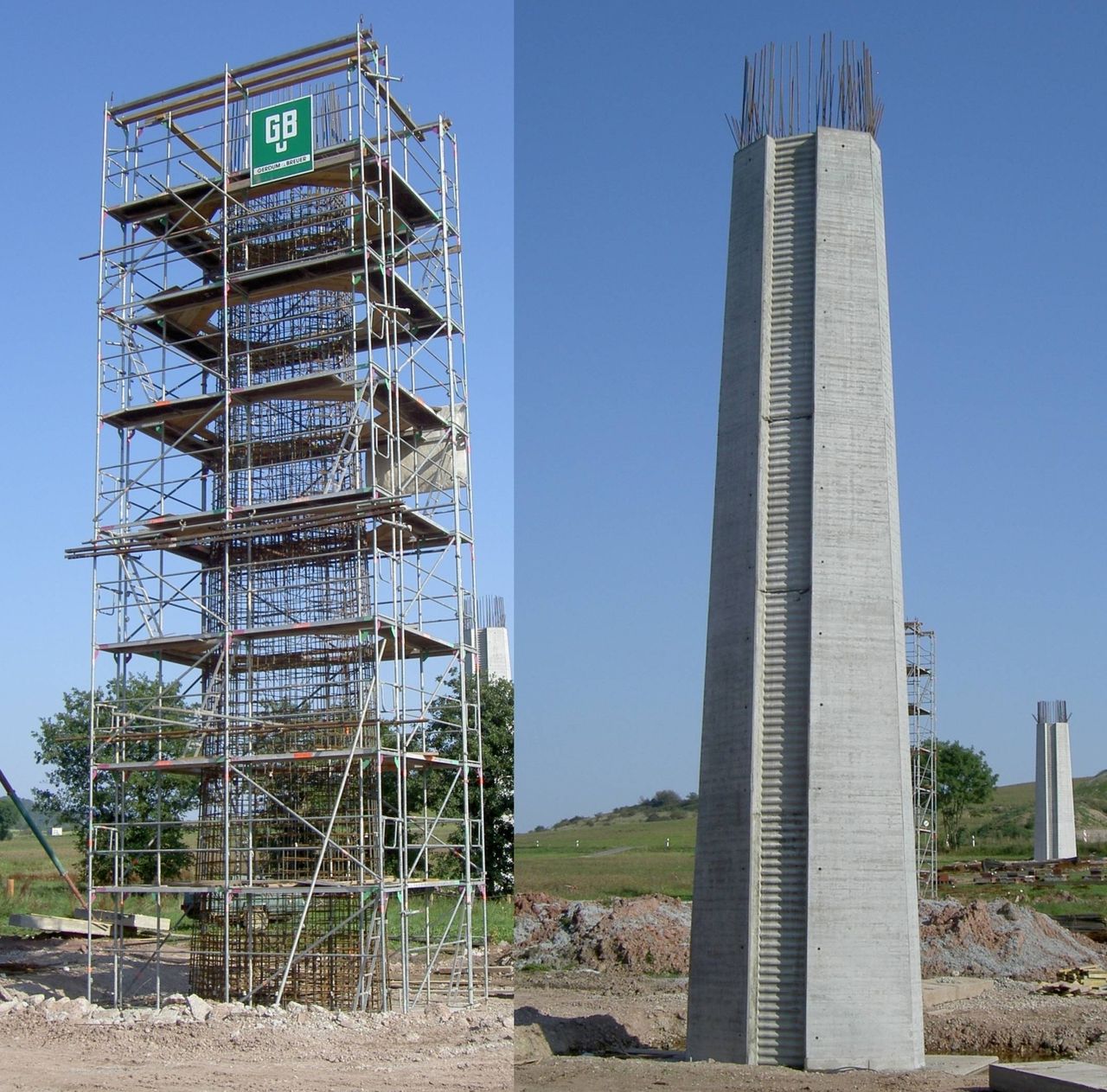
Reinforced concrete


The Synergistic Foundation
Reinforced concrete, also known as ferroconcrete, is a composite material engineered to overcome the inherent limitations of its constituent components. Concrete, a mixture of cement, aggregates, and water, exhibits excellent compressive strength but possesses relatively low tensile strength and ductility. This means it can withstand significant squeezing forces but is prone to cracking and brittle failure when subjected to pulling or bending forces.
Steel, on the other hand, offers high tensile strength and ductility, making it ideal for resisting these pulling forces. The ingenious integration of steel reinforcing bars (rebar) or mesh within the concrete matrix allows the composite material to effectively handle both compressive and tensile stresses. This symbiotic relationship is the cornerstone of reinforced concrete's widespread utility, enabling the construction of structures that are both robust and adaptable to complex design requirements.
The careful placement and design of the reinforcement are critical to achieving the desired structural performance and ensuring the material's integrity under various load conditions.
From Ancient Mixes to Modern Marvels
The history of reinforced concrete is a fascinating evolution of material science and engineering innovation. While ancient civilizations like the Romans utilized concrete-like materials, the concept of reinforcing concrete with steel emerged much later. Early experiments in the mid-19th century, notably by individuals like Joseph Monier in France, who patented reinforced concrete flowerpots and later structural elements, laid the groundwork.
By the late 19th and early 20th centuries, engineers and architects began to fully appreciate and exploit the potential of this composite material. Landmark projects, such as the early reinforced concrete bridges and buildings, demonstrated its superiority over traditional materials like stone and timber for certain applications. The development of standardized design codes and construction techniques further propelled its adoption, transforming urban landscapes and enabling the construction of unprecedented structures like skyscrapers, large-span bridges, and dams, fundamentally altering the possibilities of architectural and civil engineering.
The Indispensable Material
Reinforced concrete is arguably the most critical material in modern construction, forming the backbone of global infrastructure. Its ubiquity stems from a combination of factors: cost-effectiveness, durability, versatility, and relative ease of construction. It is the primary material for high-rise buildings, providing the necessary strength and stability to resist gravity, wind, and seismic loads.
Major transportation networks, including bridges, tunnels, highways, and airport runways, rely heavily on reinforced concrete for their structural integrity and longevity. Furthermore, its inherent fire resistance and ability to be molded into complex shapes make it suitable for a vast array of applications, from residential homes and industrial facilities to specialized structures like offshore platforms and nuclear power plants. The material's long service life, coupled with its ability to be repaired and maintained, contributes to its sustainable use in long-term infrastructure projects.
The Mechanics of Strength
The functional principle of reinforced concrete hinges on the complementary mechanical properties of concrete and steel. When a structural element made of reinforced concrete is subjected to bending, the top portion typically experiences compression, while the bottom portion experiences tension. The concrete efficiently resists these compressive forces.
Simultaneously, the embedded steel reinforcement, strategically placed in the tension zones, effectively absorbs the tensile stresses. This prevents the concrete from cracking and failing prematurely. The bond between the concrete and steel is crucial; it ensures that stresses are transferred effectively between the two materials.
Additionally, the high alkalinity of concrete (pH typically above 12) forms a passive oxide layer on the surface of the steel, providing excellent corrosion resistance. This electrochemical protection is vital for the long-term durability of reinforced concrete structures, especially in environments exposed to moisture or aggressive chemicals. Advanced techniques like post-tensioning, where steel tendons are tensioned after the concrete has cured, further enhance the material's load-carrying capacity and structural efficiency.
Beyond the Basics
The application of reinforced concrete extends far beyond simple beams and columns. In high-rise construction, complex structural systems like shear walls and core systems, entirely composed of reinforced concrete, provide lateral stability against wind and seismic forces. Prestressed and post-tensioned concrete techniques allow for longer spans and more slender designs in bridges and buildings, reducing material usage and enhancing aesthetic possibilities.
In seismic regions, specialized reinforcement detailing and concrete mixes are employed to create ductile structures that can absorb earthquake energy without catastrophic collapse. Research continues into developing more sustainable concrete mixes, incorporating recycled aggregates and supplementary cementitious materials to reduce the environmental footprint of cement production. Innovations in self-healing concrete, which can repair its own cracks, and ultra-high-performance concrete (UHPC), offering exceptional strength and durability, promise to further expand the capabilities and applications of this foundational engineering material in the future.
Go deeper
Frequently Asked Questions
What is reinforced concrete?+
Why do we need steel in concrete?+
How did reinforced concrete become popular?+
Where can we find reinforced concrete?+
What makes reinforced concrete special for safety?+
Based on content from Wikipedia · Licensed under CC BY-SA 4.0