

Flute
Images
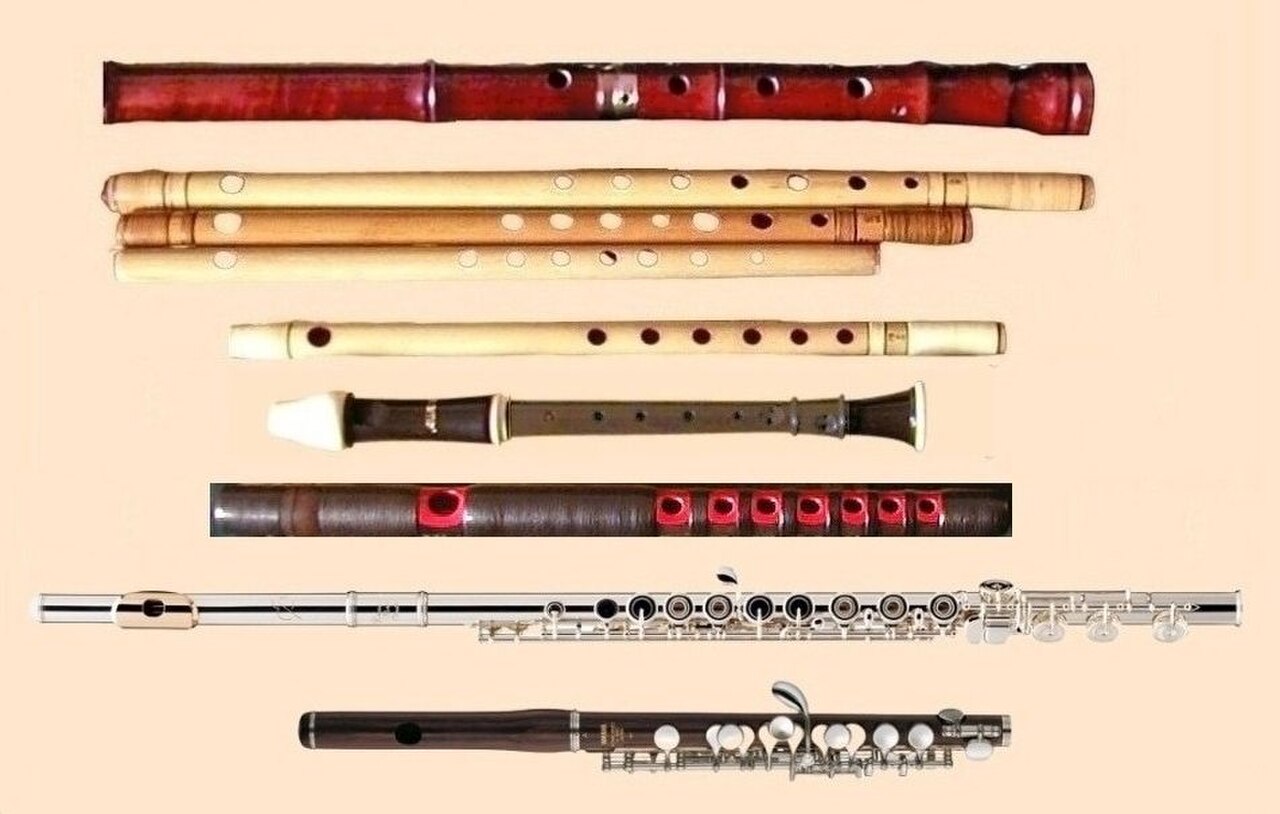
Flute
Echoes of Antiquity
The flute stands as one of humanity's most ancient musical instruments, with archaeological evidence pointing to its existence for at least 40,000 years. The earliest known flutes, discovered in caves in Germany, were crafted from bird bones and mammoth ivory. These Paleolithic instruments suggest that music, and specifically wind instruments, played a role in early human culture, possibly for communication, ritual, or artistic expression.
Throughout history, flutes have appeared in virtually every civilization, taking diverse forms. In ancient Greece and Rome, they were known as 'aulos' and 'syrinx,' often associated with pastoral scenes and religious ceremonies. The evolution from simple bone or reed pipes to the sophisticated Boehm-system flute of the 19th century represents a remarkable journey of technological and artistic development, driven by the desire for greater expressiveness and control.
Acoustic Principles and the Modern Flute's Design
The sound of a flute is a fascinating interplay of physics and precise engineering. Sound is generated when a player directs a stream of air across the sharp edge of the embouchure hole. This creates a vortex that causes the air column within the flute to resonate.
The fundamental pitch is determined by the effective length of this air column. Pressing the keys opens and closes tone holes, effectively changing this length and thus altering the pitch. The modern Boehm system, developed by Theobald Boehm in the mid-19th century, revolutionized flute design with its precisely placed keys and tone holes, allowing for greater accuracy, a wider dynamic range, and improved intonation across all registers.
Materials also play a crucial role; while historically made of wood, modern flutes are often constructed from metals like silver, gold, or platinum, each imparting a unique tonal quality and response.
The Flute's Multifaceted Role in Global Music
The flute's influence extends far beyond the Western classical orchestra. In orchestral settings, it is a cornerstone, often tasked with carrying lyrical melodies, executing rapid virtuosic passages, and adding brilliance to the ensemble's sound. Its clear, penetrating tone makes it an effective solo instrument.
However, its versatility is evident in its presence in numerous other genres. In jazz, flutists like Hubert Laws and Herbie Hancock have explored its improvisational potential. Folk traditions worldwide feature distinct flute types, such as the Irish tin whistle, the Scottish Highland bagpipe chanter, the Indian bansuri, and the Japanese shakuhachi, each with its own unique construction, playing technique, and cultural significance.
Contemporary composers continue to push the boundaries of flute performance, exploring extended techniques like multiphonics, flutter-tonguing, and key clicks, further expanding the instrument's sonic capabilities.
The Flute Family
The term 'flute' encompasses a broad family of instruments, each with its own characteristics. The most ubiquitous is the Western concert flute, typically pitched in C, known for its bright, agile sound. Its smaller cousin, the piccolo, pitched an octave higher, produces a piercing, brilliant tone that can soar above the orchestra.
The alto flute, pitched in G, offers a richer, darker, and more mellow sound, often used for its expressive qualities. Beyond these common orchestral members, numerous other flutes exist globally. The recorder, though often considered separate, shares the principle of edge-blown sound production and is a foundational instrument for many musicians.
The diversity of flutes highlights a universal human impulse to create music through breath and simple tubes, adapted and refined across cultures and eras.
Contemporary Relevance and Future Trajectories
In the 21st century, the flute remains a vibrant and evolving instrument. While its classical repertoire is vast, contemporary composers are constantly exploring new sonic territories, integrating the flute into electronic music, film scores, and experimental genres. The accessibility of digital tools and online learning platforms has also democratized flute education, allowing aspiring musicians worldwide to connect with resources and communities.
Furthermore, advancements in instrument design, including the development of new materials and ergonomic considerations, continue to enhance playability and tonal possibilities. The flute’s enduring appeal lies in its direct connection to the player's breath, its expressive range, and its rich historical legacy, ensuring its continued relevance in the ever-changing landscape of music.
Go deeper
Frequently Asked Questions
What is a flute and how does it make sound?+
How old is the flute?+
Why do flutes come in different sizes like piccolo and alto?+
Where can you hear flutes besides classical music?+
What materials are used to make modern flutes and why?+
Based on content from Wikipedia · Licensed under CC BY-SA 4.0