

Evo Morales
Images

Evo Morales Ayma


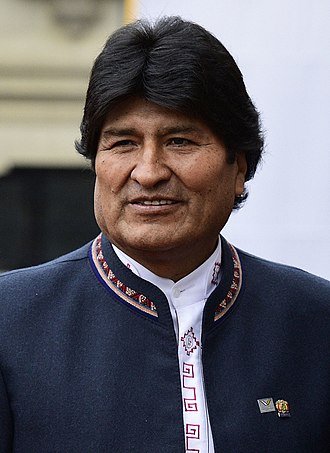


The Genesis of a Leader
Juan Evo Morales Ayma's journey from a subsistence farmer and Aymara indigenous community member to the 65th President of Bolivia is a narrative of profound social and political change. Born in 1959, Morales's early life in the highlands was marked by agricultural labor, including the cultivation of coca, a traditional Andean crop. His move to the Chapare Province in 1978 propelled him into the heart of the campesino (rural laborers) movement.
As a trade union organizer, he became a formidable opponent of U.S.-backed coca eradication programs, framing them as imperialistic assaults on indigenous culture and economic survival. This activism, often involving direct action and leading to arrests, cemented his reputation as a champion of the marginalized and laid the groundwork for his entry into electoral politics in the mid-1990s. Leading the Movement for Socialism (MAS) party from 1998, Morales skillfully blended populist rhetoric with a platform advocating for land reform, equitable resource distribution, and the empowerment of Bolivia's vast indigenous majority.
The Morales Presidency
Elected president in 2005, Morales embarked on an ambitious agenda to fundamentally reshape Bolivia's socioeconomic structure. A cornerstone of his policy was the re-nationalization and increased taxation of the hydrocarbon sector, channeling the revenue into extensive social spending. This included significant investments in combating illiteracy, poverty, and systemic racial and gender discrimination.
Ideologically a socialist, Morales steered Bolivia towards a mixed economy, actively reducing dependence on the International Monetary Fund (IMF) and the World Bank, and fostering relationships with left-leaning governments across South America, notably Venezuela and Cuba, joining the Bolivarian Alliance for the Americas (ALBA). His administration championed the concept of a 'plurinational state,' enshrined in a new constitution adopted in 2009, which formally recognized the rights and sovereignty of Bolivia's diverse indigenous nations.
This period was characterized by strong economic growth and a tangible reduction in poverty, solidifying his popularity.
Navigating Power
Morales's presidency was not without significant internal political struggles. His administration often clashed with autonomist movements in Bolivia's eastern provinces, who sought greater regional control. He successfully weathered a recall referendum in 2008, demonstrating considerable popular support.
However, his later years were increasingly defined by efforts to extend his time in office. After being re-elected in 2009 and 2014, Morales sought to abolish presidential term limits, a move that drew criticism and fueled opposition. This ambition culminated in a controversial 2019 election, marred by allegations of fraud.
The ensuing political unrest and pressure from various sectors, including the military, ultimately led to his resignation and exile, initially to Mexico and later Argentina. This period marked a significant turning point, raising complex questions about democratic norms and the consolidation of power.
Enduring Influence and Complex Legacy
Following his resignation, Evo Morales remained a potent political figure in Bolivia. He returned to the country in November 2020 after the election of his successor, Luis Arce. Despite his continued influence, his relationship with the Arce administration deteriorated, particularly concerning political maneuvering and future electoral ambitions.
Morales's supporters highlight his historic role in elevating indigenous representation, his anti-imperialist stance, and his contributions to economic development and poverty reduction. Conversely, critics point to democratic backsliding, concerns about the sustainability of his economic model, and instances where his policies were perceived to contradict his environmentalist rhetoric, such as his defense of coca cultivation which some argue contributed to illegal drug production. His political trajectory, from union leader to president and his subsequent exclusion from future presidential races, underscores the dynamic and often contentious nature of political power in contemporary Bolivia and Latin America.
Go deeper
Frequently Asked Questions
Who is Evo Morales?+
What did Evo Morales do as president?+
Why did Evo Morales fight against coca eradication?+
What happened when Evo Morales tried to stay in office longer?+
How did Evo Morales help indigenous people?+
Based on content from Wikipedia · Licensed under CC BY-SA 4.0